
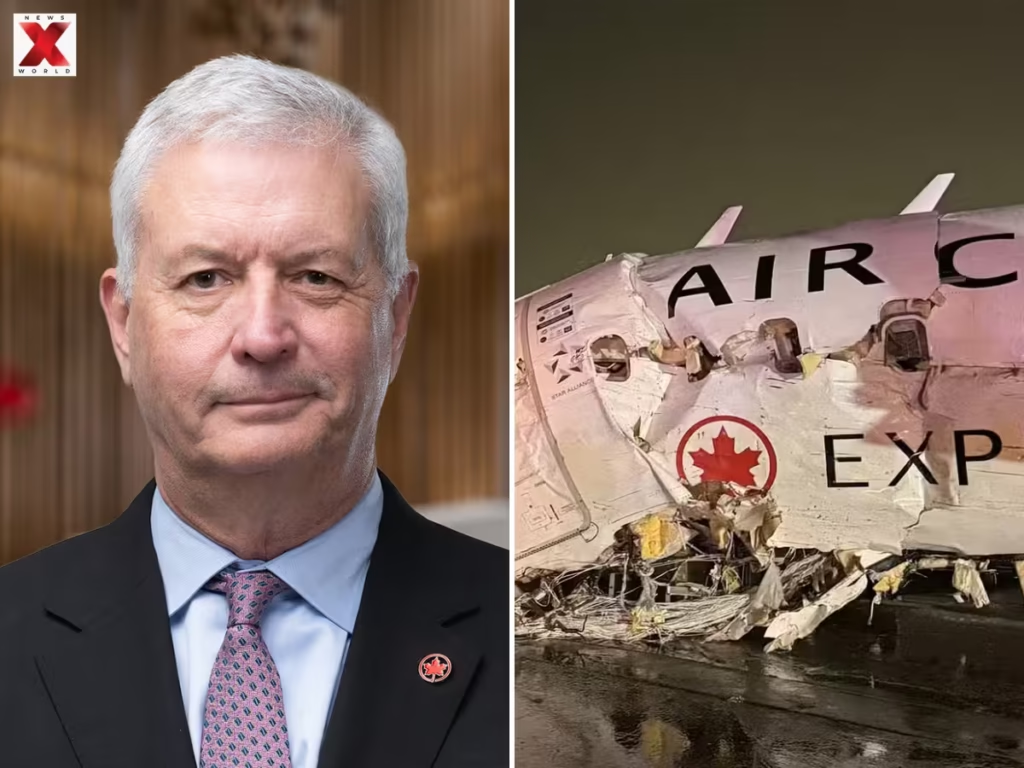
Air Canada CEO Steps Down Following French Language Controversy
The helm of Canada’s largest airline has changed hands, concluding a chapter defined not just by turbulent skies but by a profound cultural storm. The retirement of Michael Rousseau as CEO of Air Canada is inextricably linked to a personal misstep that ignited a national conversation about language, respect, and corporate leadership in a bilingual nation. This event serves as a powerful case study in how a single moment of tone-deafness can overshadow years of corporate strategy and trigger a leadership crisis.
The Speech That Shook a Nation
At the heart of this corporate drama was a speech delivered in November 2021. Addressing the Montreal Chamber of Commerce, Michael Rousseau, who had been living in the predominantly French-speaking city for over a decade, conducted almost the entirety of his remarks in English. The optics alone were damaging for the head of a national flag carrier headquartered in Quebec.
However, it was his response to a reporter’s question afterward that truly fueled the fire. When asked about his experience living in Montreal without speaking French, Rousseau famously stated, “I’ve been able to live in Montreal without speaking French, and I think that’s a testament to the city of Montreal.” He further admitted he hadn’t learned the language due to the “busy schedule” of running an airline.
Immediate Backlash and Public Outcry
The reaction from political leaders, the media, and the Quebec public was swift and severe. The comments were perceived not as an individual shortcoming but as a symbolic act of disrespect from the leader of a federal institution toward one of Canada’s founding languages and cultures. Critics argued that if the CEO of Air Canada, a company deeply embedded in the fabric of Quebec’s economy and society, saw no need to learn French, it sent a dismissive message about the language’s value.
*
- Political Condemnation: Quebec’s premier and minister responsible for the French language publicly expressed their disappointment and anger, framing the issue as one of respect and integration.
*
- Media Firestorm: National and provincial news outlets covered the controversy extensively, analyzing it as a failure of corporate and personal responsibility.
*
- Public Trust Erosion: For many Quebecers, the incident damaged the airline’s brand, transforming it from a point of national pride to a symbol of linguistic indifference.
A Struggle for Redemption and Mounting Pressure
In the face of the escalating crisis, Rousseau issued public apologies and committed to undertaking French lessons. The airline also reaffirmed its commitment to bilingualism. Yet, the shadow of the controversy proved long. The pledge to learn French was seen by many as a belated and forced gesture, unable to fully repair the fractured trust.
Compounding this reputational damage were persistent operational challenges. As air travel rebounded from the pandemic, Air Canada, like many global carriers, faced a cascade of problems:
*
- Widespread flight delays and cancellations.
*
- Baggage handling malfunctions, leaving passengers stranded without luggage.
*
- General customer service strain under the pressure of high demand.
These issues created a perfect storm. The public perception became one of a company struggling on two fronts: failing in its cultural duties to a key region of the country and faltering in its core operational mandate. The pressure on Rousseau’s leadership from the board, shareholders, and the public became unsustainable.
The Leadership Transition: Seeking a Fresh Start
The announcement of Rousseau’s retirement and the appointment of Michael *Mike* Rousseau, the current Chief Operating Officer, as his successor marks a strategic pivot. While an internal promotion suggests continuity in business strategy, the change at the very top is a clear attempt to turn the page on a contentious era.
The board’s decision underscores a critical realization: for a company like Air Canada, leadership credibility is multifaceted. It is no longer sufficient to focus solely on balance sheets and route networks. The new CEO steps into a role where cultural competence and symbolic leadership will be scrutinized as intensely as financial results.
Lessons for Corporate Canada
The Air Canada saga transcends the airline industry, offering stark lessons for all leaders operating in linguistically and culturally diverse markets, particularly in Canada.
1. Language is a Litmus Test for Respect:
For national symbols and companies with a significant presence in Quebec, proficiency in French is not a quaint courtesy. It is a tangible demonstration of respect for the province’s identity, its people, and its laws. It is viewed as a non-negotiable aspect of authentic engagement.
2. The CEO is the Chief Cultural Officer:
A CEO’s personal actions and statements are magnified and interpreted as reflections of the entire corporation’s values. A personal failure in cultural sensitivity is instantly perceived as a corporate failure. Leaders must be hyper-aware of the symbolic weight their personal conduct carries.
3. Reputational Risk is an Existential Business Risk:
The controversy consumed enormous media oxygen, damaged brand loyalty in a key market, and likely diverted management focus from operational recovery. It proved that a crisis of trust can be as debilitating as a financial crisis, impacting customer choice, employee morale, and regulatory relations.
Looking Ahead: Navigating the Flight Path to Recovery
As Air Canada moves forward under new leadership, the path to rebuilding trust in Quebec will require consistent, visible effort. It will involve more than corporate language training programs. It demands genuine, ongoing engagement with Quebec’s cultural and business communities, and perhaps most importantly, a leader who visibly embodies the bilingual and bicultural character of the nation the airline represents.
The retirement of Michael Rousseau closes a controversial chapter, but its legacy will endure as a cautionary tale. In a country built on a delicate linguistic balance, the message is clear: for those who lead our most visible institutions, cultural intelligence is not a soft skill—it is a core component of executive leadership and a fundamental pillar of long-term success. The skies ahead for Air Canada will be judged not only by on-time performance but by its commitment to navigating the complex cultural currents of the country it serves.

