
Shanxi Coal Mine Disaster: 82 Dead as Safety Failures Spark Nationwide Scrutiny
The Tragedy Unfolds: What We Know So Far
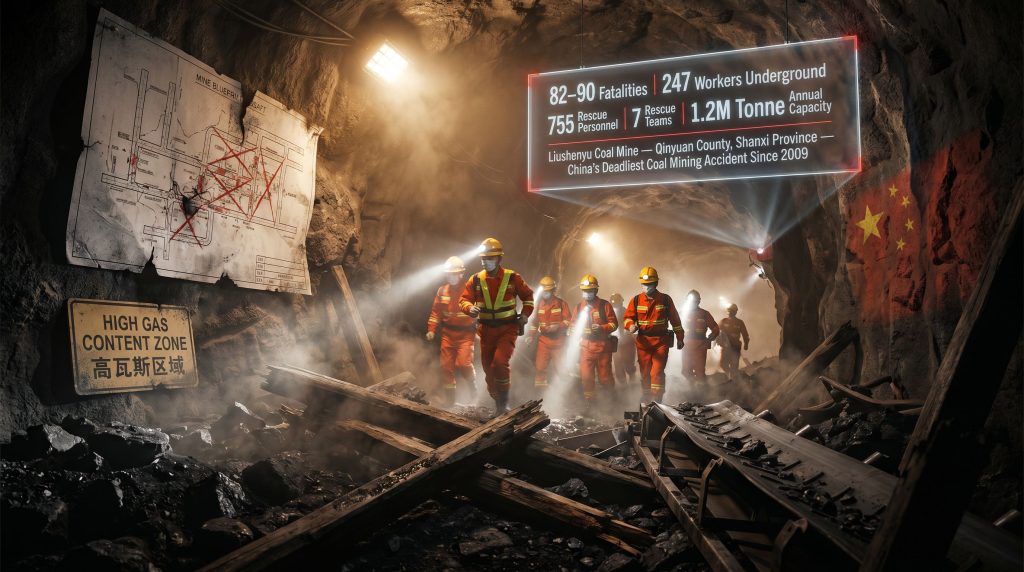
A routine shift in China’s Shanxi province turned catastrophic when a methane explosion tore through a coal mine, killing at least 82 miners. Rescue teams were immediately deployed, but collapsed tunnels, toxic air, and unstable conditions made survival increasingly unlikely.
The incident now ranks among the deadliest mining disasters in China in over a decade. Beyond the immediate loss of life, it raises a deeper concern: known safety risks appear to have gone unaddressed despite repeated regulatory promises.
As a resource security analyst focused on mining safety trends across Asia, this case follows a familiar and troubling pattern—warning signs were present, but operational pressure often overrides enforcement.
Immediate Aftermath and Rescue Efforts
Within hours of the explosion, more than 200 rescue workers were deployed to the site. However, the scale of the blast and structural collapse severely limited access to deeper sections of the mine.
Early reports from provincial emergency authorities indicate:
- Most victims likely died instantly from the blast shockwave or suffocation
- Several miners remain unaccounted for in inaccessible underground sections
- Ventilation systems were severely damaged or potentially compromised before the explosion
The current death toll of 82 places this disaster among the most severe in recent years, comparable to earlier Shanxi mining tragedies.
Root Causes: Beyond a Single Explosion
Preliminary assessments point to “safety lapses,” a broad term that often masks deeper systemic issues.
Methane Detection Failures
Coal mines naturally release methane, which must be continuously monitored. In properly managed operations, sensors trigger automatic shutdowns before gas levels become dangerous.
At the Shanxi site, early findings suggest:
- Gas monitoring systems may have been disabled or tampered with
- No recorded alarms were logged in the 48 hours before the blast
- Supervisory warnings were reportedly not acted upon
Ventilation Breakdown
Proper airflow is critical to preventing methane buildup. Investigators found evidence that ventilation controls may have been altered to reduce operational costs.
Key concerns include:
- Ventilation doors possibly left open or improperly secured
- Airflow disruption creating pockets of trapped methane
- Increased risk of ignition from routine electrical activity
Production Pressure and Safety Culture
Shanxi remains one of China’s most important coal-producing regions, supplying a significant share of national energy demand. That pressure often translates into production targets that can overshadow safety protocols.
Industry accounts suggest:
- Safety compliance is sometimes treated as procedural rather than operational
- Violations are frequently corrected only ahead of inspections
- Cost-saving measures can quietly weaken safety systems over time
Historical Context: Reforms That Did Not Fully Hold
Following the 2009 Shanxi mining disaster, China introduced stricter oversight, real-time gas monitoring systems, and regulatory restructuring. Fatalities dropped significantly over the past decade.
However, structural weaknesses remain:
- State-owned mines generally maintain stronger compliance
- Smaller private operations often operate under tighter financial constraints
- Enforcement inconsistency remains a persistent issue
This mine reportedly held a conditional safety rating shortly before the explosion—an early warning sign that standards may not have been fully met in practice.
Human Cost and Accountability
Behind the statistics are 82 individual lives and families left behind—miners, fathers, sons, and workers who spent years underground in difficult conditions.
Authorities have detained several senior officials, including management and safety personnel, as investigations continue. However, past cases suggest accountability often stops short of ultimate ownership structures.
Families are now calling for:
- Transparent, independent investigation findings
- Fair and comprehensive compensation
- Stronger enforcement to prevent repeat incidents
Broader Energy Implications
The disaster comes at a critical time for China’s energy system, where coal still accounts for roughly 60% of electricity generation.
In the short term, inspections and temporary mine shutdowns may disrupt supply chains. In the longer term, the incident highlights a structural tension between energy security and operational safety.
Each production target met carries an often invisible cost—measured in risk exposure for those working underground.
What Must Change
Experts and safety advocates consistently point to three urgent reforms:
- Real-time independent monitoring: Gas and safety data should be transmitted directly to regulators, not controlled internally
- Unbiased safety inspections: Third-party or state-run audits should replace mine-funded evaluations
- Stronger whistleblower protection: Workers must be able to report hazards without fear of retaliation
The tools to prevent methane explosions already exist. The challenge lies in consistent enforcement and accountability.
Conclusion: From Tragedy to Accountability
The Shanxi coal mine explosion is not an isolated failure—it is a reminder of the fragile balance between industrial output and human safety.
As investigations continue, the critical question is whether this will become another documented tragedy or a turning point in enforcement reform.
For miners returning underground tomorrow, the difference between the two outcomes is measured in policy, oversight, and the willingness to act on known risks.
Hope alone is not a safeguard. Only sustained enforcement can prevent the next disaster.

