
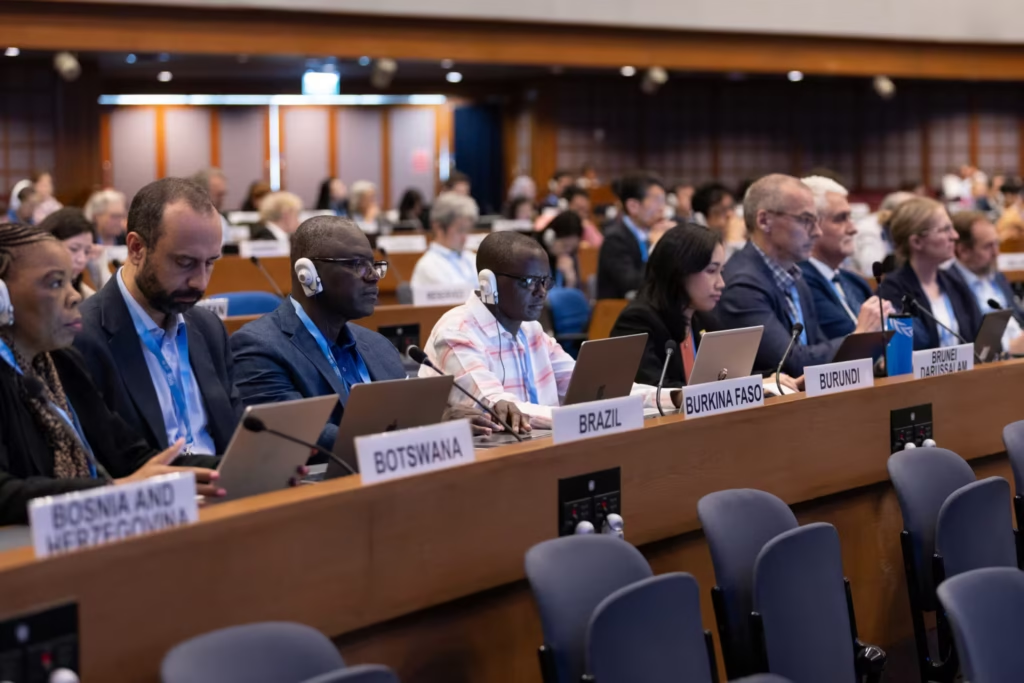
The IPCC Faces Internal Strife and a Looming Financial Crisis
For decades, the Intergovernmental Panel on Climate Change (IPCC) has stood as the definitive scientific authority on global warming. Its meticulously crafted assessment reports have shaped international policy, informed public discourse, and delivered stark warnings about the planetary emergency. However, beneath the surface of this respected institution, a confluence of internal discord and severe financial strain now threatens to undermine its critical work at a time when its guidance is needed most.
A House Divided: The Roots of Internal Tension
The IPCC’s strength has always been its consensus-driven model, bringing together hundreds of scientists from around the world to synthesize the latest climate research. Yet, this very process is becoming a source of significant strife. The core of the tension lies in a fundamental debate about the panel’s future direction and pace.
On one side, many scientists and contributing authors are pushing for a more aggressive, rapid, and policy-prescriptive approach. They argue that the accelerating pace of climate impacts—from record-shattering heatwaves to devastating extreme weather—demands that the IPCC move beyond its traditional role of neutral assessor. They believe the panel must deliver clearer, more urgent guidance on immediate solutions, such as a rapid phase-out of fossil fuels, to keep the goals of the Paris Agreement within reach.
On the other side, there is concern that such a shift could politicize the IPCC’s science and compromise its hard-won credibility with governments. Member states, particularly those with economies reliant on fossil fuels, have historically resisted language they deem too prescriptive. This creates a difficult balancing act for the panel’s leadership, caught between the imperative of scientific clarity and the realities of geopolitical negotiation.
Key Pressure Points Fueling the Conflict:
- The Report Cycle: The multi-year process for producing major assessments is seen by some as too slow for a fast-evolving crisis, leading to calls for more frequent, focused special reports.
- Communication of Risk: Debates rage over how bluntly the IPCC should communicate high-risk, low-likelihood scenarios (like catastrophic tipping points) that could dramatically reshape risk assessments.
- Equity and Representation: Ensuring meaningful participation and leadership from scientists in the Global South remains an ongoing challenge, affecting the framing of issues like climate justice and loss and damage.
The Silent Emergency: A Deepening Financial Crunch
While internal debates over science and policy play out, a more immediate threat is eroding the IPCC’s foundation: a severe and worsening financial crisis. The panel operates on a surprisingly modest voluntary budget, funded by contributions from its member governments. This financial model has proven to be precarious and unreliable.
Chronic underfunding is forcing difficult choices. The IPCC has been forced to dip into its limited reserves to cover basic operational costs, including the essential meetings where scientists collaborate to write and review reports. Travel grants for experts from developing countries—crucial for maintaining geographic diversity and equity—are at risk. Perhaps most alarmingly, the financial shortfall is threatening to delay or scale back the very assessments the world relies on.
The situation creates a vicious cycle. Political disagreements can translate into withheld or delayed funding. Budgetary constraints then limit the panel’s ambition and timeliness, which in turn can fuel frustration among the scientific community and the public. This financial instability strikes at the heart of the IPCC’s ability to function independently and deliver its work program.
How the Funding Shortfall Manifests:
- Depleted Reserves: The IPCC’s cash reserves have been used to cover annual deficits, a unsustainable stopgap measure.
- Threats to Participation: Without secure travel funding, the panel risks becoming dominated by scientists from wealthier nations, skewing its perspective.
- Compromised Output: The scope, depth, or frequency of future assessment reports may be reduced purely due to budget limitations.
Why This Matters for Global Climate Action
The internal and financial challenges facing the IPCC are not merely bureaucratic issues. They have direct, real-world consequences for the global response to climate change.
First, the IPCC’s assessments are the bedrock of international climate negotiations. Weakened, delayed, or diluted reports would deprive the UNFCCC process of the robust, agreed-upon science needed to ratchet up national commitments and hold countries accountable. At a time when the Paris Agreement’s implementation is entering a critical phase, a faltering IPCC would leave diplomacy without its essential compass.
Second, the authority of the IPCC’s reports empowers civil society, activists, and businesses to demand action. A panel seen as bogged down by procedure or muted by political pressure loses its power to mobilize public opinion and drive the ambitious action that science unequivocally demands.
Navigating the Storm: Pathways to a Resilient Future
Addressing these dual crises requires decisive action from the IPCC’s member governments and its leadership. The panel’s relevance and effectiveness hang in the balance.
On the financial front, the solution requires moving from a voluntary donation model to a more reliable, predictable, and adequate funding mechanism. Member states must recognize that underfunding the IPCC is tantamount to underfunding the global climate response itself. Formalizing contributions as assessed dues, similar to other UN bodies, could provide the stability needed for long-term planning.
Regarding internal governance, a transparent and inclusive dialogue about the panel’s future is essential. This could involve:
- Streamlining processes to enable more timely outputs without sacrificing scientific rigor.
- Clarifying the boundary between policy-neutral assessment and policy-relevant communication, allowing for clearer statements on the implications of scientific findings.
- Reinforcing commitments to equity, ensuring the IPCC’s structures and leadership fully reflect the global community it serves.
The Stakes Could Not Be Higher
The IPCC was born out of a recognition that the world needed a single, trusted source of climate science. Today, that need is more acute than ever. The storms of internal strife and financial insecurity now buffeting the institution must be navigated with wisdom and urgency. The world cannot afford a weakened IPCC. Ensuring its strength, independence, and scientific clarity is not just about saving an institution—it is about safeguarding the primary knowledge system that guides humanity’s fight for a livable planet. The time for member governments to secure its future is now.

