
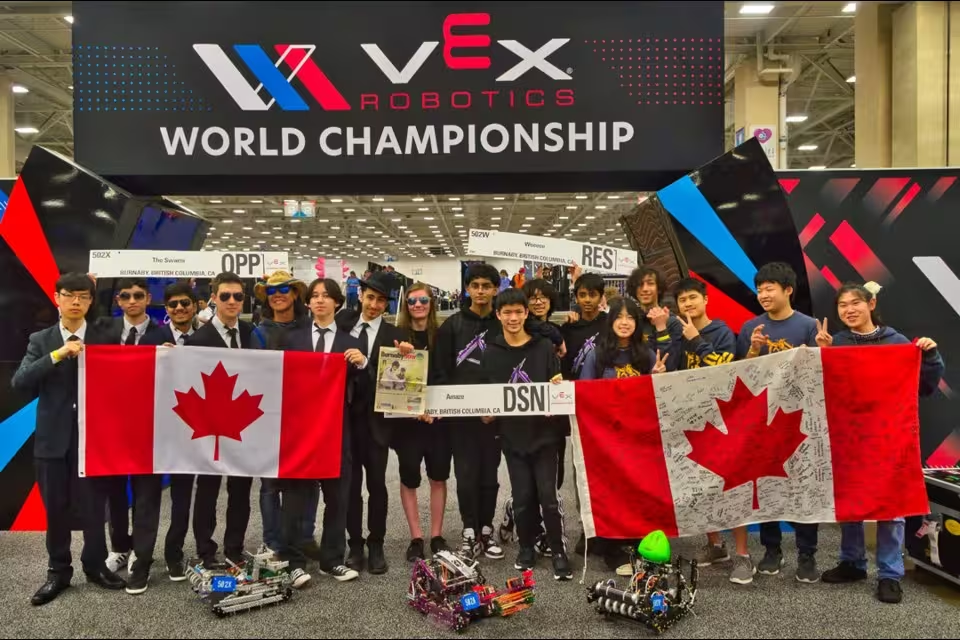
How West Vancouver Students Won the World Robotics Championship
A group of high school students from West Vancouver has done something most teams only dream about — they became world robotics champions.
Competing on an international stage filled with experienced teams, strong funding, and highly advanced engineering programs, the students didn’t just hold their own. They outperformed some of the best robotics teams in the world and brought home the top title.
Their win is now being seen as a strong example of what focused STEM education and teamwork can achieve, even without massive resources.
A Global Competition with High Pressure
The students competed in the FIRST Robotics Competition (FRC), often described as one of the most demanding high school robotics challenges in the world. Every year, teams are given a brand-new task and just weeks to design, build, and program a working robot from scratch.
It’s not just about building a machine. It’s about building it fast, making it reliable, and adapting it under pressure while competing in live matches.
This year, the West Vancouver team faced competitors with bigger budgets, advanced workshops, and long-established robotics programs. Many of those teams treat the competition like a year-round operation. For West Vancouver, it meant balancing schoolwork, late nights in the workshop, and constant problem-solving.
The Strategy That Made the Difference
Instead of trying to build the most complicated robot on the field, the team focused on something simpler: consistency.
Their approach came down to a few key decisions:
- Build a robot that performs reliably in every match
- Design it to work well with other teams during alliances
- Avoid overcomplicated features that could fail under pressure
That strategy proved to be the difference-maker.
While other robots sometimes struggled with breakdowns or unstable performance, the West Vancouver machine stayed steady and effective throughout the competition.
Engineering Choices That Paid Off
What stood out most was not just what they built, but how they built it.
The robot included a climbing system designed for stability rather than flashiness, along with scoring mechanisms that could adjust based on match conditions. They also built in backup systems so that if one part failed, the robot could still function.
It wasn’t the most advanced design on paper, but it was dependable — and in robotics competitions, dependability often wins matches.
Lessons Beyond the Robot
For the students, the experience went far beyond engineering.
They learned how to manage a real project under tight deadlines, make decisions quickly, and deal with unexpected failures. At one point during qualifiers, a drivetrain issue almost took them out of the competition. The team had only minutes to diagnose and fix it before their next match — and they managed to get back on the field in time.
That kind of pressure teaches skills that go well beyond the classroom: communication, teamwork, and calm problem-solving when things go wrong.
Why This Win Matters for STEM Education
This victory is more than just a trophy for one school. It highlights what’s possible when students are given access to hands-on technical learning.
Robotics programs like FRC give students real-world experience in coding, engineering design, and collaboration — skills that are directly used in modern tech careers.
It also shows that strong results don’t always come from the biggest budgets. With the right mentorship and focus, smaller teams can still compete at a global level.
How Other Schools Can Learn From This
The team’s success wasn’t random. A few key elements played a big role:
- A committed mentor who guided the process without taking over
- A focus on building early, testing often, and improving step by step
- Careful documentation of design choices and mistakes
- Support from the local community, including donations and encouragement
These are simple foundations, but they make a big difference when applied consistently.
What Comes Next
For many of these students, this win is just the beginning. Some are already looking toward engineering degrees, while others are exploring further innovation in robotics and design.
But beyond individual futures, their achievement sends a clear message: strong STEM talent can come from anywhere.
What matters most is not the size of the program, but how students are supported — and how willing they are to keep solving problems when things get difficult.
In the end, their championship wasn’t just about building a robot. It was about building confidence, resilience, and proof that a school team from West Vancouver can stand on the world stage and win.

