SFU and Siemens Forge Partnership to Advance Green Hydrogen Technology
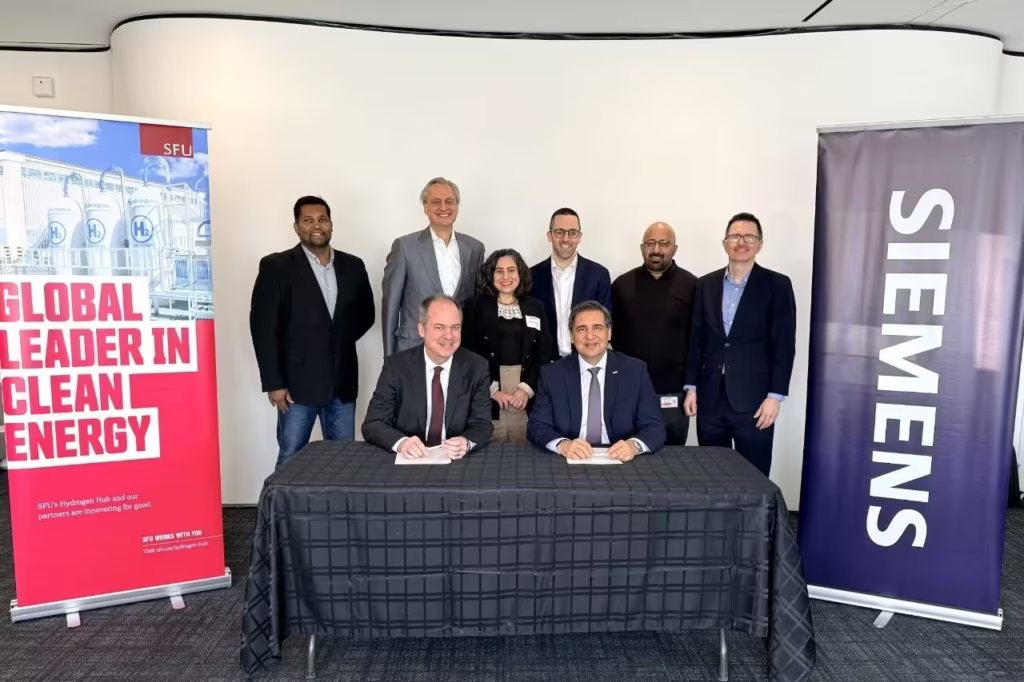
In a significant move poised to reshape the landscape of clean energy research, Simon Fraser University (SFU) and global technology powerhouse Siemens have announced a groundbreaking strategic partnership. This collaboration is squarely focused on accelerating the innovation and commercialization of green hydrogen technology, a critical component in the global race to achieve net-zero emissions. By combining cutting-edge academic research with world-class industrial engineering and digitalization expertise, this alliance aims to tackle the most pressing challenges in the hydrogen value chain, from production to utilization.
A Strategic Alliance for a Sustainable Future
The partnership between SFU and Siemens represents a perfect synergy of vision and capability. SFU brings to the table its renowned strength in materials science, electrochemistry, and sustainable energy systems research. Its researchers are at the forefront of developing next-generation catalysts, membranes, and electrolyzer designs that are more efficient, durable, and cost-effective.
Siemens contributes its unparalleled expertise in industrial-scale engineering, automation, and digital twin technology. The company is a leader in electrolyzer manufacturing, energy management systems, and the software platforms needed to integrate complex hydrogen systems into the broader energy grid. Together, the partners will establish a collaborative research hub, providing SFU students and researchers with direct access to Siemens’ industrial technology and real-world problem sets.
Core Research Pillars of the Collaboration
The joint initiative will concentrate its efforts on several key technological frontiers essential for making green hydrogen a viable, widespread energy carrier:
- Next-Generation Electrolysis: Research will focus on advancing Proton Exchange Membrane (PEM) electrolyzer technology to improve efficiency and reduce reliance on rare and expensive materials like iridium.
- System Integration and Digitalization: A major focus will be on using Siemens’ digital twin technology to model, simulate, and optimize entire hydrogen production plants. This virtual modeling allows for rapid design iteration, predictive maintenance, and seamless integration with renewable energy sources like wind and solar.
- Hydrogen Utilization and Storage: The partnership will explore innovative methods for storing and transporting hydrogen, as well as its application in hard-to-abate sectors, including heavy industry and long-haul transportation.
- Workforce Development: A core mission is to train the next generation of scientists and engineers. Through co-op placements, joint projects, and specialized curriculum development, students will gain hands-on experience with the technologies that will define the future energy landscape.
Why Green Hydrogen is a Keystone for Decarbonization
Green hydrogen, produced by splitting water using electricity from renewable sources, holds immense promise for decarbonizing sectors where direct electrification is challenging. Unlike conventional “grey” hydrogen made from natural gas, its production releases no carbon dioxide.
- Industrial Processes: It can replace fossil fuels in steelmaking, chemical production, and refining.
- Long-Distance Transport: Hydrogen fuel cells offer a zero-emission solution for shipping, aviation, and heavy freight.
- Seasonal Energy Storage: Hydrogen can store excess renewable energy for weeks or months, providing grid stability and ensuring a reliable clean energy supply.
However, widespread adoption has been hindered by high production costs, infrastructure needs, and technological hurdles in efficiency and scalability. The SFU-Siemens partnership is strategically designed to address these very barriers, moving breakthroughs from the lab bench to commercial deployment at an accelerated pace.
The Power of Digital Twins in Hydrogen Innovation
A particularly transformative aspect of this collaboration is the application of Siemens’ digital twin expertise. A digital twin is a virtual, dynamic replica of a physical asset or system. In the context of a hydrogen production facility, researchers can create a digital twin to:
- Simulate performance under various operating conditions and renewable energy inputs.
- Predict potential failures and optimize maintenance schedules, reducing downtime.
- Test new control algorithms and integration scenarios without risk to physical hardware.
- Accelerate the engineering design process, cutting development time and cost.
This digital-first approach will be a game-changer, allowing the SFU-Siemens team to innovate faster and de-risk the scale-up of new hydrogen technologies.
Economic and Environmental Impact for British Columbia and Beyond
This partnership has profound implications that extend far beyond the laboratory. For British Columbia, a province with abundant renewable hydroelectricity and a strong cleantech mandate, it positions the region as a potential global hub for green hydrogen innovation and export. The collaboration aligns perfectly with both the BC and Canadian governments’ hydrogen strategies, which aim to spur investment, create jobs, and establish a thriving domestic hydrogen economy.
The research outcomes are expected to attract further investment from both the public and private sectors, fostering a vibrant ecosystem of startups and suppliers. Furthermore, by developing homegrown solutions for hydrogen production and use, Canada can build energy security, reduce greenhouse gas emissions in its most polluting industries, and export valuable technology and expertise to the world.
A Model for Academia-Industry Collaboration
The SFU-Siemens partnership serves as a powerful model for how academia and industry can work together to tackle society’s greatest challenges. It moves beyond traditional grant-based research to a deeply integrated, mission-driven alliance where both parties share knowledge, resources, and a common goal. This model ensures that research is directly relevant to market needs, speeding up the often-lengthy journey from scientific discovery to real-world impact.
Forging a Path to a Clean Energy Future
The collaboration between Simon Fraser University and Siemens marks a pivotal step in the journey toward a sustainable, low-carbon future. By uniting brilliant academic minds with leading industrial engineering and digital capabilities, this partnership is not just about incremental improvements—it’s about fostering the breakthrough innovations necessary to make green hydrogen a practical, affordable, and cornerstone technology of the global energy system.
As this joint research hub begins its work, the world will be watching. The solutions developed in British Columbia have the potential to accelerate the global energy transition, proving that through strategic partnership, the clean hydrogen economy is not a distant dream, but an achievable reality. The race to net-zero demands bold action, and the SFU-Siemens alliance is a definitive stride forward.