Artemis II Crew to Embark on Historic Deep Space Voyage
The dream of returning humans to the Moon is no longer a distant vision on a PowerPoint slide. It has a crew, a rocket, and a launch date on the horizon. NASA’s Artemis II mission, the first crewed flight of the ambitious Artemis program, is set to send four astronauts on a journey not undertaken in over half a century. This isn’t just a repeat of past glories; it’s a bold, record-breaking odyssey that will pave the way for a sustained human presence on the lunar surface and, ultimately, the first footsteps on Mars.
Meet the Trailblazers: The Artemis II Crew
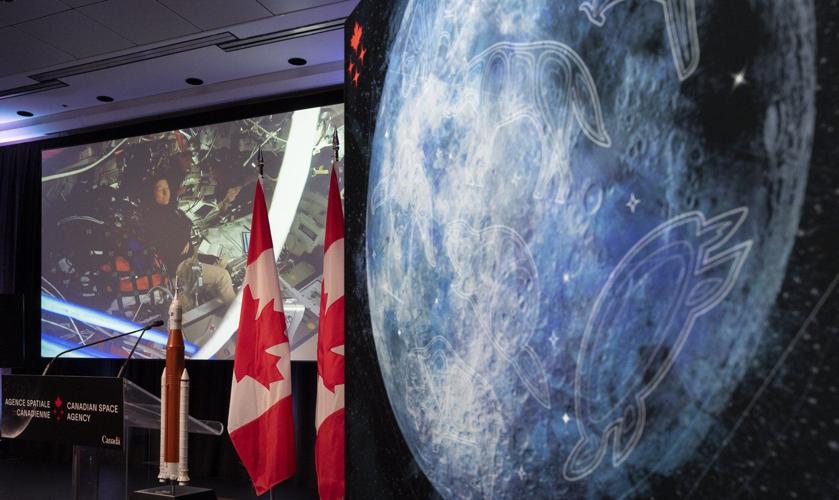
In a historic announcement, NASA and the Canadian Space Agency (CSA) introduced the four pioneers who will venture farther from Earth than any human before. This diverse and accomplished crew embodies the international and collaborative spirit of modern space exploration.
Commanding the Mission: Reid Wiseman
A veteran NASA astronaut and former Chief of the Astronaut Office, Reid Wiseman will serve as the mission commander. With prior experience aboard the International Space Station (ISS), his leadership will be crucial as the team navigates the complexities of this unprecedented flight.
Piloting Orion: Victor Glover
Victor Glover, the pilot for Artemis II, is no stranger to breaking barriers. He was the pilot on NASA’s SpaceX Crew-1 mission to the ISS and served as a flight engineer on the station for 168 days. As the pilot of the Orion spacecraft, he will be responsible for the vehicle’s systems and performance during the mission.
Mission Specialist 1: Christina Koch
Set to make history yet again, Christina Koch brings invaluable expertise as a mission specialist. Holder of the record for the longest single spaceflight by a woman (328 days), her extensive experience living and working in space will be an incredible asset for testing Orion’s life-support systems during the multi-day journey.
Mission Specialist 2: Jeremy Hansen
Rounding out the crew is Jeremy Hansen, a colonel in the Royal Canadian Air Force and CSA astronaut. As the first Canadian ever chosen for a mission to deep space, his role highlights the essential international partnerships driving Artemis forward. He will oversee key mission objectives and the deployment of scientific instruments.
Beyond Apollo: The Groundbreaking Journey of Artemis II
While Apollo missions flew directly to the Moon, Artemis II will chart a different, more ambitious course. The crew will not land on the lunar surface, but their 10-day flight will break records and test every system needed for future landings.
The mission will launch from Kennedy Space Center’s Launch Complex 39B atop NASA’s towering Space Launch System (SLS) rocket, the most powerful rocket ever built. After achieving Earth orbit and performing system checkouts, Orion’s powerful upper stage will fire, sending the capsule and its crew on a Translunar Injection burn—a maneuver that commits them to the path of the Moon.
The crew will travel approximately 6,400 miles (10,300 kilometers) beyond the far side of the Moon. At this point, they will be farther from Earth than any humans in history, surpassing the record set by the Apollo 13 crew. This distant retrograde orbit will provide a profound perspective of our home planet as a small, blue marble in the vast blackness of space.
Key objectives of this shakedown cruise include:
- Thoroughly testing Orion’s life-support systems with a crew on board.
- Proving the performance of both the SLS rocket and the Orion spacecraft in actual flight conditions.
- Evaluating navigation and communication systems in deep space.
- Ensuring the crew’s ability to live, work, and manage the spacecraft in the deep space environment.
This mission is the critical final test before Artemis III, which aims to land the first woman and the next man on the lunar South Pole.
The Ripple Effect: Why Artemis Matters
The significance of Artemis II extends far beyond a single spectacular flight. It is the keystone for a new era of exploration with profound implications for science, technology, and humanity’s future.
A Stepping Stone to Mars
The Moon is the perfect proving ground. The systems, technologies, and operational experience gained from living and working on and around the Moon are directly applicable to a future mission to Mars. Artemis is about learning to sustainably live off-world, using local resources (like water ice), and operating in a harsh environment with delayed communications to Earth.
Unlocking Lunar Science
The lunar South Pole, a primary target for Artemis, is believed to contain permanently shadowed craters harboring water ice. This resource could be used for life support and rocket fuel. Understanding the Moon’s history also provides a window into the early solar system and the history of Earth itself.
Fueling Innovation and Inspiration
Like Apollo before it, the Artemis program is a catalyst for technological innovation. The challenges of deep space travel drive advancements in materials science, computing, propulsion, medicine, and robotics. Furthermore, this mission, with its diverse crew, has the power to inspire a new generation of scientists, engineers, and explorers—the “Artemis Generation.”
The Countdown to History Begins
As the Artemis II astronauts continue their intensive training, teams across NASA and its international and commercial partners are preparing the hardware for this momentous flight. The core stage of the SLS rocket is complete, the Orion spacecraft is undergoing final testing, and new ground systems at Kennedy Space Center are being activated.
This mission marks the pivotal moment when plans on paper become a tangible reality in space. It is the journey that will reaffirm humanity’s capacity for exploration and discovery. When Orion splashes down in the Pacific Ocean after its long voyage, it will bring back not just four astronauts, but a wealth of data, confidence, and the undeniable proof that we are ready to extend our presence deeper into the solar system. The lunar odyssey awaits, and its crew is ready to make history.