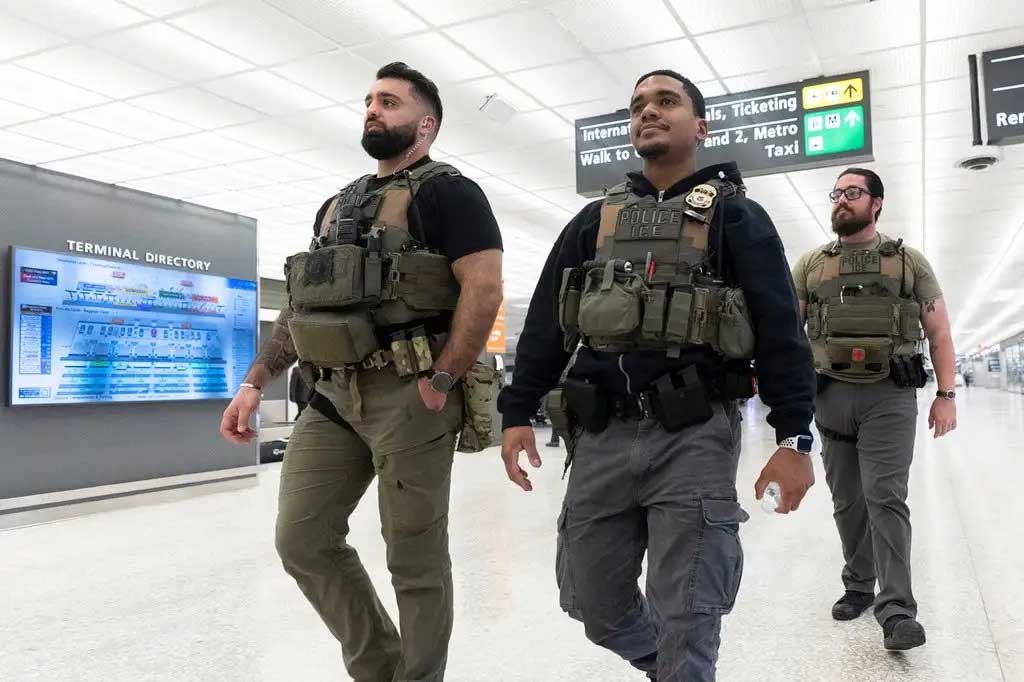
Inside ICE’s No-Gun Policy for the 2026 World Cup in Canada
The 2026 FIFA World Cup is set to be a spectacle of global unity, with matches spanning three nations. For Canada, a host nation with a distinct approach to security, preparations are taking a unique shape. A recent announcement from the Canada Border Services Agency (CBSA) has brought a critical, and for some, controversial, policy into the spotlight: ICE agents from the United States will not be permitted to carry firearms while on duty in Canada during the tournament.
This decision, rooted in long-standing Canadian law and sovereignty, is more than a logistical footnote. It’s a powerful statement about cross-border cooperation, differing national philosophies on armed enforcement, and the intricate dance of security planning for one of the planet’s largest events.
The Core of the Policy: Sovereignty and Standard Protocol
At its heart, the CBSA’s position is not a new or reactionary measure. It is a firm reiteration of existing Canadian law. Canada does not allow foreign law enforcement officers to carry guns within its borders. This principle applies universally, regardless of the event or the visiting country.
For the 2026 World Cup, U.S. Immigration and Customs Enforcement (ICE) personnel will be present as part of a Visa and Passport Policy Program. Their role is specialized and crucial: to help identify fraudulent documents, assist with passenger pre-screening, and facilitate the secure entry of players, officials, and fans. They are there in an advisory and supportive capacity, not as a primary security or patrol force.
Why This Distinction Matters
The clarification from the CBSA underscores a fundamental point about jurisdiction:
- Primary security for the World Cup in Canada will be the responsibility of Canadian law enforcement agencies, including local police, the RCMP, and CBSA officers themselves.
- Visiting ICE agents are considered “guests” on Canadian soil, there to lend their specific expertise, not to exercise independent law enforcement powers.
- This model of unarmed liaison and intelligence cooperation is common in international policing for major events and is built on pre-established trust and information-sharing agreements.
Navigating Different Policing Philosophies
The policy inevitably highlights the contrasting approaches to armed authority between the two neighbors. In the United States, it is standard for many federal law enforcement officers, including ICE agents, to be armed as part of their regular duties. Canada’s model, particularly for border services, is different. While CBSA officers are armed and do carry firearms, the general presence of guns in law enforcement is less visible than in the U.S.
This difference can lead to misunderstandings. The CBSA’s public statement serves as a proactive measure to set clear, unambiguous expectations for all parties involved—including the U.S. Department of Homeland Security and the traveling public. It ensures there is no confusion about the rules of engagement on Canadian territory.
A Focus on Collaborative Security
The no-firearm policy does not diminish the importance of the U.S.-Canada security partnership. If anything, it reinforces that true security success for an event of this scale relies on seamless coordination, not overlapping jurisdictions.
- Integrated Intelligence: Agencies will work side-by-side in command centers, sharing real-time data on threats or persons of interest.
- Unified Front: Travelers will encounter a cohesive security and screening process, even though multiple nations’ experts are contributing behind the scenes.
- Clear Command Structure: With Canadian police in the lead, the chain of command for any incident response is streamlined and avoids potential conflict.
Potential Challenges and Reassurances
The policy is not without its critics. Some may question whether unarmed ICE agents could be put in a vulnerable position, though their work is primarily investigative and analytical rather than frontline intervention. Others might see it as a political statement, though Canadian officials firmly frame it as a simple matter of legal consistency.
The CBSA and Canadian security planners offer clear reassurances:
The safety of all personnel, visitors, and residents is the top priority. Comprehensive security plans account for the protection of everyone involved, including foreign liaison officers.
Canadian law enforcement is highly trained and equipped to handle any situation that may arise at World Cup venues and borders. The presence of ICE agents enhances these capabilities through intelligence, not through an additional armed presence.
This model has precedent. Similar arrangements have functioned effectively during other major international events held in Canada and around the world.
A Blueprint for International Cooperation
As the 2026 World Cup approaches, Canada’s stance on this issue offers a case study in managing multinational security. It demonstrates that effective collaboration does not require a concession of sovereignty. By inviting expertise while maintaining its own legal standards, Canada is crafting a security environment that is both robust and respectful of its national principles.
The message is clear: Canada is rolling out the welcome mat for the world’s soccer fans and is deeply engaged with its partners to ensure a safe and spectacular event. However, the rule of law on its soil remains unequivocally Canadian. The no-firearm policy for ICE agents is a definitive line, one that underscores that the beautiful game will be played under a framework of cooperation, clarity, and shared commitment to a secure celebration.