
Navigating the Strait of Hormuz: The Lifeline of Global Energy and Asian Trade
The world’s economic pulse is measured in many ways, but few places make it as tangible as the narrow seaway between Iran and Oman. The Strait of Hormuz, a mere 21 nautical miles wide at its narrowest point, is not just another channel on the map. It is the arterial chokepoint for global energy supplies and the cornerstone of economic security for Asia’s industrial powerhouses. Understanding its routes, risks, and geopolitical significance is crucial for grasping the fragile dynamics of international trade and energy markets.
Why the Strait of Hormuz is the World’s Most Critical Maritime Chokepoint
To call the Strait of Hormuz “important” is a profound understatement. This narrow passage connects the Persian Gulf and the Gulf of Oman, serving as the only sea route for the oil-rich nations of the Gulf Cooperation Council (GCC) and Iraq to reach the open ocean. Its statistics are staggering:
* Liquid Lifeline: Approximately one-fifth of the world’s total oil consumption passes through the Strait. That’s about 21 million barrels of oil every single day.
* Liquefied Natural Gas (LNG) Gateway: It is equally vital for global gas markets, with about one-third of the world’s seaborne LNG trade transiting these waters, primarily from Qatar.
* Geopolitical Pressure Point: Its strategic location makes it a focal point of international tensions, with Iran’s coastline dominating the northern side. The threat of disruption, whether from military escalation, piracy, or political blockades, sends immediate shockwaves through global energy prices.
For Asia, this isn’t a distant geopolitical issue—it’s a direct matter of national economic stability. The strait is the primary conduit through which the energy needed to power factories, light cities, and fuel transportation arrives from the Middle East.
Mapping the Key Asian Trade Routes Through Hormuz
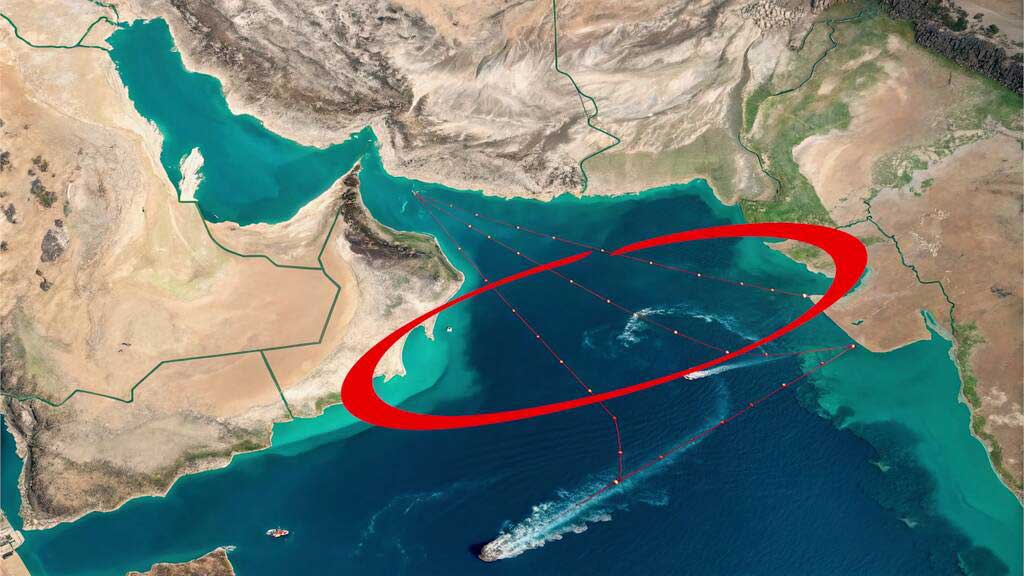
The oil and gas tankers that emerge from the Strait of Hormuz don’t travel to random destinations. They follow precise, high-volume maritime highways that terminate at the world’s busiest ports. The map of these routes vividly illustrates Asia’s deep dependency on this waterway.
The Eastward Flow: Energy for Asia’s Giants
The most heavily trafficked lanes run eastward. Tankers fan out across the Arabian Sea and into the Indian Ocean, heading toward the major energy-importing nations:
* China: As the world’s largest crude oil importer, China receives a massive portion of its Middle Eastern crude via Hormuz. Tankers travel past Sri Lanka and through key chokepoints like the Malacca Strait to reach ports such as Ningbo and Qingdao.
* India: Heavily reliant on Gulf oil for its growing economy, India’s route is more direct, with tankers heading for terminals on its western coast like Jamnagar and Mumbai.
* Japan & South Korea: These industrialized nations, with limited domestic energy resources, have long-term contracts for Gulf LNG and crude. Their routes extend further east, through the South China Sea and onward to ports like Yokohama and Busan.
* Southeast Asia: Nations like Singapore, Thailand, and Indonesia also import significant volumes for their refineries and growing energy needs.
The Strategic Chokepoints Within the Chokepoint
It’s critical to note that the journey doesn’t end at Hormuz. Tankers bound for East Asia must then navigate other strategic passages, creating a chain of vulnerabilities:
* The Malacca Strait: The shortest sea route between the Indian and Pacific Oceans, this is another critical chokepoint where traffic from Hormuz converges.
* The South China Sea: A major thoroughfare for global trade, where overlapping territorial claims add another layer of geopolitical risk to the shipment of energy.
The Ever-Present Shadow: Risks and Geopolitical Tensions
The concentration of so much critical trade in such a confined space creates inherent risk. The Strait of Hormuz is a flashpoint, with tensions often simmering just below the surface.
* Iranian Influence and Brinkmanship: Iran has repeatedly threatened to close the strait in response to international sanctions or military threats. Its capability to harass shipping through naval exercises, seizures, or asymmetric tactics (like mines or fast-attack craft) is a constant concern.
* Regional Conflicts: Broader Middle Eastern conflicts, such as the war in Yemen, have seen attacks on tankers and infrastructure, highlighting how spillover can directly threaten shipping lanes.
* Maritime Security: Incidents of tanker seizures and accusations of sabotage have occurred, leading to increased insurance premiums (known as war risk premiums) and higher costs for every barrel of oil that transits the area.
* Global Military Presence: The U.S. Fifth Fleet, based in Bahrain, alongside navies from European and Asian nations, patrols the area to ensure freedom of navigation, creating a complex military tableau.
Navigating an Uncertain Future: Alternatives and Adaptations
Given these risks, major importers and exporters are not standing still. Strategies to mitigate the “Hormuz risk” are actively being pursued, though none offer a complete solution.
* Pipeline Projects: Some countries have invested in pipelines to bypass the Strait entirely. The UAE operates the Abu Dhabi Crude Oil Pipeline from Habshan to the port of Fujairah on the Gulf of Oman. Saudi Arabia has, in the past, utilized its East-West Petroline pipeline to Red Sea terminals, though capacity is limited.
* Diversification of Supply: Asian nations are actively seeking to diversify their energy imports. This includes increasing purchases from non-Middle Eastern sources like the United States, West Africa, and the Americas, though Gulf oil remains competitively priced and logistically central.
* Strategic Stockpiling: Countries like China, Japan, and South Korea maintain enormous strategic petroleum reserves (SPRs) to cushion against any sudden supply disruption from the Gulf.
* Investment in Alternative Routes: Long-term visions include developing overland corridors, such as the China-Pakistan Economic Corridor (CPEC) to Gwadar Port, but these are not yet viable for large-scale oil replacement.
Conclusion: A Narrow Strait with Global Repercussions
The Strait of Hormuz is more than a geographic feature; it is a barometer for global economic stability. The intricate web of trade routes stretching from its mouth to the ports of Asia underscores a profound interdependence. For Asian economies, the safe and uninterrupted flow of hydrocarbons through this passage is synonymous with growth and stability. While mitigation strategies are evolving, the geographic and economic reality ensures that the Strait of Hormuz will remain, for the foreseeable future, the most critical checkpoint in the world’s energy landscape. Navigating its waters—both literally and geopolitically—requires constant vigilance, diplomacy, and a clear understanding that what happens in this narrow channel resonates on every stock exchange and in every home around the world.

