Trump’s Proposed Strait of Hormuz Toll Shakes Global Shipping
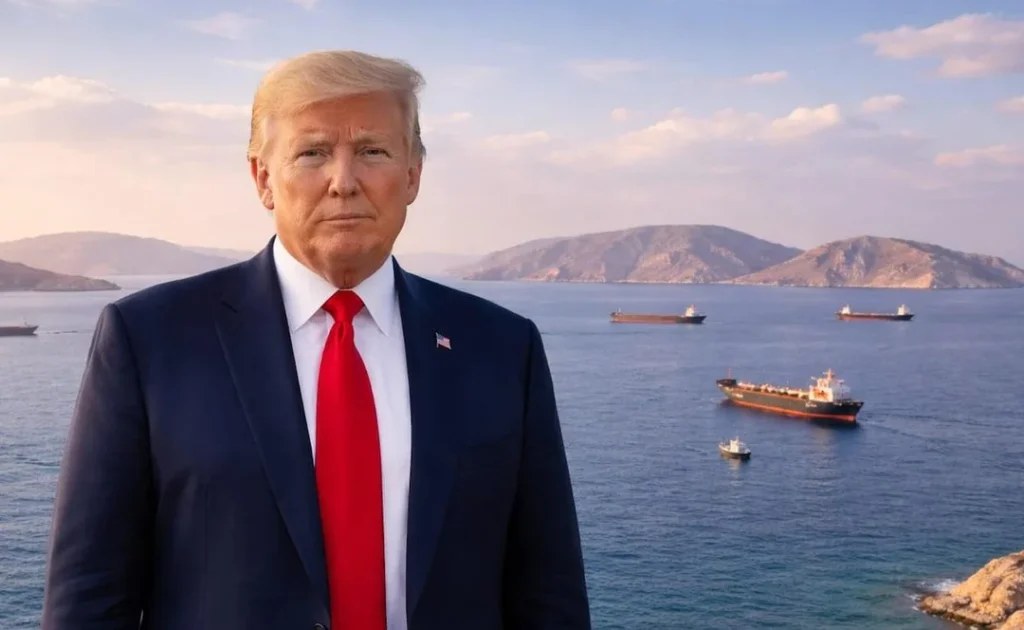
The world’s most critical maritime chokepoint is at the center of a new and controversial proposal from former U.S. President Donald Trump. In the wake of heightened tensions with Iran, Trump has suggested that the United States should charge a toll on commercial vessels passing through the Strait of Hormuz, a narrow waterway through which roughly one-fifth of the world’s oil supply flows. This idea, floated as a means to fund U.S. naval protection in the region, has sent shockwaves through the global shipping, energy, and geopolitical communities, raising profound questions about international law, trade costs, and the future of global energy security.
The Strategic Heart of Global Energy
To understand the magnitude of this proposal, one must first grasp the irreplaceable role of the Strait of Hormuz. This 21-mile-wide passage at the mouth of the Persian Gulf is the lifeline for major oil producers like Saudi Arabia, the United Arab Emirates, Kuwait, Iraq, and Qatar. Every day, millions of barrels of crude oil and liquefied natural gas (LNG) transit this corridor on tankers bound for markets across Asia, Europe, and beyond.
For decades, the U.S. Navy has played a dominant role in patrolling these waters, ensuring freedom of navigation and safe passage for international shipping. This presence is framed as a global public good, safeguarding the free flow of commerce upon which the world economy depends. Trump’s toll proposal fundamentally challenges this long-standing principle, suggesting that this security service should come with a direct price tag for its users.
Rationale and Immediate Repercussions
The proposal emerges from a context of protracted U.S.-Iran antagonism. Proponents of the idea argue that the U.S. bears a disproportionate financial and strategic burden in securing the strait, while other nations, including allies in Europe and Asia, reap the economic benefits without commensurate contribution. Framing it as a “user fee” or “toll,” the concept posits that shipping companies and, by extension, consumer nations should pay for the military protection that enables their cargoes to move safely.
However, the immediate repercussions of such a policy would be severe and widespread:
- Skyrocketing Shipping Costs: A toll would add a direct new cost to every barrel of oil and cubic meter of gas moving through the strait. Shipping companies would pass this cost onto traders, who would pass it onto refiners, ultimately leading to higher prices for consumers worldwide at the gas pump and on utility bills.
- Legal and Diplomatic Firestorm: The proposal clashes head-on with the United Nations Convention on the Law of the Sea (UNCLOS), which guarantees transit passage through international straits. While the U.S. is not a party to UNCLOS, it has historically upheld its navigation principles. Imposing a toll would be viewed as an unlawful restriction on freedom of navigation, triggering fierce opposition from allies and trading partners alike.
- Geopolitical Backlash: Nations that rely on Hormuz transit, from Japan and China to India and European Union members, would vehemently oppose the move. It could fracture alliances and push countries to seek alternative security arrangements or energy suppliers, potentially undermining U.S. influence in the region.
A Precedent for Global Chokepoints?
Beyond Hormuz, the proposal raises a alarming specter: the militarization and monetization of the world’s sea lanes. If the U.S. can levy a toll in the Strait of Hormuz, what prevents other naval powers from doing the same in other critical passages like the Strait of Malacca, the Suez Canal, or the Bab el-Mandeb? The precedent could lead to a fragmented, transactional, and volatile system of global maritime trade, where passage is guaranteed not by international law but by the ability to pay.
The Iranian Factor and Regional Stability
The toll idea is inextricably linked to the U.S. posture toward Iran. Tehran has repeatedly threatened to disrupt shipping in the Strait of Hormuz in response to Western sanctions or military threats. A U.S. decision to unilaterally impose a toll would likely be portrayed by Iran as economic warfare and a further provocation, potentially escalating an already tense standoff. It could provide Tehran with a propaganda victory, framing American actions as predatory and illegal, while complicating the diplomatic efforts of allies.
Furthermore, regional partners like Saudi Arabia and the UAE, while reliant on U.S. protection, would be deeply concerned about the economic and logistical disruption a toll would cause to their primary export route. This could strain these strategic relationships, forcing Gulf states to recalibrate their security dependencies.
Industry and Economic Analysis
For the shipping and energy industries, the proposal introduces a layer of unprecedented uncertainty and risk. The global oil market is a finely balanced machine, and a new, variable cost of this nature would create volatility. Analysts predict it would force a complex restructuring of trade routes, insurance premiums, and long-term supply contracts.
- Alternative Route Exploration: While geographically limited, some shippers might explore vastly longer and more expensive routes to bypass Hormuz entirely, such as sending oil from the Gulf around the southern tip of Africa.
- Investment Chill: The threat of new transit taxes could deter investment in new energy infrastructure in the Persian Gulf, as the cost of bringing products to market becomes less predictable.
- Global Inflationary Pressure: By raising the base cost of energy, a Hormuz toll would act as a tax on global economic activity, potentially stifling growth and fueling inflation in importing nations.
Conclusion: A Watershed Moment for Maritime Trade?
Donald Trump’s proposal to charge a toll for passage through the Strait of Hormuz is more than a mere policy suggestion; it is a challenge to the foundational norms of the post-World War II global order. It swaps the principle of freedom of navigation as a collective good for a model of transactional security. While it highlights legitimate debates about burden-sharing in international security, the implementation of such a toll would likely trigger immediate economic pain, legal battles, and geopolitical realignment.
The global economy is built on the assumption of stable, rules-based maritime transit. Disrupting that assumption at the world’s most important oil chokepoint is a gamble with extraordinarily high stakes. As the idea enters the realm of political discourse, it forces a stark question: will the arteries of global trade remain open highways, or will they become toll roads controlled by the highest bidder? The answer will define the future of energy security and international commerce for decades to come.