
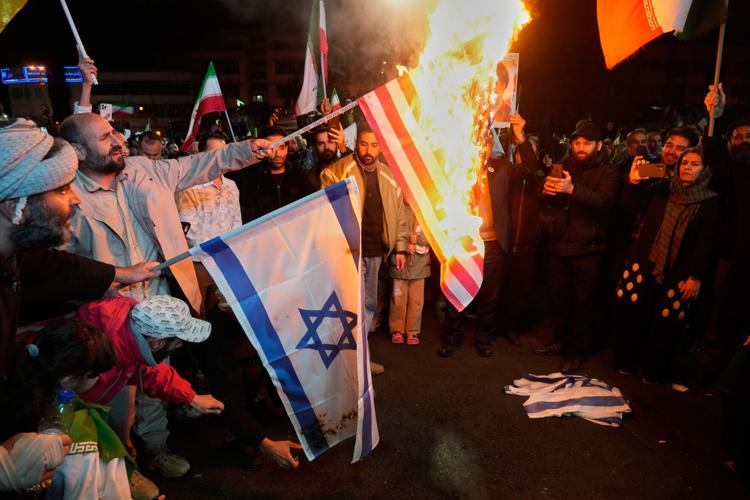
U.S., Israel, and Iran Agree to Fragile Two-Week Ceasefire
In a dramatic and unexpected diplomatic breakthrough, the United States, Israel, and Iran have agreed to a temporary, two-week cessation of hostilities. The deal, announced on April 8, 2026, comes after weeks of escalating rhetoric and military posturing that brought the Middle East to the brink of a wider regional war. The agreement marks a significant, if precarious, pause in a cycle of violence that has destabilized global energy markets and sparked international alarm.
A Sudden Shift from Threats to Truce
The path to this ceasefire was anything but straightforward. For months, the geopolitical landscape was dominated by a volley of threats and aggressive maneuvers. The situation reached a fever pitch with direct military engagements between Israeli and Iranian forces, raising fears of an uncontrollable conflict.
A critical element in de-escalating the crisis appears to have been a calculated pullback from maximalist threats by key figures. Former U.S. President Donald Trump, who had been vocal with aggressive warnings, notably moderated his rhetoric in the days leading up to the announcement. This shift, observed by analysts and diplomats, helped create a narrow window for back-channel negotiations to gain traction. While not a direct party to the talks, the softening of public threats from influential figures is seen as having reduced political pressure and allowed pragmatic discussions to occur behind the scenes.
Key Terms of the Temporary Agreement
The ceasefire, described by all parties as “fragile” and “temporary,” is built on a few core, immediate commitments:
- A Full Halt to Offensive Military Operations: For a period of 14 days, Israel, Iran, and their respective allied proxies will cease all cross-border attacks, drone strikes, and missile launches.
- Humanitarian Corridor Access: The deal includes specific provisions to allow unfettered humanitarian aid into conflict-affected areas, particularly the Gaza Strip, which has suffered immensely from the broader regional tensions.
- Establishment of a Communication Hotline: A direct military-to-military communication channel, facilitated by neutral parties, will be established between the U.S., Israel, and Iran to prevent accidental clashes or misunderstandings during the truce period.
- No Conditions on Long-Term Issues: Notably, the agreement does not address underlying, entrenched disputes such as Iran’s nuclear program or the status of Jerusalem. It is purely a short-term mechanism to stop the bleeding and create space for further diplomacy.
Why Now? The Pressures Forcing a Pause
Several converging factors pushed the warring parties toward this temporary truce, despite deep and abiding mutual distrust.
Economic and Global Stability Concerns: The sustained conflict had caused massive volatility in global oil prices and threatened key shipping lanes like the Strait of Hormuz. The economic strain on all involved, coupled with intense pressure from global powers and international financial institutions, made a continued escalation increasingly untenable.
Military and Strategic Exhaustion: Both Israel and Iran had engaged in a costly exchange of strikes, with significant expenditures on advanced missile defenses and offensive capabilities. A brief pause allows each nation to reassess its military posture, resupply, and care for casualties without the immediate pressure of incoming attacks.
Domestic Political Calculations: Leaders in Washington, Tel Aviv, and Tehran all face complex domestic audiences. The ceasefire provides a momentary respite that each government can use to demonstrate control and diplomatic prowess to their citizens, who are weary of constant conflict and its economic repercussions.
The Daunting Road Ahead: Challenges to a Lasting Peace
While the ceasefire is a welcome relief, experts universally caution that the hardest work lies ahead. The two-week window is not a solution but a desperately needed timeout.
Major Hurdles to a Sustained Agreement
- Deep-Seated Animosity and Mistrust: The fundamental hostility between the Israeli and Iranian governments, spanning decades, cannot be resolved in two weeks. Each side deeply distrusts the other’s long-term intentions.
- The Proxy Network Dilemma: Iran’s influence over regional militias like Hezbollah and the Houthis presents a major challenge. Ensuring these groups comply with the ceasefire, and holding Iran accountable if they do not, will be a critical test.
- The Nuclear Question Looms Large: Any discussion of a permanent de-escalation will inevitably circle back to the issue of Iran’s nuclear program. Finding a formula that satisfies Israel’s security concerns, Iran’s sovereign ambitions, and the non-proliferation goals of the international community is a monumental task.
- Spoilers and Hardliners: All sides have political factions that benefit from perpetual conflict and oppose any normalization. These spoilers could sabotage the truce with a single provocative act.
A Glimmer of Hope in a Volatile Region
The announcement of this two-week ceasefire is a testament to the power of last-ditch diplomacy when the alternative is catastrophic war. It demonstrates that even the most entrenched adversaries can find a off-ramp when the costs of conflict become too high.
The international community, led by mediators in Qatar, Oman, and at the United Nations, now has a brief and precious opportunity. The primary goal for the next 14 days is not to solve the Middle East’s problems, but to ensure the ceasefire holds, humanitarian aid flows, and a foundation for more substantive talks is laid.
The world will be watching closely. If this fragile truce can be extended and built upon, it could mark a historic turning point. If it collapses, the resumption of violence could be more severe than before. For now, the region holds its breath, hoping that this pause in hostilities becomes more than just an intermission between acts of war.

