
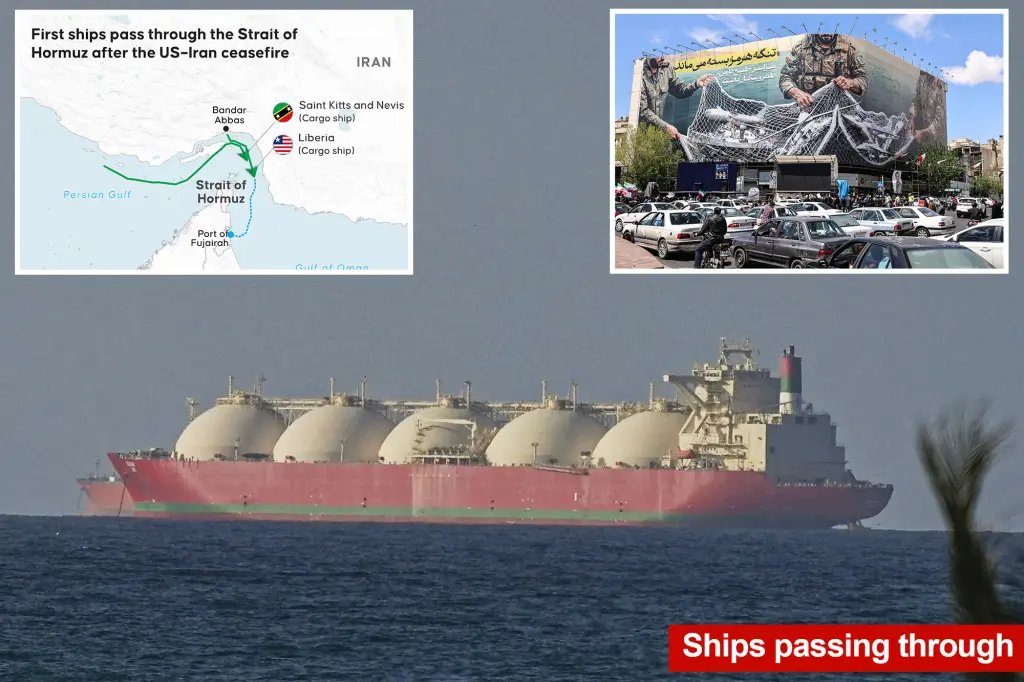
Beyond the Ceasefire: Strait of Hormuz Shipping Traffic to Stabilize
The recent U.S.-Iran ceasefire agreement, announced in early April 2026, marks a pivotal moment for global energy security and maritime trade. While the diplomatic breakthrough is being celebrated in capitals worldwide, its most immediate and tangible impact is unfolding in the narrow, strategic waters of the Strait of Hormuz. For years, this 21-mile-wide chokepoint has been a flashpoint of geopolitical tension, with threats to shipping casting a long shadow over the global economy. Now, analysts are predicting a period of significant stabilization and a potential end to the mass exodus of commercial vessels that had come to define the region’s risk profile.
The Chokepoint Calms: From Peril to Predictability
Known as the world’s most important oil transit corridor, the Strait of Hormuz is the conduit for about one-fifth of the world’s seaborne oil and a third of its liquefied natural gas (LNG). The constant threat of harassment, seizure, or attack had driven insurance premiums to astronomical levels and forced shipping companies into costly rerouting decisions. The “mass exodus” referenced by analysts wasn’t a literal emptying of the strait, but a significant diversification of risk that saw more traffic taking the longer, more expensive route around the Cape of Good Hope.
With the ceasefire holding, the calculus is changing rapidly. The perceived operational risk has plummeted, leading to a swift recalibration by logistics and risk management teams across the globe. The expectation of a stable transit environment means the economic imperative is shifting back towards the Strait’s efficiency. We are likely to see a steady, managed return of traffic to its optimal route, bringing a sigh of relief to energy markets and consumer nations dependent on hydrocarbons from the Gulf.
Ripple Effects Across the Global Economy
The stabilization of traffic through the Strait of Hormuz sends positive shockwaves far beyond the Arabian Gulf. The implications for global trade, inflation, and energy security are profound.
Energy Markets and Consumer Prices
The most direct impact is on the price of oil and gas. The removal of a major geopolitical risk premium—a cost baked into energy prices for years—will contribute to lower and less volatile benchmark prices. This translates to:
- Reduced fuel costs for transportation and industry.
- Lower heating and electricity bills for consumers.
- Decreased input costs for manufacturing, potentially easing inflationary pressures globally.
Shipping and Logistics Recalibration
The shipping industry, which had adapted to a “new normal” of avoidance, must now pivot again. Key changes include:
- Collapsing War Risk Insurance Premiums: The additional premiums levied for Hormuz transits, which could add hundreds of thousands of dollars to a single voyage, are already falling sharply.
- Optimized Supply Chains: The return to the shorter route means faster transit times between Asia, Europe, and the Middle East, improving schedule reliability and reducing fleet capacity strain.
- Strategic Reassessment: Companies that invested in alternative routing strategies will now weigh the cost savings of the Strait against the strategic value of maintaining some level of diversification.
Cautious Optimism: The Challenges That Remain
While the outlook is overwhelmingly positive, seasoned observers urge cautious optimism. A ceasefire is a cessation of hostilities, not necessarily a deep-rooted political resolution. The path to lasting stability in the Strait is fraught with potential challenges.
The sustainability of the ceasefire itself is the primary concern. Any perceived violation or breakdown in talks could trigger a rapid return to high tension, making the current stabilization fragile. Furthermore, the regional security architecture remains complex. The presence of multiple state and non-state actors in the Gulf means that the risk of miscalculation or an incident sparking a new crisis cannot be entirely eliminated.
There are also logistical and infrastructural considerations. The expected surge in traffic will require meticulous coordination by regional navies and port authorities to ensure safe passage and prevent accidents in the congested waterway. The nations bordering the Strait will play a critical role in maintaining this new era of safe transit.
The Long-Term View: A New Paradigm for Gulf Trade?
If the ceasefire endures and evolves into a more durable diplomatic framework, it could herald a new paradigm for trade and energy security in the Middle East. A stable Strait of Hormuz opens the door to:
- Increased Investment: Energy producers may feel more confident in sanctioning long-term upstream projects, knowing the primary export route is secure.
- Regional Economic Cooperation: Stability could foster unprecedented collaboration on maritime security, environmental protection, and port development among Gulf states.
- Accelerated Energy Transition: Ironically, lower and stable hydrocarbon prices could provide a more predictable economic backdrop for both producers and consumers to invest in renewable energy projects, smoothing the global energy transition.
The announcement of the U.S.-Iran ceasefire is more than a diplomatic headline; it is a catalyst for realignment in the arteries of global commerce. The stabilization of shipping traffic through the Strait of Hormuz stands as the first and most critical test of this new chapter. As tankers and container ships once again ply these waters with greater confidence, the world will be watching, hopeful that this vital passage has moved beyond a period of peril to one of predictable prosperity. The journey to full normalization will be long, but for the first time in years, the course is clearly charted towards calmer seas.

