
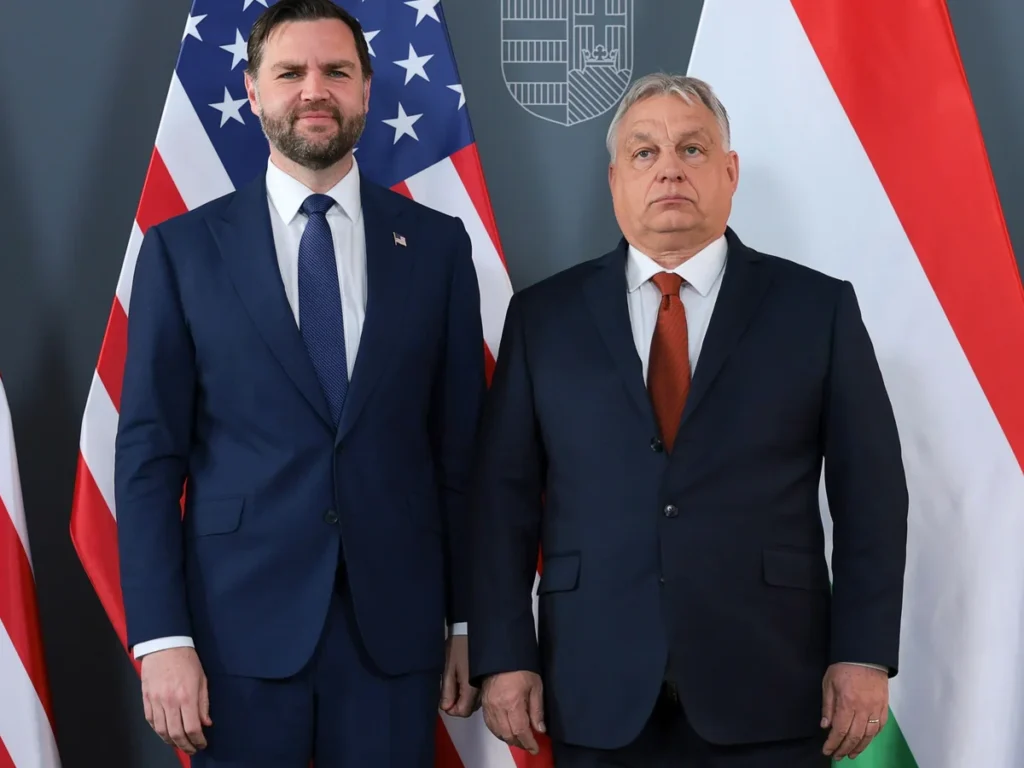
JD Vance Denies US Meddling in Hungary’s Critical Election
In the heart of Budapest, a political storm brewed as U.S. Senator J.D. Vance delivered a forceful rebuttal to swirling allegations of American interference in Hungary’s upcoming national election. The visit, which saw Vance meet with Hungary’s long-standing Prime Minister Viktor Orbán, has ignited a fierce transatlantic debate about sovereignty, foreign influence, and the deepening ideological alliances reshaping global politics.
A Firm Rejection on Hungarian Soil
Standing alongside one of Europe’s most controversial leaders, Senator Vance left no room for ambiguity. He categorically dismissed claims that the United States government is attempting to sway the outcome of the Hungarian election, a pivotal vote that will determine the future direction of the Central European nation.
“The United States is not interfering in this election,” Vance stated emphatically. His message was a direct counter to narratives promoted by Orbán’s government and its allies, which have frequently portrayed external actors, particularly liberal NGOs and entities funded by American philanthropist George Soros, as destabilizing forces seeking to undermine Hungarian democracy.
Vance framed his visit not as an act of intervention, but as one of diplomatic engagement between sovereign nations. He emphasized a respect for Hungary’s right to self-determination, a principle that resonated deeply with Orbán’s own political platform centered on national sovereignty and strong borders.
The Orbán-Vance Alliance: A Meeting of Political Minds
The significance of the meeting extended far beyond the immediate election allegations. It highlighted a growing and influential political axis between certain factions of the American right and Europe’s nationalist-conservative leaders.
Shared Ideological Ground
The alliance is built on a foundation of shared convictions:
- A deep skepticism of liberal, globalist institutions.
- A focus on traditional values and national identity.
- A critical view of unchecked immigration.
- An advocacy for a foreign policy rooted in national interest over international consensus.
For Orbán, the endorsement from a rising star in the Republican Party, potentially a future vice-presidential candidate, serves as a powerful validation. It counters criticism from Western European capitals and Brussels by demonstrating influential American support. For Vance and his political allies, Orbán represents a successful model of conservative governance in action—a leader who has maintained popularity while directly challenging EU orthodoxy.
Context: The “Illiberal Democracy” and Western Tensions
To understand the weight of Vance’s denial, one must grasp the unique position Hungary holds under Orbán’s Fidesz party. Since returning to power in 2010, Orbán has:
- Centralized control over the media and judiciary.
- Passed laws criticized as targeting LGBTQ+ communities and academic freedom.
- Clashed repeatedly with the European Union over rule-of-law issues and the withholding of funds.
This model of “illiberal democracy” has made Hungary a battleground in a broader cultural and political war. The European Parliament has repeatedly condemned democratic backsliding in Hungary, and the U.S. State Department, under the Biden administration, has been openly critical of corruption and erosions of democratic norms.
Vance’s visit and his unequivocal support thus represent a stark divergence from the official U.S. diplomatic stance, underscoring a profound ideological split that now runs directly into foreign policy.
The Allegations of Meddling: A Two-Way Street?
The claims of foreign interference are a potent tool in Hungarian domestic politics. The Orbán government has long argued that its political opponents are not genuine domestic actors but proxies for foreign interests, particularly those of Soros and Brussels bureaucrats.
Vance turned this narrative on its head, suggesting that the real interference comes from those criticizing the Orbán government. He positioned the act of condemning Hungary’s sovereign choices as a form of political meddling in itself. This perspective reframes the debate: supporting a sitting government is seen as respecting sovereignty, while criticizing it is framed as an illegitimate attempt to influence internal affairs.
This logic creates a powerful shield for leaders like Orbán, insulating them from external criticism by labeling it as undue influence.
Broader Implications for US-EU Relations
The Vance-Orbán meeting is more than a bilateral photo-op; it is a symptom of a shifting world order. It signals a potential future where the foreign policy of a leading U.S. political party is more aligned with European nationalist parties than with traditional allies like Germany or France.
Potential Ramifications:
- A Weakening of the United Front: It complicates a unified Western approach to challenges from Russia or China when political leaders within the alliance openly champion each other’s dissenting members.
- Empowerment of Populist Movements: The visible American support bolsters other EU-skeptic leaders in Poland, Slovakia, and beyond, potentially fragmenting European unity further.
- Diplomatic Confusion: It creates a scenario where foreign governments must decide whether to engage with the official State Department line or the alternative vision presented by influential opposition figures.
Conclusion: Sovereignty, Solidarity, and the Future of Alliances
JD Vance’s denial of U.S. meddling in Budapest was a definitive political statement. It was a rejection of one form of foreign policy—the kind that advocates for liberal democratic standards across borders—and an embrace of another, based on ideological solidarity and a non-interventionist respect for national sovereignty as defined by chosen allies.
The critical Hungarian election remains a domestic contest, but Vance’s intervention has ensured it is also a key front in a global ideological struggle. The outcome will not only shape Hungary’s future but will also be interpreted as a verdict on the growing alliance between America’s New Right and Europe’s nationalist conservatives. In denying interference, Vance has powerfully affirmed a new and disruptive form of international political alignment, one that promises to redefine transatlantic relations for years to come. The world is watching, not just the Hungarian ballot boxes, but the ripples this partnership will send across the diplomatic pond.

