Israeli Airstrike in Central Beirut Shatters Truce, Killing Over 100
A fragile understanding in the Middle East was shattered this week as an Israeli airstrike targeted the densely populated heart of Beirut, Lebanon. The strike, which Lebanese authorities and international observers confirm resulted in over 100 civilian casualties, marks a severe and deadly escalation in regional tensions. This attack directly contravened a recently brokered, temporary truce between Israel and Iran, with Israeli officials stating the ceasefire terms did not apply to Lebanese territory. The aftermath has left a major Arab capital in mourning and the world grappling with the potential for a wider war.
The Strike That Shattered a Capital’s Calm
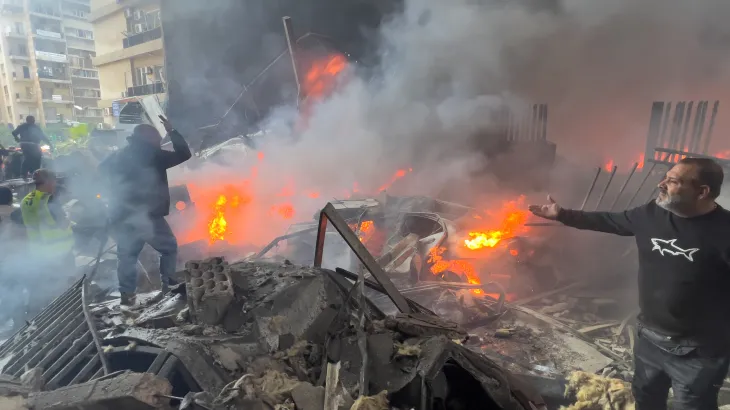
In the early hours, residents of central Beirut were jolted awake by the thunderous impact of missiles. The target was not a distant military outpost but a vibrant district known for its commercial and residential life. The precision of the strike suggests a high-value target, but the devastating human cost has become the immediate, horrifying focus.
Emergency services scrambled through rubble-strewn streets, fighting against time to pull survivors from the wreckage of collapsed buildings. Hospitals across the city were quickly overwhelmed, issuing urgent calls for blood donations and medical supplies. The death toll, which Lebanese health officials state has surpassed 100, is expected to rise as search and rescue operations continue. The scene is one of profound loss, with families torn apart and a city center transformed into a landscape of grief and destruction.
A Truce in Name Only: The Iranian Exception
This devastating attack comes amidst a complex web of regional ceasefires. Just days prior, Israel and Iran had agreed to a temporary halt in direct hostilities, a tense arrangement following months of shadow conflict. However, Israel has now drawn a stark geographical distinction. Officials have publicly clarified that the truce with Iran does not extend to Lebanese soil, where Israel reserves the right to target what it identifies as Iranian-backed militant assets.
This legal and rhetorical maneuvering points directly at Hezbollah, the powerful Lebanese political and military organization backed by Iran. Israel has long considered Hezbollah its most potent and immediate threat on its northern border. By excluding Lebanon from the Iran truce, Israel signals its intent to continue, and indeed intensify, its campaign against Hezbollah’s infrastructure, regardless of the catastrophic collateral damage.
Hezbollah’s Vow of “Severe” Retaliation
The response from Hezbollah was swift and unequivocal. In a fiery statement, the group’s leadership condemned the attack as a “massacre” and a “flagrant violation” of Lebanese sovereignty. They have vowed a “severe and disproportionate” military response, promising that Israel will “pay the price in blood.” This rhetoric sets the stage for a significant escalation in cross-border hostilities.
Historically, exchanges of fire between Hezbollah and Israel have been contained to border areas. A strike of this magnitude in the capital itself represents a dangerous new threshold. Analysts fear Hezbollah’s retaliation will be correspondingly severe, potentially targeting major Israeli cities and critical infrastructure, risking an all-out war that neither side may be able to easily control.
International Condemnation and Fears of a Wider War
The international community has reacted with alarm. The United Nations Secretary-General issued a statement expressing profound distress at the civilian deaths and calling for maximum restraint from all parties. Key European and Arab states have condemned the scale of the strike, urging de-escalation. The United States, while reiterating its support for Israel’s right to self-defense, has also expressed deep concern over the high civilian toll and the potential for regional conflagration.
Diplomats are now working frantically behind the scenes to prevent a full-scale war. The core fear is that this event could ignite a multi-front conflict, drawing in Iran directly and destabilizing the entire Levant. The existing truce between Israel and Iran now hangs by a thread, and the conflict’s geographical boundaries appear to have been violently erased.
The Human Cost and the Path Forward
Beyond the geopolitics lies an immense human tragedy. The over 100 lives lost in Beirut were those of shopkeepers, students, families, and children. The strike has inflicted a deep psychological wound on the Lebanese people, a nation already reeling from economic collapse and political paralysis.
*
- A City in Trauma: Beirut, which has painstakingly rebuilt from past conflicts, now faces another chapter of destruction and collective trauma.
*
- A Regional Tinderbox: The attack has poured gasoline on simmering regional tensions, with the potential for conflict to spread unpredictably.
*
- A Test for Diplomacy: The immediate future hinges on whether diplomatic channels can re-establish any form of deterrence or dialogue faster than military escalation takes hold.
A Precarious New Reality
The Israeli airstrike in central Beirut is more than a single military action; it is a pivotal moment that has rewritten the rules of engagement in the Middle East. By explicitly divorcing the Iran truce from its actions in Lebanon, Israel has adopted a high-risk strategy of localized, intense conflict. Hezbollah’s promised retaliation guarantees that the cycle of violence will accelerate.
The world now watches with trepidation. The delicate buffers that have prevented a regional war are crumbling, replaced by a volatile new calculus where the heart of a capital city is considered a legitimate battlefield. The coming days will determine whether the voices calling for restraint can prevail over the drums of war, or if the Middle East is on the cusp of its most destructive conflict in a generation. The lives of over 100 civilians in Beirut have become the first, terrible cost of this dangerous new chapter.