Benin’s Finance Minister Poised for Presidential Election Victory
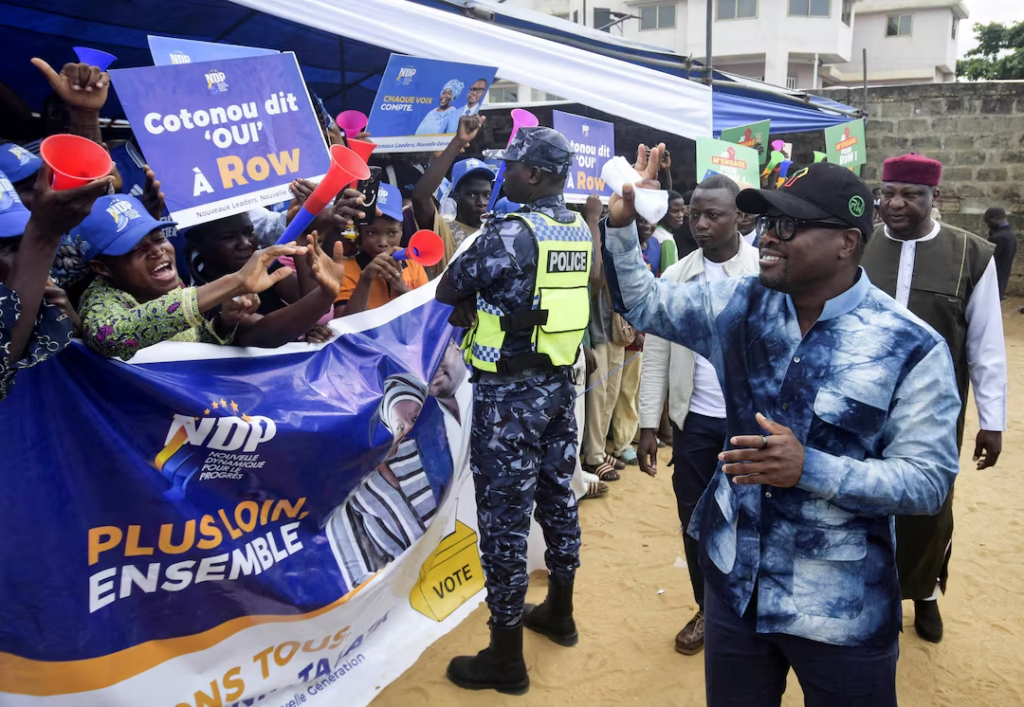
A significant political shift appears to be underway in the West African nation of Benin. Romuald Wadagni, the country’s respected Minister of Economy and Finance, is widely seen as the frontrunner in the upcoming presidential election. While official campaigning has yet to begin in earnest, political analysts and observers point to a powerful combination of economic credibility, institutional backing, and a carefully crafted public image that has positioned Wadagni for a potential first-round victory.
The Architect of Benin’s Economic Stability
Romuald Wadagni is not a career politician in the traditional sense. His rise to prominence is deeply rooted in his professional track record. Appointed as Finance Minister in 2016 under President Patrice Talon, Wadagni has been the chief architect of Benin’s macroeconomic framework for nearly a decade.
A Track Record of Growth and Reform
During his tenure, Benin has experienced a period of notable economic stability and growth, even amidst regional and global crises. Key achievements attributed to his leadership include:
- Sustained GDP Growth: Benin has consistently posted some of the highest economic growth rates in West Africa, averaging over 6% in recent years prior to global shocks.
- Fiscal Discipline: Wadagni has been credited with improving tax collection, streamlining public expenditure, and maintaining control over the national debt.
- Major Infrastructure Financing: He has successfully negotiated and secured funding for critical national projects, most notably the financing of the Glo-Djigbé Industrial Zone (GDIZ) and the modernization of the Port of Cotonou.
- International Credibility: Under his guidance, Benin has strengthened its standing with international financial institutions like the IMF and World Bank, and achieved a historic credit rating upgrade.
This economic stewardship forms the bedrock of his appeal. In a region where economies are often fragile, Wadagni presents himself as a safe pair of hands—a competent manager who can safeguard and build upon the nation’s progress.
The Power of Incumbency and the “Talon Factor”
Perhaps the most decisive factor in Wadagni’s favor is the perceived, though not yet official, endorsement of outgoing President Patrice Talon. Benin’s political landscape has been fundamentally reshaped during Talon’s two terms, with a focus on development and a controversial overhaul of the electoral system that sidelined traditional opposition parties.
Wadagni is widely viewed as President Talon’s chosen successor. This association brings immense advantages:
- Access to the machinery and resources of the incumbent government.
- The implicit transfer of credibility from Talon’s base of supporters who have benefited from the administration’s policies.
- A clear narrative of continuity, suggesting that the path of economic development and “Talonomics” will persist.
This dynamic has led many to conclude that the election is Wadagni’s to lose. The opposition, while vocal, remains fragmented and faces significant hurdles in mounting a cohesive challenge to a candidate with such strong institutional support.
Crafting the Candidate: From Technocrat to Statesman
A crucial aspect of Wadagni’s campaign has been the strategic evolution of his public persona. For years, he was the quiet technocrat in the background—the expert managing spreadsheets and international negotiations. Recently, a deliberate effort has been made to introduce him to the populace as a relatable and visionary leader.
This “coasting” phase, as some have called it, involves:
- High-Visibility Diplomacy: Representing Benin at major international summits, positioning him as a statesman on the global stage.
- Targeted Public Appearances: Gradually increasing his visibility at national events, cultural ceremonies, and community engagements beyond the finance ministry.
- Controlled Media Narrative: Leveraging both state and sympathetic private media to highlight his achievements and personal story.
The goal is to transform his image from that of a brilliant accountant to a compassionate and capable future president who understands both the numbers and the people they affect.
Challenges and the Road Ahead
Despite the favorable outlook, the path to the presidency is not without potential obstacles. Wadagni’s deep association with the Talon administration is a double-edged sword. While it grants him strength, it also ties him to the controversies of the past eight years.
Key challenges include:
- Perception of Elitism: His technocratic background and elite economic training could be framed by opponents as disconnecting him from the everyday struggles of ordinary Beninese citizens.
- Accountability for Shortcomings: As Finance Minister, he will be held accountable for any persistent economic hardships, including the high cost of living, youth unemployment, and perceived inequalities in the distribution of growth.
- The Desire for Change: After a decade of Talon’s rule, some voters may simply desire a new direction and fresh faces, irrespective of economic metrics.
- Regional and Social Dynamics: Benin’s complex regional and ethnic political calculus will still play a role, and Wadagni must build a coalition that transcends his native southern base.
A New Chapter for Benin?
The potential election of Romuald Wadagni would represent a significant moment for Benin. It would mark a transition of power within the same political project, emphasizing continuity, technical competence, and economic management as the primary qualifications for leadership.
If successful, a Wadagni presidency would likely focus on:
- Consolidating and expanding the major infrastructure and industrial projects initiated under Talon.
- Deepening regional economic integration and positioning Benin as a trade and logistics hub.
- Navigating the complex security challenges of the Sahel region that spill over into neighboring countries.
- Addressing social pressures by ensuring that macroeconomic growth translates into more tangible improvements in living standards for all citizens.
As Benin approaches election day, all signs point to Romuald Wadagni entering the race with formidable momentum. His journey from the finance ministry to the presidential palace seems increasingly probable. The coming months will test whether his record as an economic manager and his carefully curated public image can convince a majority of Beninese voters that he is not just the candidate of continuity, but the right leader for the nation’s future. The world will be watching to see if this West African democracy continues on its path of development-focused governance under a new, yet familiar, helm.