
Diego Maradona Death Trial: Doctors Face Charges in Argentina
The world watched in shock on November 25, 2020, as news broke that Diego Armando Maradona, one of soccer’s most iconic and controversial legends, had died at his home outside Buenos Aires. The initial cause was listed as acute pulmonary edema, a heart condition. However, the story that has unfolded since is one of alleged negligence, systemic failure, and a desperate quest for accountability. Today, eight medical professionals stand trial in Argentina, charged in connection with the football icon’s death, turning a national tragedy into a landmark legal case.
The Final Days: A Descent into Chaos
To understand the trial, one must look at Maradona’s final weeks. After brain surgery for a subdural hematoma in early November 2020, he was discharged to a rented house in the private neighborhood of Tigre, where he was supposed to receive 24/7 care and rehabilitation. This period, intended for recovery, is now the central focus of the prosecution.
Prosecutors allege that Maradona’s treatment was riddled with “omissions and recklessness.” They paint a picture of a medical team that failed their patient at nearly every turn. Key allegations include:
- Inadequate and irregular monitoring of Maradona’s vital signs and overall condition.
- A lack of a coherent, coordinated care plan between the various doctors and nurses involved.
- Leaving the football legend, a man with a known history of addiction and severe heart issues, alone for extended, critical periods.
- Failing to act with the urgency required by his deteriorating health in the days leading up to his death.
The defense, naturally, contests this narrative. Lawyers for the accused have argued that Maradona was a difficult patient who was ultimately responsible for his own health, and that the medical team did their best under complex circumstances. They suggest he was in a terminal state and that his death was inevitable.
The Accused: Who is on Trial?
The trial, which began in late 2023, involves eight individuals who were part of Maradona’s private care team. They face charges of “simple homicide with eventual intent,” a legal term in Argentina that implies the accused knew their actions could lead to a person’s death but proceeded anyway.
The Key Figures Include:
- Neurosurgeon Leopoldo Luque: The surgeon who operated on Maradona’s brain and was a central figure in organizing his post-operative care. Prosecutors claim he was the de facto leader of a disorganized medical team.
- Psychiatrist Agustina Cosachov: Part of the team managing Maradona’s overall treatment plan. Her role in prescribing medication and assessing his mental state is under scrutiny.
- Other Doctors and Nurses: Several other physicians and nursing coordinators are charged, accused of failing to properly execute their duties and monitor the patient.
The trial is being heard by a panel of three judges, and if convicted, the defendants face sentences ranging from 8 to 25 years in prison.
A Nation’s Grief Turns to Anger
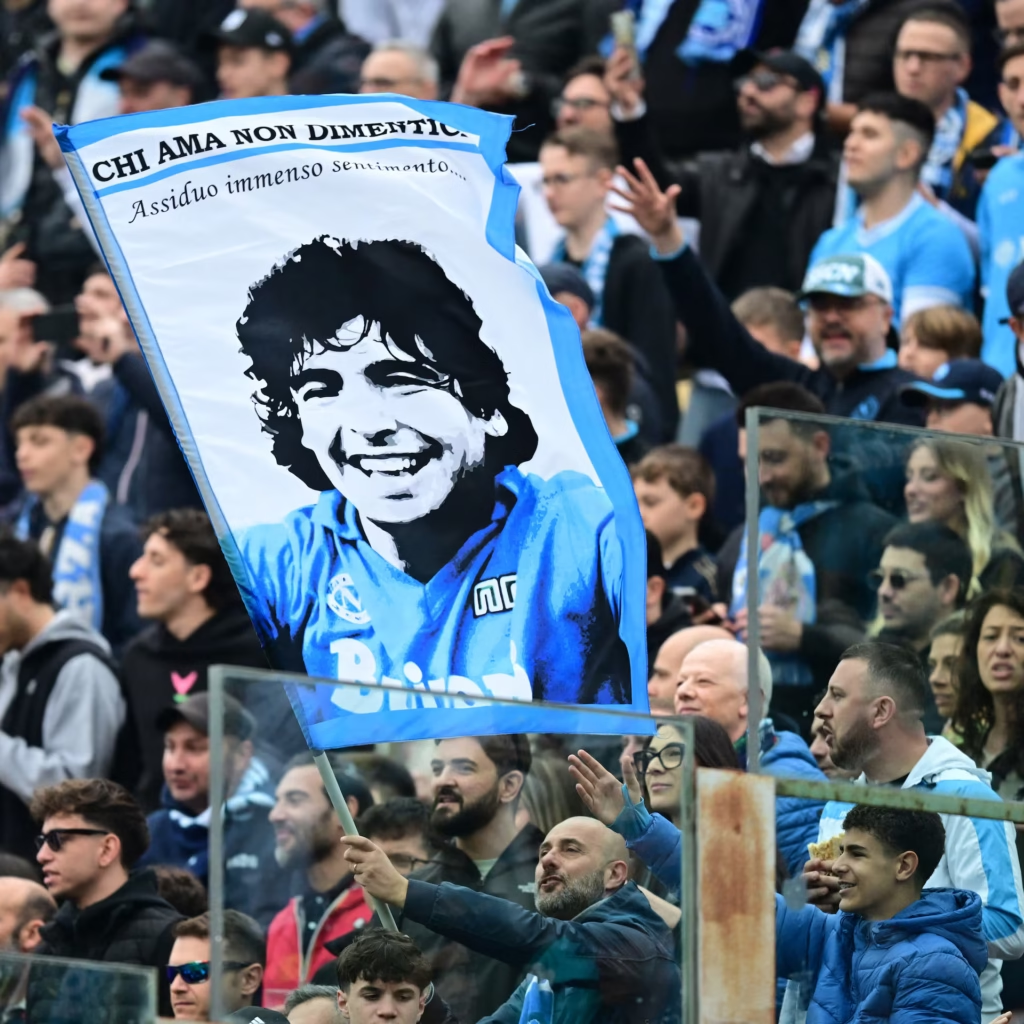
For Argentines, Maradona was more than a footballer; he was a cultural symbol, a source of immense national pride, and a flawed hero with whom millions identified. His death was met with an outpouring of grief, with tens of thousands lining the streets for his funeral. That grief quickly morphed into suspicion and then outrage as details of his final care emerged.
A board of medical experts convened to investigate the death delivered a scathing report in 2021. It concluded that Maradona’s treatment was full of “deficiencies and irregularities” and that he was essentially left to his fate. The report stated that he “showed signs of agony for approximately 12 hours” and that he “did not have full use of his mental faculties” in his final days, making him utterly dependent on his caregivers.
This expert opinion solidified public sentiment and gave legal weight to the family’s accusations. Maradona’s daughters have been vocal in their pursuit of justice, arguing that their father was failed by those he trusted most.
Broader Implications: A Trial That Transcends Football
While the case centers on a global superstar, its implications reach far beyond the world of sports. It raises profound questions about medical ethics, accountability for private in-home care, and the treatment of individuals with complex, high-profile health issues.
Key questions being highlighted by this trial:
- The Standard of Care for VIPs: Did Maradona’s fame lead to a fragmented, “too many cooks” approach where no single professional took ultimate responsibility?
- Patient Agency vs. Professional Duty: To what extent can a patient’s non-compliance absolve medical professionals of their duty to provide adequate care, especially when the patient is vulnerable?
- Oversight of Private Home Care: The case exposes potential gaps in how intensive, multi-disciplinary home care is regulated and supervised.
A Long Road to a Verdict
The trial is expected to last for months, with hundreds of witnesses slated to testify. The proceedings are being closely followed not just in Argentina, but around the globe. For the football world, it is a somber epilogue to the life of a genius who brought unparalleled joy and drama to the pitch. For the medical and legal communities, it is a cautionary tale and a potential precedent.
The courtroom in San Isidro has become the unlikely stage for the final chapter of Diego Maradona’s story. No verdict can bring back “El Diego,” nor diminish his legacy on the field. But for his family, his fans, and a nation still mourning, this trial represents a search for truth and a demand that even a legend deserves dignity and competent care in his final hours. The world now waits to see if the justice system will deliver the accountability it seeks.

