
Canada’s Federal Spring Economic Update Announced for April 28
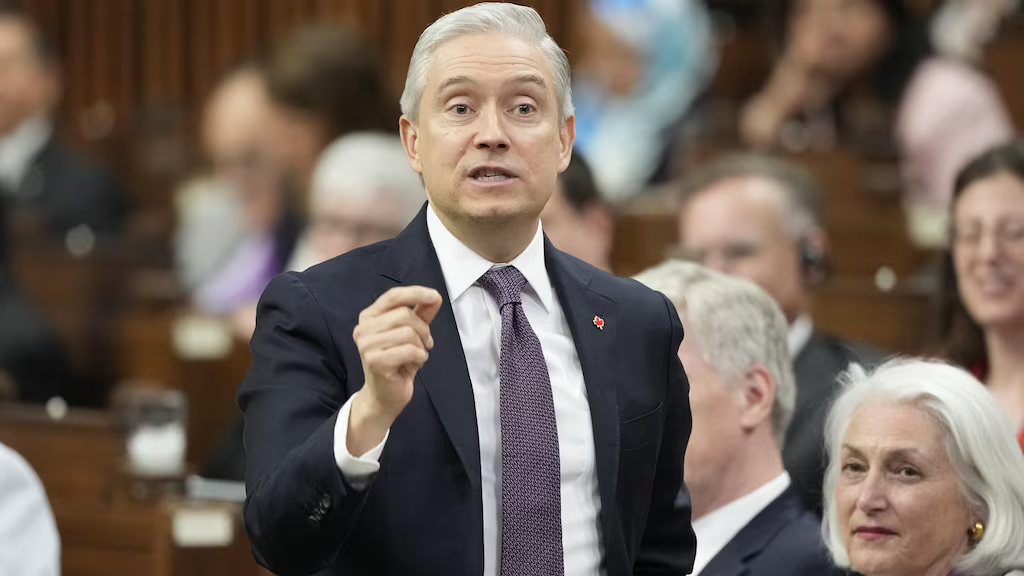
Mark your calendars, Canada. On April 28, Deputy Prime Minister and Finance Minister Chrystia Freeland will present the federal government’s highly anticipated spring economic update. The date was confirmed by Innovation Minister François-Philippe Champagne, setting the stage for a pivotal moment in Canada’s economic planning. This fiscal snapshot arrives at a critical juncture, with Canadian households and businesses grappling with persistent challenges and political debates over federal spending reaching a fever pitch.
More than just a routine report, this update will serve as a crucial diagnostic of the nation’s financial health. It will provide a revised economic forecast, detail the current state of federal coffers, and offer Canadians a clearer picture of the fiscal path the Liberal government intends to follow. As the foundational precursor to the full 2025 budget, the decisions and projections revealed on April 28 will have real-world implications for your wallet, your community, and the country’s economic trajectory.
The Economic Backdrop: A Nation Under Pressure
The tabling of this update does not occur in a vacuum. It comes against a backdrop of significant domestic pressure, primarily centered on a single, pervasive issue: affordability.
From soaring grocery bills and elevated mortgage costs to rising rents and higher prices at the pump, the financial squeeze on Canadian families is the dominant economic reality. This persistent pressure has shaped the political landscape, forcing all parties to center their messaging on economic relief and fiscal responsibility. The government is under intense scrutiny to demonstrate not only empathy but also a credible, actionable plan to address these daily struggles.
Housing: The Unignorable Crisis
Intertwined with the broader affordability crisis is the specific, acute challenge of housing. The dream of homeownership feels increasingly out of reach for younger Canadians, while rental markets in cities across the country exhibit severe stress. This issue was a top-tier priority during the recent federal cabinet retreat, signaling its expected prominence in the upcoming update. Stakeholders will be watching closely for any new signals, funding re-allocations, or policy tweaks aimed at accelerating housing supply and providing relief to renters and prospective buyers.
Beyond the Budget: What a Spring Economic Update Entails
It’s important to understand what this April 28 presentation is—and what it is not. This is not the federal budget; that larger, more comprehensive fiscal plan is slated for 2025. Instead, the spring economic update, often called the “fiscal snapshot,” serves several key functions:
- Revised Economic and Fiscal Projections: It updates the economic forecasts (like GDP growth, unemployment, and inflation) and fiscal numbers (like the deficit and debt-to-GDP ratio) last presented in the 2023 Fall Economic Statement. Given the volatile global and domestic landscape, these revisions are critical.
- Mid-Year Check-In: It acts as a report card on the government’s year-to-date spending and revenue collection, measuring actual performance against previous plans.
- Political Signaling: It is a strategic tool for the government to communicate its priorities, respond to immediate pressures, and set the narrative ahead of the next budget. It can announce new, focused spending initiatives or tax measures without the full scope of a budget.
In essence, the update answers the questions: Where is the economy actually headed, and are we on track with our fiscal plan?
The Political Arena: A Battle of Narratives
The release of the update will immediately ignite a fierce political battle. The opposition parties are poised to dissect every line, with a pre-emptive focus on the themes of government spending and fiscal restraint.
The Conservative Party, under Pierre Poilievre, has consistently hammered the government for what it frames as inflationary deficit spending. They will likely judge the update solely through the lens of whether it shows a concrete path to a balanced budget and lower taxes. The NDP, whose supply-and-confidence agreement sustains the minority Liberal government, will be evaluating the update for tangible, new actions on affordability, likely pushing for enhanced supports for low- and middle-income Canadians.
For the Liberal government, the challenge is to walk a tightrope. It must signal seriousness about fiscal discipline to counter criticism and maintain market confidence, while simultaneously demonstrating tangible progress and empathy on the affordability issues that are eroding its public support. The tone and content of Minister Freeland’s speech will be parsed for this delicate balance.
The Cabinet Retreat: A Prelude to Action
The recent cabinet retreat was undoubtedly a framing session for this update. When the highest-ranking government ministers sequester themselves to discuss priorities, it directly shapes upcoming policy announcements. The heavy focus on affordability and housing at that retreat is a strong indicator that these themes will be front and center on April 28. The update may unveil specific, targeted measures that were refined during those discussions.
What Canadians Should Look For
For families, entrepreneurs, and investors, the spring economic update is more than political theater. It provides vital clues about the economic landscape for the coming year. Here’s what to watch for when the document is released:
Key Indicators and Projections
Pay close attention to the revised forecasts for inflation and interest rates. The government’s outlook on when the Bank of Canada might further lower rates will influence everything from mortgage renewals to business investment. Similarly, updated deficit and debt projections will signal the government’s fiscal capacity for future programs.
Targeted Policy Announcements
While not a budget, the update often includes new spending or tax changes. Be on the lookout for potential measures in these areas:
- Housing Supply & Affordability: New financing tools, accelerator funds for municipalities, or enhancements to existing programs like the FHSA.
- Cost-of-Living Supports: While large-scale new spending is unlikely, tweaks to benefit programs (like the Grocery Rebate or GST Credit) or sector-specific initiatives (e.g., tackling “junk fees”) could be announced.
- Productivity and Growth: Signals related to investment in innovation, AI, or clean technology to spur long-term economic capacity.
The Minister’s Tone
The narrative crafted by Minister Freeland will be as important as the numbers. Will the emphasis be on steady stewardship in turbulent times, or on a more transformative agenda? Her language regarding fiscal anchors and future spending will be meticulously analyzed by economists and political opponents alike.
The Road to 2025: Setting the Stage
Ultimately, the April 28 spring economic update is the opening act for the main event: the 2025 federal budget. It sets the technical and political stage upon which next year’s full fiscal plan will be built. The choices announced—or deferred—will define the government’s economic narrative as it moves closer to an election mandated for October 2025.
For Canadians feeling the pinch, this update is a signal of whether immediate relief is on the horizon. For businesses, it provides crucial forecasting data. And for the political world, it is the next major battlefield in the ongoing debate over Canada’s economic future. All eyes will be on Parliament Hill on April 28 as Chrystia Freeland rises to present a picture of a nation at a economic crossroads, charting the course for the challenging months ahead.

