
How Iran Conflict Risks Slowing Global Economic Growth
The International Monetary Fund (IMF) has issued a sobering update to its global economic outlook, pointing to escalating geopolitical tensions as a primary threat to worldwide stability. In its latest assessment, the IMF has downgraded its growth forecast for the global economy, citing the direct and indirect impacts of the ongoing conflict involving Iran as a key destabilizing force. This revision signals a critical juncture where geopolitical flashpoints are no longer isolated events but powerful drivers with the potential to derail the fragile post-pandemic recovery.
The warning from one of the world’s most prominent financial institutions underscores a harsh reality: in our interconnected global system, a conflict in one region can send shockwaves through energy markets, supply chains, and investor confidence worldwide. The IMF’s analysis suggests we are now witnessing this domino effect in real-time.
The IMF’s Revised Forecast: A Numbers-Driven Warning
While precise figures are regularly updated, the core message from the IMF’s April 2026 report is clear and concerning. The institution has markedly lowered its projections for global GDP growth for the current year and the near term. This downgrade is attributed not to typical cyclical economic factors, but predominantly to the heightened risks emanating from the Middle East.
The IMF’s models account for several disruption channels, including:
- Energy Price Volatility: The immediate and most visible impact of regional conflict.
- Trade Route Disruptions: Critical shipping lanes, including the Strait of Hormuz, are under threat.
- Investor Sentiment and Market Jitters: Geopolitical uncertainty leads to capital flight and risk aversion.
- Broader Regional Instability: The potential for the conflict to widen, drawing in other state and non-state actors.
This formal downgrade moves the conversation from speculative worry to concrete, data-backed concern, urging policymakers and businesses to prepare for a more turbulent economic environment.
The Primary Channels of Economic Disruption
The conflict’s ability to slow global growth operates through several distinct but interconnected mechanisms. Understanding these channels is key to grasping the full scope of the risk.
1. Energy Market Shockwaves
The Middle East remains a cornerstone of global energy supplies. Any sustained conflict involving Iran, a major oil and gas producer, triggers immediate fears of supply shortages. Even the threat of disrupted flows through the Strait of Hormuz—a chokepoint for about one-fifth of the world’s oil supply—can cause prices to spike. Higher energy costs act as a tax on consumers and businesses everywhere, squeezing disposable income, increasing production costs, and fueling inflationary pressures that central banks struggle to contain.
2. The Fragility of Global Supply Chains
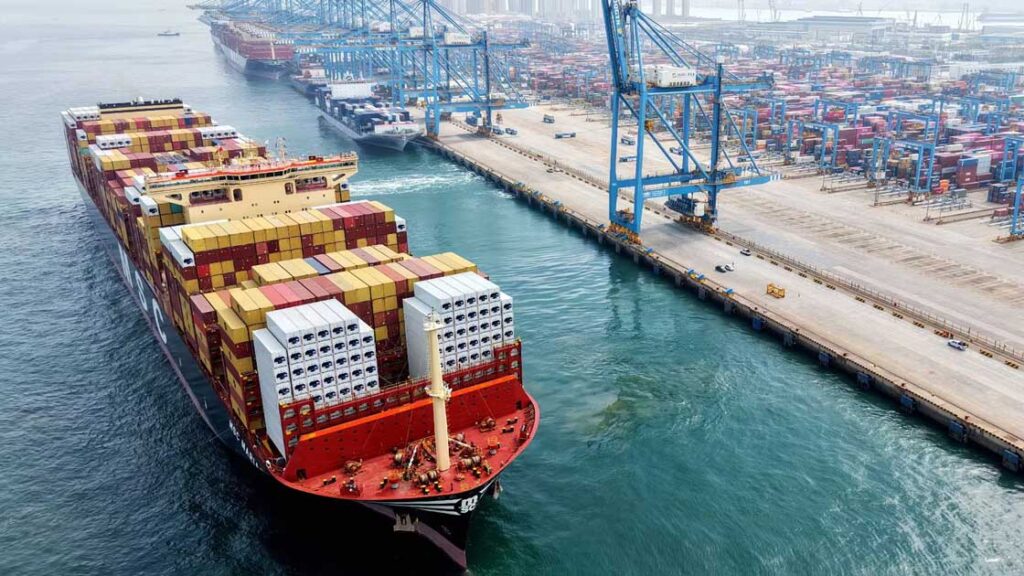
Global trade networks, still recovering from recent shocks, are highly vulnerable to regional instability. The waters around the Arabian Peninsula are vital for cargo moving between Asia, Europe, and Africa. Attacks on shipping or increased military activity force costly rerouting, delays, and skyrocketing insurance premiums. This disrupts the timely delivery of everything from consumer electronics to industrial components, creating bottlenecks that stifle production and contribute to goods inflation worldwide.
3. The Chill on Investment and Confidence
Geopolitical uncertainty is the enemy of long-term investment. The IMF highlights how businesses, facing the prospect of prolonged instability, may delay or cancel capital expenditure plans. Similarly, financial markets react with increased volatility, as investors seek safe-haven assets like gold and the U.S. dollar. This tightening of financial conditions makes it more expensive for countries and companies to borrow, further dampening economic activity.
Regional and Global Economic Fallout
The impacts are not felt uniformly. Neighboring economies in the Middle East and North Africa face the most direct exposure, with potential hits to tourism, foreign direct investment, and domestic stability. However, the IMF’s warning is truly global in nature.
Europe, with its historical energy dependence and close geographical ties, is particularly susceptible to both energy shocks and new waves of migration driven by conflict. Emerging markets across Asia and Africa, which are often more sensitive to oil price fluctuations and external financing costs, could see hard-won development gains erode. Even major economies like the United States and China, while more insulated, are not immune to the drag effects of slower global trade and weakened demand.
Navigating the Crisis: Policy Responses and Mitigation
The IMF’s report is not merely a diagnosis; it is a call to action. It outlines the difficult balancing act facing policymakers in this complex environment.
- Monetary Policy Dilemma: Central banks may face conflicting pressures from inflation caused by supply shocks and growth slowdowns, complicating interest rate decisions.
- Strategic Reserves and Diversification: The crisis underscores the urgency for nations to leverage strategic petroleum reserves and accelerate investments in renewable energy to reduce long-term dependency on volatile regions.
- Trade Resilience: Governments and corporations are being pushed to further diversify supply chains and build in greater redundancy to withstand regional disruptions.
- Diplomatic Engagement: Ultimately, the IMF’s economic warning reinforces the critical need for sustained diplomatic efforts to de-escalate tensions and create a stable foundation for growth.
A Precarious Juncture for the World Economy
The IMF’s decision to downgrade its global growth forecast is a significant marker. It formally acknowledges that the Iran conflict has evolved from a regional security issue into a material threat to worldwide economic prosperity. The report makes clear that the path of the global economy in 2026 and beyond is now inextricably linked to the trajectory of geopolitical events in the Middle East.
For business leaders, investors, and policymakers, the message is to brace for increased volatility and prioritize resilience. The era where geopolitics could be treated as a secondary concern for economic forecasting is over. In today’s world, the two are deeply fused, and stability in one is a prerequisite for growth in the other. The world now watches, hoping that economic necessity can help pave a path toward diplomatic resolution before the current slowdown deepens into a more severe and widespread downturn.

