
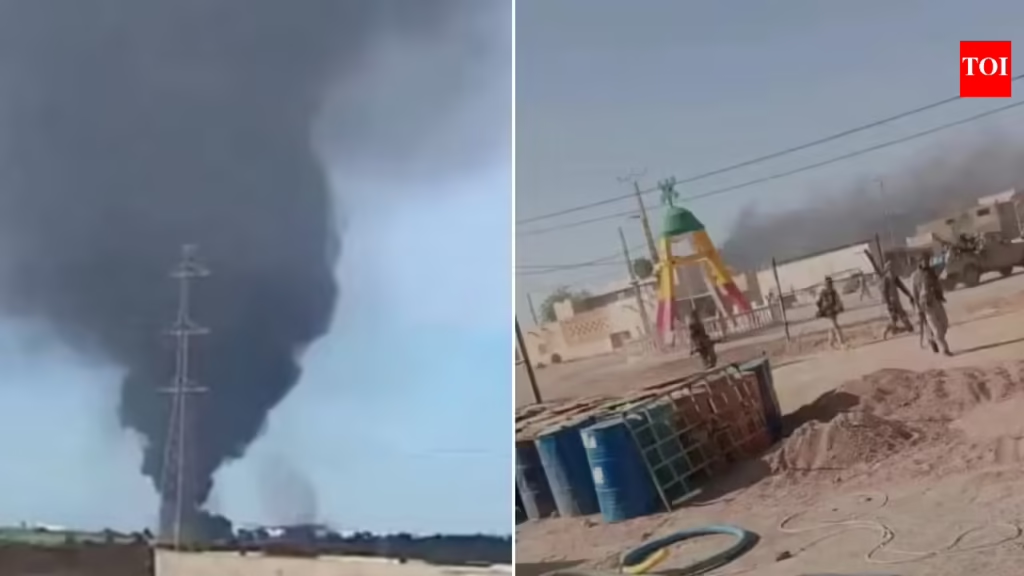
Coordinated Terror Attacks in Mali: Gunfire and Explosions Rock Bamako and Multiple Cities
In a sharp escalation of violence in the Sahel, a wave of coordinated attacks has shaken Mali. Gunfire, explosions, and heavy blasts were reported in the capital, Bamako, as well as in several other cities, highlighting the fragile security situation across the country.
These attacks mark a significant intensification of conflict in a nation already struggling with instability, raising concerns about regional security and long-term governance.
The Assault on Bamako: A Capital Under Siege
The most alarming developments came from Bamako, where residents reported loud explosions and sustained gunfire across multiple neighborhoods.
Key Targets and Tactics
Initial reports suggest a coordinated and strategic assault:
- Targeted institutions: Attacks occurred near military facilities and key infrastructure, including Bamako-Sénou International Airport
- Heavy weaponry: Witnesses described the use of machine guns, rocket-propelled grenades, and improvised explosive devices
- Possible hostage situations: Some reports indicate attackers may have taken hostages, echoing past incidents like the Radisson Blu hotel attack in Bamako
The Immediate Human Impact
The attacks caused widespread panic:
- Civilian casualties reported, though exact numbers remain unclear
- Schools, businesses, and offices shut down
- Residents stayed indoors as security forces responded
- Flights disrupted and roads blocked by checkpoints
Attacks Spread Across Other Cities
The violence extended beyond the capital, indicating a highly coordinated effort.
Urban Centers Affected
- Ségou: Reports of gunfire and explosions
- Mopti: Renewed clashes in a known conflict zone
- Kati: Attacks near a major army base
This multi-city approach stretched security forces thin and forced authorities to escalate emergency measures.
Who is Behind the Attacks?
No group immediately claimed responsibility, but suspicion falls on known extremist organizations.
The Main Groups
- Jama’at Nusrat al-Islam wal-Muslimin (JNIM)
- Islamic State in the Greater Sahara (ISGS)
- Various local militias operating across the region
These groups have increasingly shifted toward complex, coordinated urban attacks.
Strategic Intent
Targeting major cities serves multiple purposes:
- Undermines public confidence in the government
- Disrupts economic activity
- Draws global attention to the conflict
The Political Fallout: Pressure on the Junta
The attacks pose a major challenge to Mali’s military leadership, which came to power after coups in 2020 and 2021.
The junta had promised to restore security, partly by replacing French forces with support from the Wagner Group (also known as Africa Corps).
Now, questions are growing:
- Can the current strategy ensure national security?
- Will public frustration increase?
- How will international relationships evolve?
Regional and Global Implications
The crisis in Mali is part of a wider Sahel instability.
A Spreading Threat
Neighboring countries like Burkina Faso and Niger face similar insurgencies.
Coastal nations are also at risk, as violence spreads southward.
Humanitarian Impact
The region faces a growing humanitarian crisis:
- Millions displaced
- Limited access to food and services
- Ongoing insecurity affecting daily life
A Deeper Look: Root Causes of Instability
The conflict in Mali is driven by multiple overlapping factors:
- Weak governance and limited state presence in rural areas
- Ethnic tensions exploited by armed groups
- Climate pressures such as drought and resource scarcity
- Spillover from regional conflicts, including the Libyan Civil War
These conditions create an environment where extremist groups can operate and recruit.
Final Thoughts
The attacks on Bamako and other cities highlight the ongoing challenges facing Mali.
While immediate efforts focus on restoring order, the deeper issues remain unresolved. Long-term stability will require more than military responses—it will depend on governance, economic development, and regional cooperation.
As the situation unfolds, the events serve as a stark reminder: the Sahel crisis is far from contained, and its impact reaches far beyond Mali’s borders.

