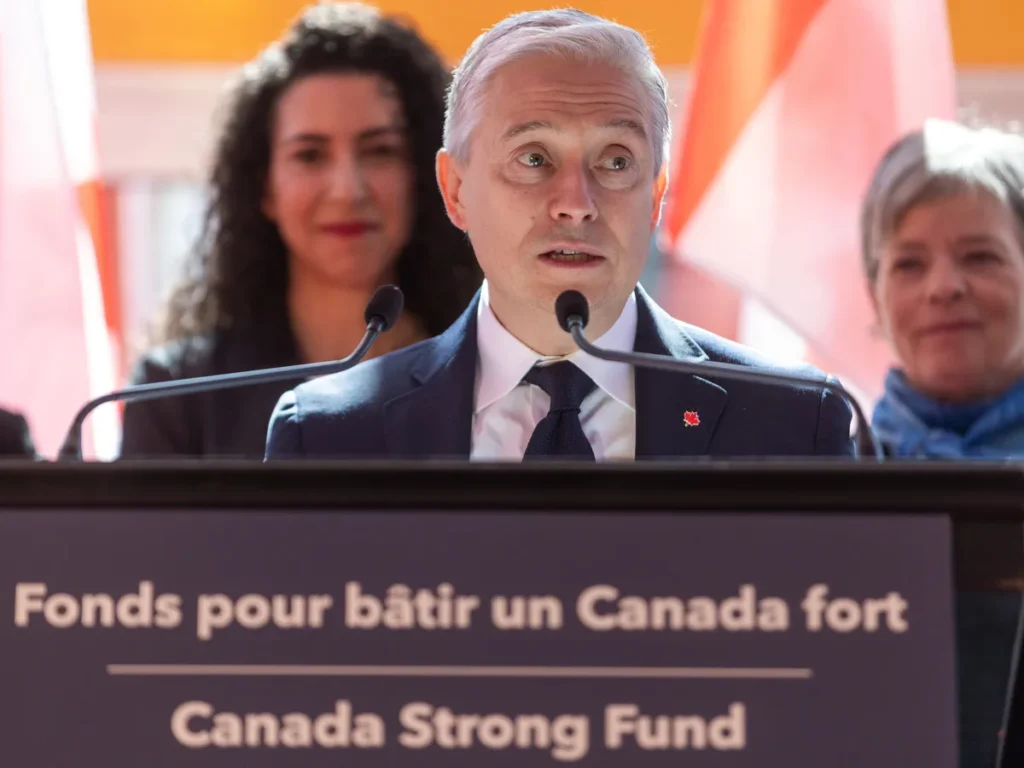
Canada’s $25 Billion Sovereign Wealth Fund: A Band-Aid on a $600 Billion Wound?
When Ottawa announced a $25 billion sovereign wealth fund, the reaction from economists and investment veterans was telling: a collective shrug. The fund, intended to anchor Canada’s long-term economic resilience, sounds massive in a headline. But peel back the layer of political spin, and you find a number that barely registers against the country’s structural investment deficits.
Norway’s sovereign fund sits at roughly $1.7 trillion. Singapore’s Temasek manages over $400 billion. Canada—the G7 economy with the third-largest oil reserves on the planet—is starting its own fund decades late with a sum that would cover less than half of one year’s worth of infrastructure needs. This isn’t a strategy. It’s a symbolic gesture.
The Real Cost of Inaction: A $600 Billion Deficit
Let’s put that $25 billion in context. The Canadian Infrastructure Report Card estimates the country’s total infrastructure deficit—roads, bridges, transit, water systems—exceeds $600 billion. That figure predates the recent housing crisis and the green energy transition demands. Add in the need for new power grids, carbon capture facilities, and affordable housing stock, and the number balloons further.
Consider these benchmarks:
- Annual investment needed for energy transition: $50–60 billion per year, according to the Canadian Climate Institute.
- Cost of one major LNG terminal: $10–20 billion—a single project could swallow half the fund.
- Toronto’s housing shortfall alone: requires an estimated $100 billion in public and private capital over the next decade.
The $25 billion fund, even if invested aggressively at a 7% annual return, generates less than $2 billion per year in additional revenue. That’s not enough to patch a pothole epidemic, let alone transform Canada’s productivity trajectory.
What Norway Got Right That Canada Didn’t
The comparison to Norway is inevitable—and uncomfortable. Norway started its sovereign wealth fund in 1996, channeling oil revenues into a globally diversified portfolio. Today, that fund owns roughly 1.5% of all publicly traded stocks in the world. Canada, meanwhile, has one of the lowest savings rates among resource-rich nations.
Norway’s success wasn’t magic. It involved:
- Fiscal discipline: Governments agreed to save the vast majority of oil revenue, not spend it.
- Early start: The fund began when production was still ramping up, allowing decades of compounding.
- Political consensus: The fund’s mandate was protected from short-term budget cycles.
Canada has larger proven oil reserves than Norway. But instead of building a war chest during the commodity boom of the 2000s, the country spent the windfall on tax cuts, transfers, and provincial spending. The $25 billion fund now is effectively a catch-up contribution—and a small one at that.
The Investment Challenge Isn’t Capital—It’s Coordination
Perhaps the most critical point from the Financial Post analysis is this: Canada doesn’t have a capital shortage. It has a capital direction problem.
Pension funds like CPP Investments and Ontario Teachers’ manage over $2 trillion in assets combined. They are actively looking for domestic opportunities—but they face a maze of obstacles:
- Regulatory fragmentation: 13 provincial regulators, each with different rules for energy, mining, and infrastructure.
- Interprovincial trade barriers: A worker licensed in Ontario can’t build a pipeline in Alberta without new credentials.
- Permitting uncertainty: Major projects can take 10–15 years to get approval, scaring off private equity.
A well-structured $25 billion fund could theoretically act as a catalyst—de-risking early-stage projects, providing anchor capital, and signaling stability to international investors. But the fund’s current design lacks the scale and mandate to solve these coordination failures. It’s like trying to untangle a shipping container jam by handing out a single pair of scissors.
Why $25 Billion Is a Rounding Error in a $2 Trillion Economy
Canada’s GDP exceeds $2 trillion. The federal government’s annual budget is over $500 billion. Against those numbers, $25 billion is roughly 1.25% of GDP—a one-time injection that will be absorbed in less than a fiscal quarter.
Consider what $25 billion would actually buy:
- Half a cross-country high-speed rail line.
- Approximately one year’s worth of health-care spending growth.
- Less than 10% of what the U.S. allocated for semiconductor manufacturing in the CHIPS Act.
To have a real impact on Canada’s productivity, competitiveness, and energy transition, a sovereign wealth fund would need to be capitalized at 10 to 20 times the current amount—and sustained through a dedicated percentage of resource revenues, akin to Norway’s model.
The Opportunity Cost of Doing Too Little
The danger of a small, underfunded sovereign wealth fund is that it creates the illusion of action. Politicians can point to it as evidence of forward thinking, while the underlying structural problems—low business investment, lagging R&D, and interprovincial friction—remain untouched.
Experts have long argued that Canada’s true competitive challenge is not a lack of ambition but a lack of execution discipline. The $25 billion fund risks becoming another checkmark on a to-do list that never gets fully crossed off.
A Better Path Forward
To turn the fund from a Band-Aid into a lever of transformation, three changes are necessary:
- Scale up aggressively: Commit to annual contributions tied to resource revenues or a portion of corporate taxes.
- Mandate for domestic co-investment: Use the fund’s capital to unlock private investment in strategic sectors like clean energy, critical minerals, and housing.
- Link to regulatory reform: Tie fund disbursements to federal-provincial agreements that reduce red tape and speed up project approvals.
Without these measures, the $25 billion will be remembered not as the start of Canada’s sovereign wealth journey, but as the moment the country chose optics over economic transformation.
Final Thought: Size Matters in Sovereign Wealth
Sovereign wealth funds work when they are large enough to buffer national shocks, catalyze entire industries, and generate returns that meaningfully lift GDP. Canada’s $25 billion fund is a start. But standing alone, it’s a rounding error in a sea of unmet investment needs.
The question isn’t whether Canada needs a wealth fund. It’s whether the country has the political will to build one that actually matters.