Waterloo Region and Guelph Municipal Elections 2026: Nominations Open, Launching a Pivotal Race for Local Leadership
The countdown to the next chapter of local governance in one of Ontario’s fastest-growing corridors has officially begun. As nomination papers became available on the first eligible day, prospective candidates across Waterloo Region and Guelph can now formally put their names forward for mayor, city and township councils, and school board trustee positions. The opening of nominations isn’t just a procedural milestone; it signals the start of campaigns that will shape how we tackle housing affordability, infrastructure strain, climate resilience, and downtown vitality for the next four years.
Whether you’re a seasoned political observer, a first-time candidate testing the waters, or a resident eager to understand what’s at stake, this guide unpacks everything you need to know about Day One of nominations, critical deadlines, the offices up for grabs, and the strategic landscape that could define Waterloo Region and Guelph’s political future.
Day One of Nominations: What It Actually Means
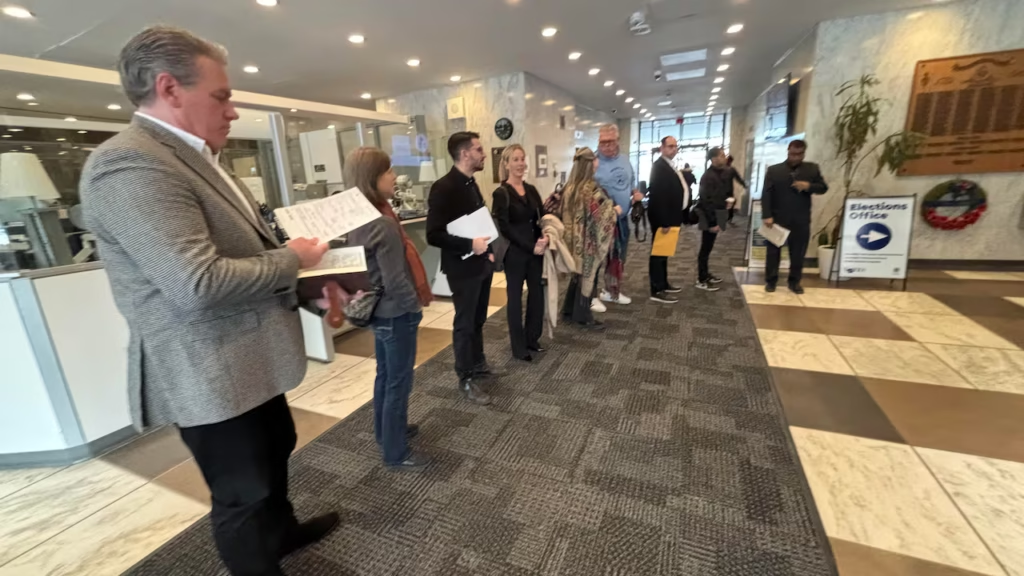
Monday marked the first day that individuals intending to run in the October 26, 2026 municipal elections could file their nomination papers with the clerk’s office of their respective municipality. In Ontario, the Municipal Elections Act dictates a specific window for nominations, and this opening day carries both symbolic and practical weight. Early filers can start raising funds, begin campaigning in earnest, and build name recognition while others are still deliberating.
Municipal clerks in Kitchener, Waterloo, Cambridge, the four townships (Woolwich, Wilmot, Wellesley, and North Dumfries), and the City of Guelph are now accepting forms. While no one expects a flood of registrations on the very first morning—many serious contenders spend weeks gathering signatures and lining up support—keen observers will be watching to see whether incumbents file early to signal confidence or whether a surprise challenger emerges to shake things up before Labour Day.
Why These Elections Matter More Than Ever
Waterloo Region’s population is projected to hit one million residents by 2051, and Guelph continues to experience intense growth pressure. The incoming councils will inherit massive decisions: zoning reforms to enable gentle density, transit expansion including the next phase of ION light rail, protective services budgeting, and long-term water and wastewater master plans. At the school board level, trustees will navigate enrollment surges, new school construction backlogs, and evolving provincial curriculum directives.
Local government controls the built environment you interact with every day—the bus you ride, the permit that gets your basement apartment legalized, the park where your kids play, and the snowplow that clears your street. Voter turnout for municipal elections, however, typically hovers below 35 percent. Day One of nominations is a reminder that the pool of decision-makers is being formed right now, and that engaged citizens have a narrow window to either run or rigorously vet those who do.
Deadlines That Candidates and Voters Must Mark
Nomination Period
- Opens: The first day nominations are available, typically by early spring (as happened this cycle).
- Closes: Nomination Day in 2026 is expected on the third Friday in August, generally around 2 p.m. Late filings are not accepted.
- Withdrawal Deadline: Candidates who change their minds can withdraw by the close of nominations. After that, names remain on the ballot even if a candidate suspends their campaign.
Key Election Dates (Projected)
- Voters’ List Revisions Period: Residents can confirm or update their information with the Municipal Property Assessment Corporation (MPAC) well before voting day. Do it early to avoid delays.
- Advance Voting: Most municipalities will hold multiple advance poll days in mid-October, including Saturday and evening options to improve accessibility.
- Election Day: Monday, October 26, 2026. Polling stations typically open from 10 a.m. to 8 p.m., with vote-by-mail options expanding in many jurisdictions.
- Official Results & Recount Window: Results are usually declared within a few days, with certified results within a week. A recount can be requested under tight legislative grounds.
Positions Up for Grabs: A Full Breakdown
Waterloo Region
The Regional Municipality of Waterloo operates a two-tier system. Voters elect a regional chair (directly elected as of the 2022 reforms), plus mayors and councillors in each of the seven lower-tier municipalities who also sit on regional council.
- Regional Chair: This position oversees the region-wide council and policy coordination for transit, police, public health, and major infrastructure. The incumbent may seek re-election or face a challenger pushing for a different regional growth model.
- City of Kitchener: One mayor and ten ward councillors. Expect discussion around downtown intensification, the civic district redevelopment, and the future of the Aud entertainment complex.
- City of Waterloo: One mayor and seven ward councillors. Housing near post-secondary institutions, student neighbourhood harmony, and the Northdale area transformation remain hot topics.
- City of Cambridge: One mayor and eight ward councillors. Industrial land protection, core area revitalization in Galt, Preston, and Hespeler, and the Granite Hill quarry debates will feature prominently.
- Township Councils: Woolwich (mayor and five councillors), Wilmot (mayor and six councillors), Wellesley (mayor and four councillors), and North Dumfries (mayor and four councillors). These races often center on agricultural viability, rural internet, gravel pit expansions, and managing small-town growth.
- School Board Trustees: Waterloo Region District School Board, Waterloo Catholic District School Board, Conseil scolaire Viamonde (French public), and Conseil scolaire catholique MonAvenir (French Catholic) all have trustee seats on the ballot. Candidates must declare which board they are running for at the time of nomination.
City of Guelph
Guelph operates as a single-tier municipality. Voters will elect:
- Mayor: The chief elected official representing Guelph on the provincial and national stage. The mayor also leads council’s strategic direction.
- City Councillors: Twelve councillors elected across six wards (two per ward). Neighbourhood-level concerns like the Baker District redevelopment, the Dolime Quarry and its impact on drinking water, and the ongoing overhaul of the Official Plan will be debated intensely.
- School Board Trustees: Upper Grand District School Board, Wellington Catholic District School Board, and the French-language boards. Urban-rural dynamics often surface here, as Guelph trustees represent areas extending beyond city limits.
The Early Movers: What Day One Tells Us About the Race
Historically, the first day of nominations sees a trickle rather than a torrent. Incumbents who file immediately aim to project stability and to signal that they aren’t wavering, while first-time candidates use the early registration as a launch pad for media coverage. In past cycles across Waterloo Region, early nominees included longtime councillors who wanted to wrap up the administrative paperwork before summer vacations, as well as newcomers who had spent the winter building a volunteer base and a modest war chest.
This time, political watchers will be monitoring Guelph’s mayoral contest particularly closely. If the incumbent chooses not to seek re-election, a wide-open race could attract several high-profile councillors and community leaders, potentially fracturing the progressive vote. Similarly, in Cambridge and the townships, tensions over provincial boundary expansions and housing targets might push fresh candidates into the ring, challenging established voices on council.
For residents, early nominations are an invitation to start doing your homework. Look up who has filed in your ward on your city or township website. Check their social media presence. Attend early meet-and-greets. Ask sharp questions about their stance on the concrete issues that hit your wallet and quality of life—property taxes, service levels, and development charges.
How to Run for Office: A Practical Primer
Thinking of running? You don’t need a political science degree, but you do need to meet eligibility criteria and navigate the nomination process correctly.
- Eligibility: You must be a Canadian citizen, at least 18 years old, and a resident of the municipality (or a non-resident who owns or rents property there, along with their spouse). Employees of the municipality, judges, and certain provincial/federal officials are disqualified.
- Endorsement Signatures: A nomination paper requires at least 25 signatures from eligible voters who support your candidacy. Those signatures must be collected in the original handwriting—no photocopies.
- Filing Fee: Typically $200 for mayor and $100 for councillor or school board trustee. This fee is refunded if you file your financial statements on time after the election.
- Campaign Finances: You must open a separate bank account before accepting any contributions or spending money. Contribute your own funds carefully; strict limits apply. After the election, a detailed financial statement must be filed publicly, revealing every donation over $100.
- Training: Many municipalities and organizations like the Association of Municipalities of Ontario (AMO) offer candidate information sessions. Attend them early to understand the code of conduct and conflict-of-interest rules that often trip up new councillors.
The Issues That Will Define the Ballot Box
While each ward and township has its idiosyncrasies, several city-region-wide themes are likely to dominate all-candidate debates and door-knock conversations.
Housing Attainability and the Missing Middle
Rental vacancy rates remain exceptionally low, and home prices—though softened from their peak—are still out of reach for many young families. Voters will press candidates on how they plan to expedite gentle density (duplexes, triplexes, mid-rise apartments), embrace pre-approved building designs, and leverage federal Housing Accelerator Fund dollars without sacrificing community character. The next council’s zoning decisions will directly affect whether students, service workers, and seniors can find suitable homes.
Transit and Active Transportation
Grand River Transit’s ridership recovery is ongoing. Guelph Transit is also charting its post-pandemic route optimization. Candidates who propose concrete steps—expanding frequent-service corridors, improving bus stop infrastructure, building protected cycling grids—will stand out from those offering vague platitudes about “getting people out of cars.”
Climate Adaptation and Infrastructure
From the flood-prone areas along the Grand and Speed Rivers to the urban heat island effect in downtown cores, climate resilience is no longer theoretical. Voters will look for councillors who understand stormwater management funding, green development standards, and the energy retrofit programs that can lower both emissions and utility bills for residents.
Mental Health, Addiction, and Community Safety
Downtown business associations across the area are grappling with visible homelessness and open drug use. The next councils will have to work closely with regional public health, paramedics, and police services boards to fund supportive housing, consumption and treatment services, and 24/7 crisis response models that go beyond enforcement-only approaches.
What Voters Should Do Right Now
Don’t wait for a lawn sign to appear before you pay attention. Municipal elections are often decided by a few hundred votes in each ward. To make your vote count:
- Verify Your Voter Registration: Visit voterlookup.ca to confirm you’re on the list. If you’ve moved recently, update your information with MPAC.
- Research Your Ward’s Incumbent: Pull up council meeting minutes and watch archived webcasts. Assess their voting record and committee participation—not just their newsletter.
- Attend Candidate Debates: Many neighbourhood associations and civic groups host debates in September and early October. These forums are invaluable for comparing personalities and policy depth.
- Consider Working on a Campaign: Even if you’re not running, volunteering for a candidate who shares your values amplifies your civic voice.
Day One Is Just the Opening Bell
The opening of nominations in Waterloo Region and Guelph is the first tangible step toward a consequential democratic exercise. Over the coming months, potential candidates will test the waters, parties—though not formally recognized in municipal government—will coalesce around slates of progressives or fiscal conservatives, and the quiet organizing that began in basements and coffee shops will burst into public view.
Whether you’re frustrated with a pothole-ridden street or advocating for a city-wide vacant home tax, local government is the venue where your voice can achieve rapid, visible results. The names that appear on the ballot this October will be the ones steering that venue. Nominations are open. The race has started. The question is: are you ready to choose your candidates just as deliberately as they choose to run?