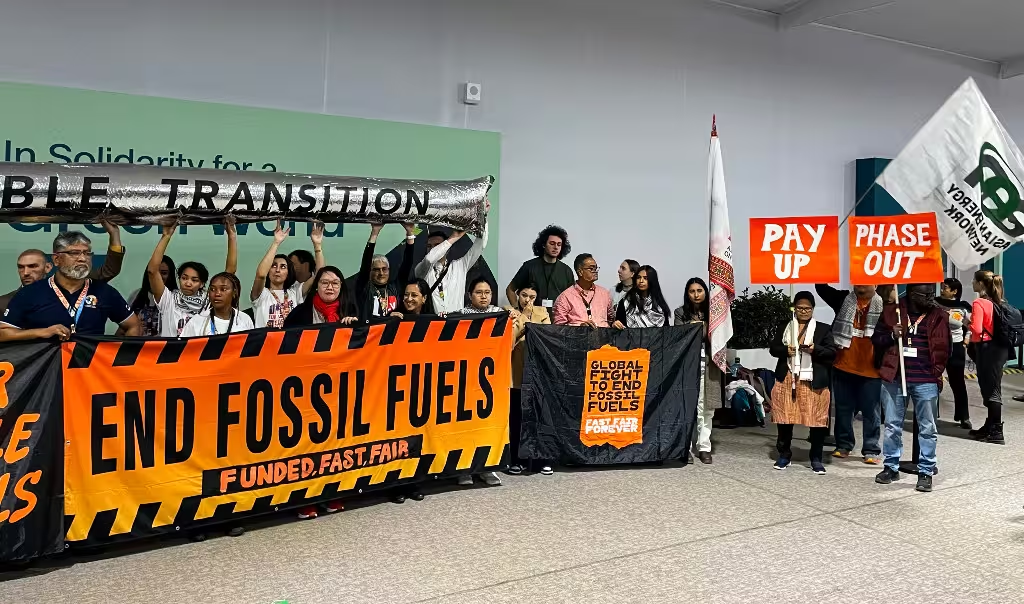
Global Coalition of 50 Nations Drafts Fossil Fuel Phase-Out Plan in Santa Marta Talks
For years, global climate negotiations have been defined by ambitious targets and voluntary commitments—net-zero pledges, long-term roadmaps, and repeated assurances of progress. Yet emissions have continued to rise, exposing a widening gap between intent and implementation.
That dynamic is now being tested in Santa Marta, Colombia.
Fifty nations have formed a coalition focused on a more concrete objective: establishing a structured, binding pathway to phase out fossil fuels. Unlike previous climate agreements, these negotiations move beyond voluntary language toward enforceable timelines and coordinated policy action. The outcome could significantly shape the trajectory of the global energy transition.
What Makes Santa Marta Different From Earlier Climate Summits
Traditional climate diplomacy has followed a familiar pattern: broad consensus on goals, followed by uneven implementation and limited enforcement mechanisms.
The Santa Marta process differs in several important ways:
- It focuses on supply-side action, not only emissions reduction
- It prioritizes binding commitments rather than voluntary pledges
- It addresses structural transition issues, including financing and stranded assets
In effect, the negotiations shift the conversation from aspiration to implementation, with an emphasis on production limits rather than consumption targets.
The Framework Under Discussion
At the center of the talks is a proposed Fossil Fuel Non-Proliferation Treaty, modeled loosely on international arms control frameworks. The concept is built around three core pillars:
- Halting approval of new oil, gas, and coal projects
- Phasing down existing fossil fuel production on a defined timeline aligned with climate science
- Establishing financial mechanisms to support a “just transition” for workers and fossil fuel-dependent economies
While the treaty has circulated in academic and civil society discussions for years, Santa Marta marks the first instance in which a substantial group of sovereign states is negotiating its operational details.
Key Policy Questions on the Table
Negotiators are currently working through several complex issues:
- Timelines: How quickly can phase-outs occur without destabilizing developing economies?
- Financing: What compensation mechanisms are required for countries heavily reliant on fossil fuel revenues?
- Legal continuity: How should existing long-term extraction contracts be managed or restructured?
These are the implementation questions previous climate frameworks largely deferred.
Who Is Participating—and Who Is Not
The coalition of fifty nations reflects a diverse group of climate-vulnerable and energy-transition-focused states.
Participants include:
- Small island developing states facing acute climate risk
- European countries with established decarbonization targets
- Latin American nations with significant renewable energy potential
- Select African states pursuing low-carbon development pathways
Notable absences:
Major fossil fuel producers—including Saudi Arabia, Russia, the United States, and Canada—are not part of the negotiations.
Despite this, proponents argue the coalition’s influence lies in collective demand and capital alignment. By coordinating policy among a significant group of importing and climate-committed countries, the bloc aims to reshape global investment incentives regardless of producer participation.
Why This Matters Beyond Diplomacy
Although the negotiations are highly technical, their implications extend into global markets and domestic economies.
Energy markets
A coordinated phase-out framework could increase long-term predictability in energy investment, reducing the risk of abrupt policy shifts and disorderly asset repricing.
Financial systems
Institutional investors—including pension funds and sovereign wealth funds—may face increased pressure to align portfolios with binding international commitments, accelerating capital flows toward renewable infrastructure.
Geopolitics
A structured fossil fuel transition would gradually reshape global influence. Economies built on hydrocarbon exports could face adjustment pressures, while countries with strong renewable resources and critical mineral supply chains may gain strategic relevance.
The Road Ahead
The Santa Marta negotiations are expected to continue over multiple rounds, with draft treaty language anticipated within the next year, followed by potential ratification discussions.
Significant challenges remain. Previous climate frameworks have struggled with enforcement, equity considerations, and political resistance from major emitters. The economic stakes are substantial, and the transition path remains politically contested.
However, the structure of the discussion has shifted. The central question is no longer whether fossil fuels will be phased out in the long term, but how and under what conditions that transition will occur.
That shift—from ambition to design—marks the most significant change in climate diplomacy in years.
The outcome of these talks will influence energy systems, investment flows, and development strategies for decades. Whether viewed from oil-producing regions, renewable energy markets, or climate-vulnerable states, the Santa Marta process represents a pivotal test of coordinated global transition planning.