
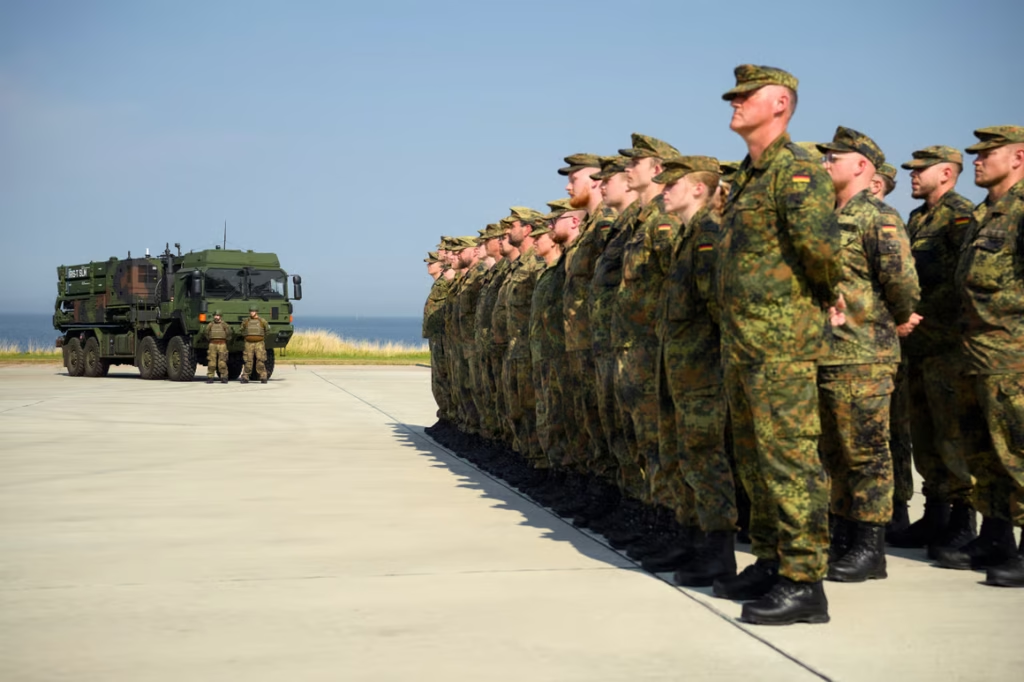
Trump’s Germany Troop Withdrawal: A New Low for U.S.-European Relations
The transatlantic alliance has weathered many storms, but the latest U.S. decision to pull thousands of troops from Germany marks a dangerous shift. President Donald Trump’s announcement, framed as a response to chronic underspending by NATO allies, has landed like a thunderclap in Brussels and Berlin. This is not merely a tactical repositioning—it is a political earthquake that threatens to reshape the security architecture of Europe.
European leaders were blindsided. The lack of consultation, the punitive tone, and the timing all point to a deliberate rupture. As Washington signals that its military presence is no longer a given, the European Union faces a stark choice: step up or risk becoming a geopolitical afterthought. Here is an expert breakdown of why this troop withdrawal matters and what it means for the future of the West.
The Core of the Conflict: Spending Grievances or Strategic Divorce?
At its heart, President Trump has long argued that NATO allies are free-riding on American taxpayers. Germany, Europe’s largest economy, consistently spends well below the alliance’s 2% of GDP target. The withdrawal—expected to cut U.S. forces in Germany by roughly 9,500 troops, with a further cap at 25,000—is designed to deliver a blunt message: pay your fair share or lose the American security guarantee.
But European defense experts see a deeper problem. The decision feels less about budgets and more about punishing a key ally. German leadership has frequently clashed with Washington on trade, energy policy (including Nord Stream 2), and multilateralism. By pulling troops without prior coordination, Washington effectively humiliates Berlin on the world stage.
This unilateralism undermines the principle of collective defense. NATO’s Article 5—an attack on one is an attack on all—relies on trust. When one member makes strategic moves in isolation, the alliance’s credibility erodes. For Eastern European nations on the front line with Russia, this is an alarming signal.
Why This Feels Different: From Partner to Power Broker
Troop rotations and base realignments happen regularly. But the circumstances of this announcement set it apart from any previous post-Cold War adjustment.
- No consultation: European allies learned of the decision through press leaks and official statements, not diplomatic channels.
- Punitive framing: The White House explicitly linked the withdrawal to Germany’s NATO spending gap.
- Strategic ambiguity: Uncertainty remains over whether troops are redeployed or permanently removed.
The message is unmistakable: alliances are being treated as transactional rather than strategic partnerships grounded in shared values. That shift unsettles European diplomats who view NATO as more than an insurance mechanism.
The timing also matters. Russia continues military modernization and hybrid operations near NATO borders, while China expands global influence. A reduced U.S. footprint in Europe risks stretching American strategic capacity and weakening deterrence simultaneously.
Geopolitical Ripple Effects: Who Wins and Loses?
The consequences of this withdrawal will not be evenly distributed.
Winners
- Russia: Gains psychological and strategic advantage from perceived NATO fragmentation.
- China: Benefits indirectly from reduced transatlantic cohesion and shifting Western focus.
- U.S. domestic politics: Reinforces an “America First” foreign policy narrative.
Losers
- Germany: Faces gaps in deterrence despite its economic strength.
- Poland and Baltic states: Increased anxiety over frontline security guarantees.
- NATO cohesion: Suffers from reduced predictability and trust in collective decision-making.
Key structural weakness remains: Europe’s defense architecture is fragmented across national budgets and procurement systems. Even EU initiatives like PESCO have yet to deliver full operational capability.
Election Year Implications: A Political Gambit with Long-Term Costs
Domestically, the move strengthens President Trump’s positioning among voters skeptical of overseas military commitments. Reducing troop presence aligns with a broader narrative of cost-saving and sovereignty.
However, strategic withdrawals are not easily reversed. Once bases close and personnel rotate out, rebuilding presence requires years of investment. Meanwhile, European states may accelerate alternative defense arrangements, including deeper cooperation with France and the United Kingdom.
That shift could gradually reduce U.S. influence in European security decision-making—regardless of future administrations.
What Comes Next? The New Reality for European Security
The troop withdrawal from Germany signals a structural inflection point in transatlantic relations rather than a temporary dispute.
Europe now faces three hard realities:
- Reliance on guaranteed U.S. military response can no longer be assumed.
- Defense integration must accelerate beyond current fragmented frameworks.
- Strategic autonomy is shifting from theoretical debate to practical necessity.
Whether Europe can respond quickly enough remains uncertain. What is clear is that the long-standing assumption of unconditional American security support is no longer stable.
The withdrawal is not just a military adjustment—it is a recalibration of the transatlantic balance of power.

