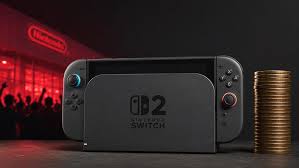
The Cost of Next-Gen Hybrid Gaming Just Went Up
If you have been holding out for the next evolution of Nintendo’s hybrid console, the wait just became more expensive. The Nintendo Switch 2 is no longer just an anticipated piece of hardware; it is now a significant financial commitment across four major global markets.
Reports are confirming that the successor to the best-selling Switch line is receiving a notable price adjustment in the United States, Canada, Europe, and Japan, catching both analysts and consumers off guard.
This is not a minor fluctuation. This is a recalibration of what Nintendo believes its next-generation product is worth, and it signals a fundamental shift in the company’s pricing strategy. Let’s break down exactly what is happening, why it is happening, and what it means for your wallet.
The Global Price Shock: A Regional Breakdown
The price increases are not uniform, but they are consistent in their upward trajectory. Nintendo appears to be treating the Switch 2 as a premium-tier electronic device, positioning it closer to the Sony PlayStation 5 and Microsoft Xbox Series X than its predecessor.
United States Market
The American market, historically a stronghold for Nintendo, is seeing the largest nominal jump. While final retail prices are still being solidified by major retailers, early indications suggest a bump in the Manufacturer’s Suggested Retail Price (MSRP) that could range from $50 to $80 USD over the originally expected launch price.
This pushes the base model of the Switch 2 well past the psychological $400 barrier, landing it firmly in premium territory.
Canada and Europe
For Canadian consumers, the situation is compounded by a weaker domestic currency. The price hike here is expected to be proportionally steeper than in the US.
European gamers are not faring much better. With VAT (Value Added Tax) already inflating tech prices across the continent, the additional manufacturer increase will make the Switch 2 one of the most expensive handheld-first consoles ever released in the region.
- UK: Likely to exceed £400
- Eurozone: Expected to land between €450 and €500
The Japanese Home Market
Perhaps the most ironic development is happening in Nintendo’s home country. Despite the console being manufactured in Japan and Asia, Japanese consumers are facing a substantial price correction, largely due to the weakness of the Japanese Yen.
For years, Japanese tech products were cheaper domestically. That advantage is eroding.
Nintendo is essentially being forced to raise prices at home to maintain profit margins on international exports. If you were planning to import a unit from Japan to save money, those days are likely over.
Deconstructing the Price Hike: More Than Just Inflation
Consumers are often told that price hikes are due to “inflation.” While that is a convenient umbrella term, the reality for the Nintendo Switch 2 is far more complex.
As an industry analyst, three key pressure points stand out.
1. The Component Conundrum
The Switch 2 is not a simple refresh. It is rumored to feature a custom Nvidia Tegra chip capable of supporting DLSS (Deep Learning Super Sampling) and ray tracing.
These are not cheap components. While the global chip shortage has eased, demand for advanced silicon—especially from AI and automotive industries—has kept pricing elevated.
Nintendo is also expected to move to larger, faster storage modules. The base model is rumored to ship with 256GB of UFS 3.1 storage, a major upgrade over the original Switch, but a costly one.
2. Currency Volatility and Global Economics
This is the silent driver behind pricing shifts.
The Japanese Yen has weakened significantly against the US Dollar. Since Nintendo reports earnings in Yen, foreign revenue must be adjusted to maintain real value.
To compensate, Nintendo must increase dollar pricing. This is a classic hedge against forex risk.
At the same time, the Euro and Canadian Dollar have not fully tracked the strength of the USD, resulting in uneven regional price pressure that feels harsh to consumers but stabilizing for the company.
3. The “Premium Ecosystem” Strategy
Nintendo is making a calculated strategic shift.
The Switch 2 is no longer being positioned purely as an accessible hybrid console. Instead, it is moving toward a premium ecosystem model—closer to high-end gaming devices and smartphones than budget-friendly family hardware.
This implies Nintendo expects its first-party franchises—new entries in Mario, Zelda, and Metroid—to carry enough cultural and commercial weight to justify the higher entry price.
What This Means for the Consumer
For gamers, this reshapes the buying decision entirely.
- Immediate Value: The original Nintendo Switch will likely remain relevant longer, with potential discounts or stronger second-hand availability. The OLED model still offers strong value for non-4K gaming needs.
- Financing Culture: Expect retailers like GameStop, Best Buy, and Amazon to aggressively push installment plans and trade-in programs.
- Launch Pressure: Higher pricing can suppress early demand, but Nintendo’s historical supply constraints may still trigger shortages and reseller activity.
The Industry Context: Is This the New Normal?
This move is not happening in isolation.
Sony has already adjusted PlayStation 5 pricing in several regions. Microsoft has also increased Xbox Series X pricing. Across the industry, the era of subsidized hardware launches appears to be fading.
Gaming consoles are increasingly aligning with broader consumer electronics trends—especially smartphones—where iterative price increases are normalized over time.
For developers, this raises expectations. A $70 game on a $450+ console now demands significantly higher production quality and long-term support to justify consumer spending.
Expert Analysis: A Risky but Calculated Move
From a business perspective, this is not panic—it is positioning.
Nintendo has:
- Massive cash reserves
- Strong first-party intellectual property
- Extremely loyal hardware ecosystem users
The strategy is clear: increase entry cost, lean on exclusives, and maximize lifetime user spending on software and services.
In effect, the message is simple:
“You are not just buying a console. You are buying into Nintendo’s ecosystem.”
But the risk remains.
If launch titles underperform, or if early impressions are mixed, the higher price point could slow adoption compared to the explosive success of the original Switch.
Final Thoughts: Prepare Your Budget
The Nintendo Switch 2 represents a clear break from the past pricing philosophy of Nintendo hardware.
The era of the $300 Nintendo console is likely ending.
For dedicated gamers, this means planning ahead—bundles, trade-ins, or waiting for seasonal discounts may become the new normal.
For casual players, the decision becomes harder: wait, upgrade, or stay with the current Switch ecosystem longer.
One thing is certain: Nintendo is no longer competing on affordability alone. It is competing on perceived value.
And the next generation will test just how much that value is worth to players around the world.