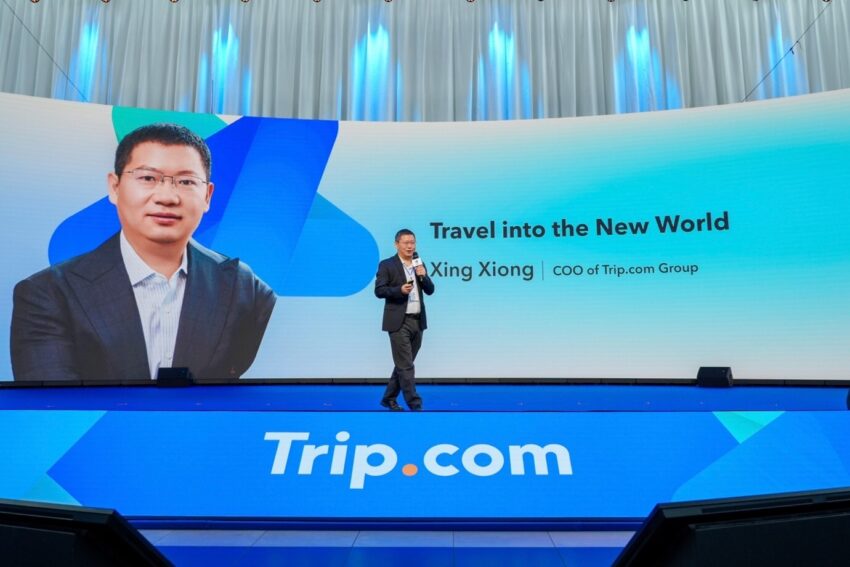
Trip.com Group Forges Strategic Alliances with Air Canada, Turkish Airlines, and Qatar Airways at Landmark Amsterdam Aviation Conference
The global travel and aviation technology landscape just witnessed a seismic shift. At the recent Visionary Airline Global Conference hosted in Amsterdam, industry heavyweights converged not just to discuss the future, but to actively build it. In a move that signals a profound evolution in how air travel is booked, managed, and experienced, Trip.com Group has announced formal collaborations with three of the world’s most influential carriers: Air Canada, Turkish Airlines, and Qatar Airways.
This is not merely a routine networking event. The Amsterdam summit served as a strategic war room where legacy airlines and a digital travel titan mapped out the next decade of aviation innovation. For industry insiders, the message is clear: the wall between booking platforms and airlines is officially crumbling, replaced by a data-driven, customer-centric alliance.
The Strategic Significance of the Amsterdam Summit
Amsterdam, a perennial hub for global connectivity, provided the perfect backdrop for this announcement. The Visionary Airline Global Conference is not your typical industry meet-and-greet. It is a crucible for high-level strategy, focusing specifically on how technology can dismantle friction points in the passenger journey.
What makes this collaboration particularly potent is the diversity of the partners involved. Trip.com Group is not just a booking engine; it is a comprehensive travel ecosystem. By locking arms with a North American giant (Air Canada), a Middle Eastern powerhouse (Qatar Airways), and a Eurasian bridge carrier (Turkish Airlines), the company is ensuring its technological advancements are relevant across disparate markets and regulatory environments.
Key takeaways from the conference alignment:
- A unified push toward personalization using artificial intelligence
- Streamlined payment and loyalty integration across different regions
- A focus on post-pandemic traveler behavior and demand forecasting
Breaking Down the Collaborations: What Each Partner Brings
To understand the true weight of this announcement, we must look beyond the press release and examine the specific value each airline brings to the Trip.com Group ecosystem.
Air Canada: The North American Anchor
Air Canada has long been a leader in digital adoption among North American carriers. Its partnership with Trip.com Group is expected to focus heavily on the trans-Pacific and trans-Atlantic leisure markets.
Strategic focus areas:
- Enhanced NDC (New Distribution Capability) connectivity for richer content
- Targeted promotions for the high-value Chinese outbound market, where Trip.com holds dominant market share
- Collaborative data analysis to predict booking spikes during North American holidays
This is a significant win for Trip.com. Air Canada’s extensive network provides the platform with a robust option for travelers heading to or through Canada, while Air Canada gains unprecedented access to Trip.com’s massive user base in Asia.
Turkish Airlines: The Geographic Bridge
Turkish Airlines understands the power of position better than almost any airline. With a network spanning Europe, Asia, and Africa, it functions as a major global connector. This collaboration focuses less on individual routes and more on seamless multi-city travel.
What this partnership targets:
- Integrated stopover packages through Trip.com’s hotel and experience verticals
- Dynamic pricing models leveraging fleet flexibility
- Improved API infrastructure for complex international itineraries
For travelers, this means smoother booking flows for multi-leg journeys like Southeast Asia → Istanbul → Africa, with fewer fragmented booking steps.
Qatar Airways: The Premium Innovator
Qatar Airways consistently pushes the boundaries of premium air travel experience. Its collaboration with Trip.com Group is expected to focus on high-value business and luxury leisure segments.
Expected integration points:
- Access to premium products like Qsuite via Trip.com
- 3D cabin previews and rich media booking experiences
- Co-branded loyalty systems across platforms
This is a direct push to convert high-intent premium travelers with stronger visualization and bundled offers.
The Technology Stack Behind the Partnership
While the announcement emphasizes “innovation,” the deeper shift is structural: a move toward a unified data ecosystem between airlines and a global travel platform.
Key developments likely include:
- AI-driven inventory systems: Real-time demand feedback loops from search behavior
- Biometric pre-clearance integration: Faster identity validation across travel stages
- Dynamic packaging engines: Bundling flights, seats, and services into unified offers
The end goal is hyper-personalization—where travel results are not generic listings but curated itineraries based on user behavior, loyalty status, and preferences.
What This Means for the Global Traveler
For consumers, this shift points toward a more streamlined and predictive travel experience.
Expected benefits:
- Simplified refunds and rebooking processes
- More transparent display of add-ons (bags, seats, meals) at search stage
- More consistent pricing across airline and third-party platforms
The traditional fragmentation of travel booking is gradually being replaced by integrated ecosystems where platforms and airlines share both data and distribution strategy.
A Vision for the Decade Ahead
The Amsterdam conference represents more than a partnership announcement—it signals a structural shift in the aviation economy.
We are moving toward an Age of Integration, where airlines, platforms, and data systems operate as interconnected layers rather than isolated competitors.
With Air Canada, Turkish Airlines, and Qatar Airways now formally aligned with Trip.com Group, a blueprint is emerging for how global distribution, personalization, and airline retailing will evolve over the next decade.
For the travel industry, the message is straightforward: this is no longer about booking flights. It is about engineering the entire travel experience from search to landing gate.