
France Sees Another Weekend of Nationwide Demonstrations
Hundreds of thousands of people took to the streets across France on Saturday, October 31, 2026, as public frustration over the rising cost of living and other social concerns continued to drive demonstrations. The French government estimated that approximately 320,000 people participated in rallies across the country.
The demonstrations marked the third consecutive weekend of nationwide protests. Although many gatherings proceeded peacefully during the afternoon, confrontations between demonstrators and police officers developed in several cities as the day progressed.
According to the Associated Press, the latest demonstrations reflected continuing dissatisfaction with increasing living expenses. The protests have also become connected to wider concerns involving public services, education and police conduct.
Why Are People Protesting Across France?
The demonstrations began with growing frustration over conditions in French schools, but the movement has gradually attracted people with different concerns about the country’s economic and political situation.
Rising household expenses, higher fuel prices, inflation and dissatisfaction with government policies have become important issues for demonstrators. Students, workers, trade unions and people associated with the Yellow Vest movement have joined the nationwide protests.
High school and university students have played an important role in organizing demonstrations. Their initial complaints included deteriorating school facilities, insufficient educational resources and concerns about the conditions in which students are expected to learn.
As participation expanded, the movement attracted additional groups seeking changes to public policies and greater attention to the financial difficulties affecting ordinary households.
The involvement of different organizations has made the demonstrations broader than a student-led campaign. Participants have brought together economic, educational and civil liberties concerns under a nationwide protest movement.
Government Reports 320,000 Participants Nationwide
The French government’s estimate placed nationwide participation at 320,000 people on October 31. This figure provides an indication of the scale of the demonstrations, although estimates from government authorities and protest organizers have differed during previous rallies.
The turnout was lower than the previous two weekends, according to government figures. Demonstrations on October 17 attracted more than 500,000 participants, while the October 24 protests brought approximately 410,000 people into the streets, based on government estimates reported during the continuing protest movement.
These figures demonstrate that participation has remained substantial despite the security measures introduced following earlier confrontations.
However, the difference between government estimates and figures provided by participating organizations remains an important consideration when assessing the overall size of the movement.
Police and Demonstrators Clash in Several Cities
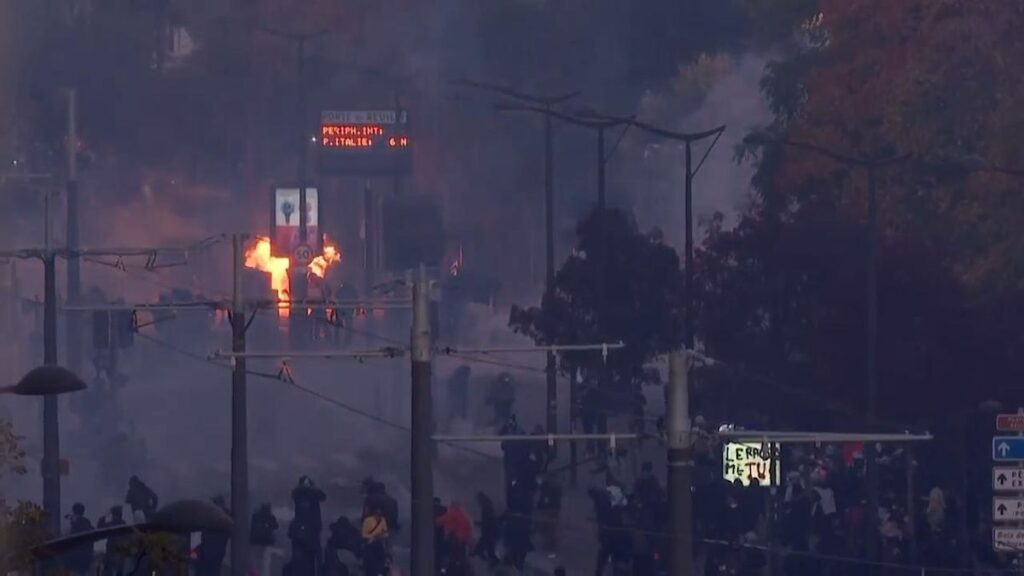
While the demonstrations were largely peaceful during the afternoon, tensions increased later in the day. Paris experienced confrontations between police officers and groups of demonstrators after the main march reached its designated destination.
Some masked individuals dressed in black reportedly threw objects at security personnel and damaged street infrastructure. Police responded with tear gas and other crowd-control measures as officers attempted to disperse groups involved in the confrontations.
Similar incidents were reported in other French cities, including Lyon, Toulouse and Marseille. In Lyon, police used tear gas after demonstrators threw projectiles, while officers in Toulouse deployed water cannons during an unauthorized gathering.
Marseille also experienced tensions following an unauthorized demonstration. These incidents occurred against the background of earlier unrest that had raised concerns about public safety and damage to businesses and public property.
Authorities have been particularly concerned about preventing a repeat of the violence reported during the October 17 demonstrations, when disturbances included fires, looting and damage to public buildings.
Paris Marches Take Place Under Increased Security
Paris remained one of the central locations for Saturday’s demonstrations. Security arrangements were strengthened as authorities prepared for another large gathering in the French capital.
The main march took place outside some of the city’s busiest central areas. Following a legal dispute over the planned route, demonstrators were directed toward the outskirts rather than being permitted to proceed through certain central locations.
The arrangements reflected concerns about possible confrontations near government buildings, commercial areas and popular tourist destinations.
After the main demonstration ended, smaller groups remained in the streets. Some individuals participated in unauthorized gatherings, creating additional challenges for police officers responsible for maintaining public order.
The situation was particularly sensitive because October 31 also coincided with Halloween celebrations. Authorities expressed concern that costumes and face coverings could make it more difficult to identify individuals involved in violent incidents.
Authorities Prepare for Further Unrest During Halloween
French Interior Minister Laurent Nuñez had warned ahead of the demonstrations that security forces needed to prepare for possible disturbances. The government was concerned about calls circulating on social media encouraging people to participate in evening gatherings.
Some online messages reportedly encouraged confrontational activities and called for wider political action. Authorities warned that gatherings violating restrictions could result in police intervention and arrests.
The use of masks also became a security concern. French authorities reminded the public that concealing one’s identity during demonstrations that threaten public order can result in legal consequences.
The government sought to prevent another night of widespread destruction similar to the unrest experienced earlier in October. Police operations therefore focused not only on the main demonstrations but also on potential disturbances after organized marches had finished.
Students Promise More Demonstrations Next Week
Despite the increased security presence, student organizations have indicated that their campaign will continue. The movement has developed beyond a single weekend of demonstrations, with additional activities planned for schools and universities.
Representatives of the Union Etudiante, a student organization in France, announced plans for further blockades at educational institutions. Its spokesperson, Sabrine Kharbach, said students intended to organize blockades beginning Tuesday and repeat the action on Thursday.
The organization also planned to participate in a demonstration scheduled for November 5, which was called by workers and trade unions.
These planned activities suggest that educational concerns remain an important part of the wider movement. Students have continued to criticize school conditions and the government’s response to their demands.
The French Education Ministry has already agreed to several measures, including limiting class sizes in certain circumstances, providing low-interest loans to help rebuild school facilities and gradually phasing out an unpopular online university admissions platform.
However, these measures have not persuaded all student groups to end their demonstrations.
Economic Concerns Continue to Influence the Movement
France is also dealing with wider economic pressures that have added to the difficulties facing the government. Rising living expenses and concerns about public finances have become central subjects in the national debate.
The country’s public debt and borrowing costs have attracted additional attention from financial observers. On Friday, October 30, credit rating agency Fitch unexpectedly revised France’s debt outlook to negative, highlighting concerns surrounding its financial position.
France’s public debt was approaching 120% of economic output, adding pressure on the government to address its financial obligations and consider spending reductions.
These economic circumstances create additional challenges for policymakers responding to demonstrators who are demanding improvements in living conditions and public services.
Providing additional financial assistance may be difficult while the government is also attempting to manage public spending and maintain economic stability.
International Attention Grows as European Protests Continue
The demonstrations in France have also attracted attention beyond the country’s borders. Similar youth-led protest activities have emerged in other European countries, reflecting concerns about economic conditions, public services and political decision-making.
Germany experienced demonstrations in several cities on Saturday, October 31. Young participants took to the streets as discussions about living costs and educational conditions continued across Europe.
Italy has also experienced protest activities connected to broader economic and social concerns.
Although the demonstrations in each country have their own circumstances and demands, the developments show how economic pressures and dissatisfaction with public institutions have become subjects of public discussion across several European communities.
For France, the immediate challenge remains managing demonstrations while protecting public safety and allowing people to exercise their right to peaceful assembly.
What Happens After the October 31 Protests?
The next few days will be important for understanding whether the French protest movement gains additional momentum or begins to lose participants. Student organizations have already announced further activities, including planned school and university blockades on November 3 and November 5.
Workers and trade unions are also expected to participate in the November 5 demonstration, potentially bringing additional groups into the continuing campaign.
Residents, business owners and visitors should monitor announcements from local authorities, particularly in Paris and other cities where demonstrations have resulted in clashes. Checking official police updates and public transport information before travelling through demonstration areas can help people avoid unexpected disruptions.
The French government’s response to the demands involving education, living expenses and public services will also remain important. Whether the measures already announced can address protesters’ concerns remains uncertain.
With 320,000 participants recorded in the latest nationwide demonstrations, the October 31 rallies show that public dissatisfaction has not disappeared. The next scheduled demonstrations and the government’s decisions will help determine how the movement develops during November.