
A Halloween Demonstration Brings Pesticide Concerns to Parliament Hill
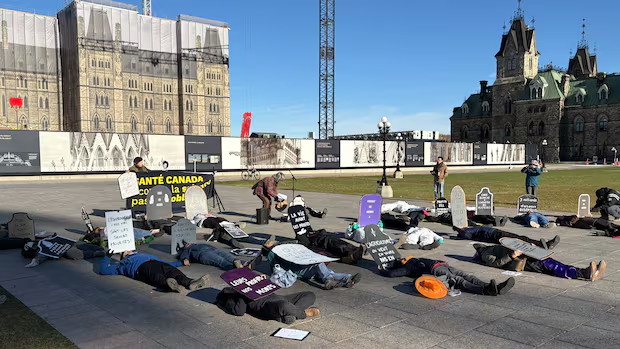
Halloween celebrations in Canada’s capital took an unusual turn on Saturday, October 31, 2026, when protesters used cardboard tombstones and a symbolic demonstration to draw attention to concerns about pesticide regulations. Instead of traditional Halloween decorations, the gathering on Parliament Hill featured imagery associated with death and disease.
The event was organized as a symbolic die-in, a form of peaceful demonstration in which participants use simulated scenes of death to communicate concerns about an issue. Protesters said their actions were directed at changes to federal pesticide regulations that they believe could weaken existing safeguards.
According to CBC News, the demonstration focused particularly on two federal bills that protesters argue could reverse important regulatory protections. The gathering formed part of a wider debate about pesticide approvals, environmental protection and public health in Canada.
Why Protesters Chose a Die-In Demonstration
A die-in is a protest technique commonly used by environmental and public health campaigners to illustrate the potential consequences of policies they oppose. Participants symbolically represent victims to encourage public discussion about the risks associated with a particular issue.
For the October 31 gathering, cardboard tombstones provided a visual representation of the protesters’ concerns. The Halloween timing also allowed organizers to use familiar seasonal imagery to attract attention to a subject that can otherwise be difficult to communicate to the public.
The demonstration was not simply about Halloween decorations. Its central message concerned the regulation of pesticides and whether proposed federal legislative changes would provide sufficient protection against potentially harmful chemical products.
Protesters questioned whether changes to the approval and reassessment process could affect how pesticide risks are monitored over time.
Bill C-30 Becomes a Central Point of Disagreement
One of the major issues raised by pesticide campaigners involves Bill C-30, legislation passed by Parliament in June 2026. The changes allow the federal cabinet to override Health Canada’s decisions and authorize the use of pesticides that the department had previously banned.
Opponents argue that allowing cabinet to reverse decisions involving restricted chemicals could weaken the role of scientific assessments in pesticide regulation. They are concerned about how political and agricultural considerations might influence decisions involving products that have already been prohibited.
Health Canada plays an important role in evaluating pesticides before they are permitted for use in Canada. Its responsibilities include assessing potential risks and determining whether products meet the requirements established under federal pesticide legislation.
Campaigners believe that maintaining independent regulatory safeguards is important because pesticide exposure can involve potential risks to people, wildlife and the environment.
The disagreement surrounding Bill C-30 therefore involves more than the authorization of individual products. It also raises questions about how much authority elected officials should have when making decisions involving pesticide restrictions.
Bill C-31 Raises Questions About Pesticide Reassessments
Another major concern involves Bill C-31, a broad federal legislative package that was still under consideration at the time of the demonstrations.
Protesters are particularly concerned about Section 13, which proposes amendments to the Pest Control Products Act. Under the proposed changes, the existing requirement to reassess registered pesticides every 15 years would be eliminated.
The current reassessment requirement provides a recurring opportunity to examine whether previously approved pesticides continue to meet regulatory standards. Scientific knowledge and information about chemical exposure can change, making periodic evaluations an important part of pesticide oversight.
Removing the automatic 15-year reassessment requirement has therefore become a significant point of disagreement between campaigners and the federal government.
Opponents fear that eliminating this requirement could allow certain registered products to remain authorized without undergoing the same scheduled review process. They argue that pesticide safety should continue to be evaluated as scientific evidence develops.
For protesters, the proposed amendment represents a major change in how Canada monitors chemicals already available for agricultural use.
Why Pesticide Regulation Matters to Canadian Families
Pesticides are widely used in agriculture to control insects, weeds and other organisms that can damage crops. They help farmers protect agricultural production, but their use also requires careful management because exposure can affect human health and surrounding ecosystems.
Potential exposure can occur through several pathways, including contact during agricultural applications, environmental contamination and residues in food or water. The level of risk depends on the particular chemical, the amount involved and the circumstances of exposure.
This is why pesticide regulation involves scientific assessment rather than simply determining whether a product is useful to farmers. Authorities must also consider how chemicals behave in the environment and whether their use meets established safety requirements.
For Canadian consumers, the debate has practical implications. Decisions involving pesticide approvals and reassessments can influence the standards applied to agricultural chemicals used in food production.
Environmental campaigners also emphasize the importance of protecting waterways, soil quality and biodiversity. These concerns are particularly relevant to agricultural communities where pesticide applications can affect surrounding ecosystems.
Similar Demonstrations Take Place Across Quebec
The Parliament Hill gathering was part of a broader series of demonstrations organized around pesticide regulations. Similar activities were planned in several Quebec communities on October 31, including Quebec City, Sherbrooke, Saguenay, Terrebonne, Blainville and Val-David.
Montreal also hosted a separate Halloween-themed die-in outside Health Canada’s offices at the Guy-Favreau complex. More than 100 people participated in that demonstration, according to reporting by The Canadian Press.
Participants in Montreal lay on the ground while individuals wearing white protective coveralls pretended to spray pesticides. Children were invited to draw chalk outlines around simulated victims, while organizers displayed a cardboard coffin and tombstones bearing the names of different diseases.
Thibault Rehn, executive director of Vigilance OGM, was among those involved in organizing the Montreal demonstration. The organization has raised concerns about the federal government’s approach to pesticide regulation and the potential consequences of the legislative changes.
Other groups involved in the wider campaign included the Family Farmers’ Network, Union Paysanne, Les Greniers Agricoles, Mères au Front and Victims of Pesticides in Quebec.
Although the demonstrations took place in different communities, their shared concern was the direction of federal pesticide policy.
Federal Government Defends Its Proposed Regulatory Changes
The federal government has defended the proposed changes, presenting them as an effort to improve regulatory efficiency and direct resources toward products that require greater attention.
Health Minister Marjorie Michel addressed concerns about the legislative changes during question period in the House of Commons. She maintained that protecting Canadians’ health and safety remained a government priority while also supporting the agricultural sector and reducing unnecessary administrative requirements.
A spokesperson for Health Canada, Alexandre Bergeron, also explained that the proposed approach would allow regulatory resources to concentrate on higher-risk products and emerging concerns.
Under this approach, officials would not automatically reassess every registered pesticide simply because 15 years had passed. Instead, the department would be able to prioritize products based on identified risks and other regulatory concerns.
This explanation highlights the difference between the government’s position and that of environmental campaigners. While federal representatives emphasize regulatory efficiency and risk-based assessments, protesters want to retain mandatory periodic reviews as an additional safeguard.
Petition Against the Legislative Changes Gains Support
Public opposition has also extended beyond street demonstrations. A petition calling for the repeal of amendments introduced through Bill C-30 and the removal of the proposed pesticide-related provisions in Bill C-31 has been made available through the House of Commons website.
The petition is sponsored by Bloc Québécois MP Maxime Blanchette-Joncas. At the time of the October 31 reporting, it had collected more than 19,000 signatures.
The petition gives Canadians another way to express their position without attending a demonstration. It specifically asks the government to reverse the relevant changes associated with Bill C-30 and remove the proposed amendments to the Pest Control Products Act under Bill C-31.
People interested in the issue can visit the official House of Commons petitions website to review the petition, examine its wording and check its current status. They should also review the parliamentary requirements and any applicable signing deadlines before participating.
What Happens Next With Canada’s Pesticide Regulations?
The debate surrounding pesticide regulation is likely to continue as Parliament considers the proposed legislative changes. Bill C-31 remains particularly important because Section 13 could change the existing requirement for periodic reassessment of registered pesticides.
The next developments to watch include parliamentary discussions, the progress of the legislation and any response from the federal government to the concerns raised by environmental organizations and campaigners.
Canadians who want to follow the issue can monitor updates from Health Canada, review information about the Pest Control Products Act and check parliamentary records for developments involving Bills C-30 and C-31.
The October 31 demonstration on Parliament Hill showed how a public protest can bring a technical regulatory issue into the wider national conversation. With campaigners continuing to question the proposed changes and the government defending its approach, the future of pesticide oversight remains an important subject for Canadian consumers, farmers and environmental organizations.