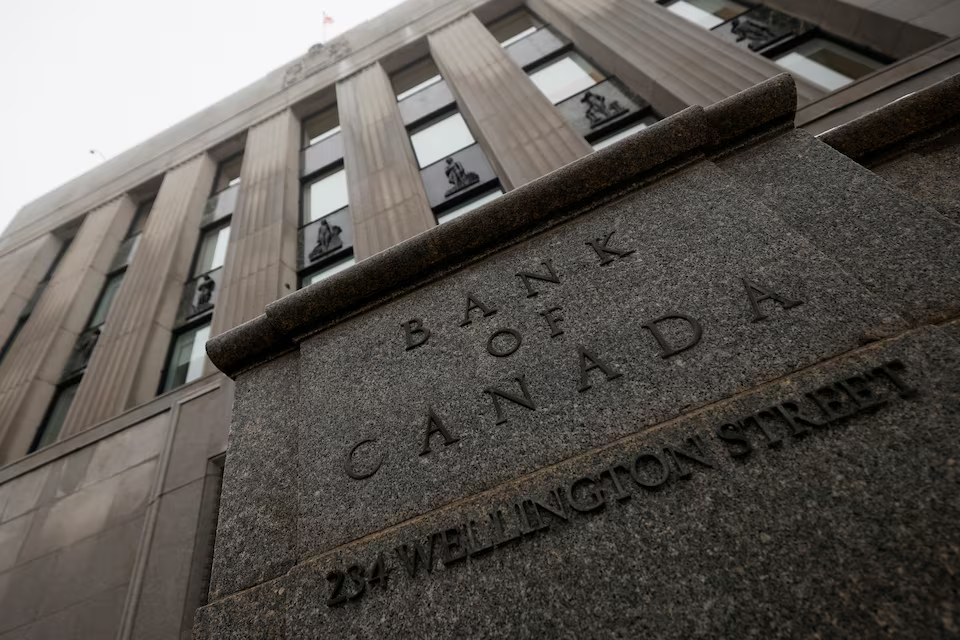
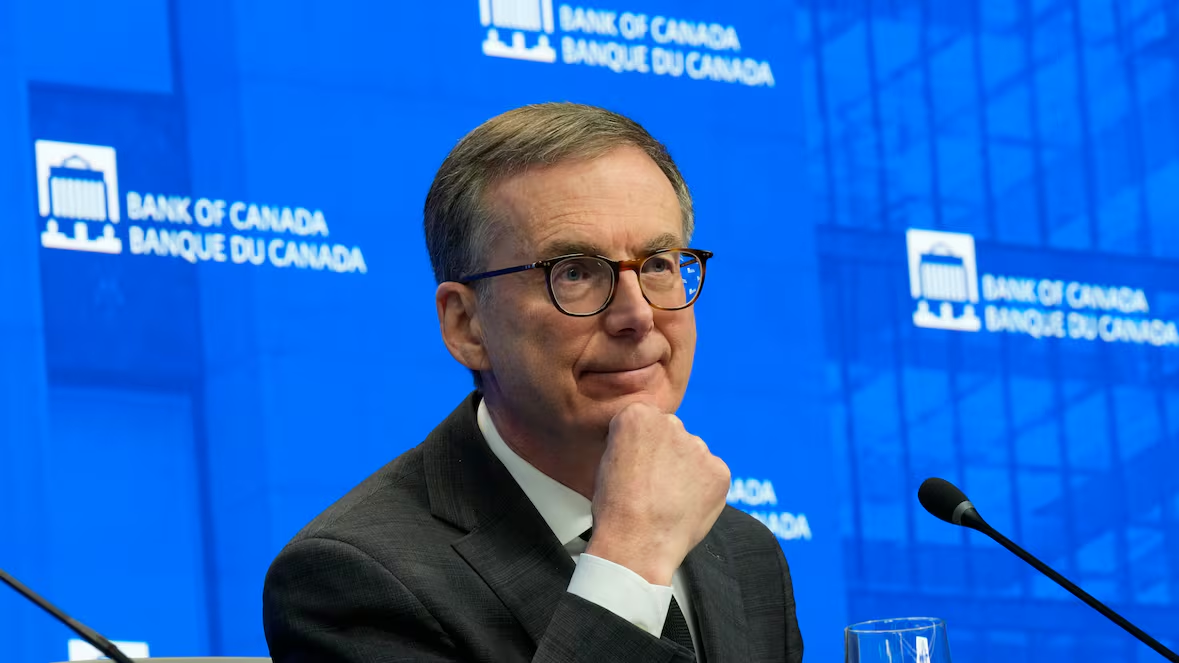
The Bank of Canada has opted for a cautious stance, choosing to maintain its benchmark interest rate at 5.0% for the third consecutive announcement. This decision, widely anticipated by economists and markets, reflects the central bank’s delicate balancing act as it navigates a complex economic landscape marked by slowing growth but persistent underlying price pressures.
A Pause, Not a Pivot: Understanding the Bank’s Decision
Governor Tiff Macklem and his governing council signaled that while higher interest rates are clearly working to cool the economy, the job of taming inflation is not yet complete. The central bank remains concerned about sticky core inflation measures, which strip out volatile items like food and energy. These indicators have not declined as quickly as the headline Consumer Price Index (CPI), suggesting that domestic, service-driven inflationary pressures are proving more stubborn.
The Bank’s statement highlighted several key factors behind the hold:
- Economic Stagnation: The Canadian economy has essentially flatlined, contracting slightly in the third quarter. This weak growth indicates that past rate hikes are effectively dampening demand.
- Easing Labor Market: Job creation has slowed, and the unemployment rate has ticked higher, moving from extreme tightness toward more balanced conditions.
- Consumer Pullback: With the cost of borrowing at a multi-decade high, consumer spending has softened significantly, particularly on big-ticket items often financed through credit.
However, the Governing Council was clear: monetary policy is “restrictive” and is working to restore price stability. The hold does not signal an end to the tightening cycle, and officials reiterated their readiness to raise the policy rate further if needed.
The Inflation Conundrum: Progress Amidst Persistence
The central narrative remains the fight against inflation. The headline CPI rate fell to 3.1% in October, moving closer to the Bank’s 2% target. This decline has been helped by lower global energy prices and improved supply chains.
Yet, the Bank’s focus has sharpened on the underlying, “homegrown” inflation. Key metrics like CPI-median and CPI-trim, which the Bank uses to gauge core trends, have remained stubbornly elevated around 3.5% to 4.0%. This persistence is largely attributed to:
Service Sector and Wage Pressures
Inflation in services—such as haircuts, rent, and restaurant meals—remains high. This is often linked to strong wage growth, as businesses pass on higher labor costs to consumers. While wage growth has moderated slightly, it continues to outpace productivity gains and the 2% inflation target, creating a potential feedback loop.
Housing Market Complications
The housing sector presents a paradox. Higher interest rates have cooled resale activity and price growth in many markets, but a severe shortage of supply and soaring population growth are putting immense upward pressure on rental costs, which are a major component of CPI. This makes the Bank’s task exceptionally difficult, as its primary tool (interest rates) can dampen housing demand but does little to increase supply.
What This Means for Canadians: Households and Businesses
The decision to hold rates offers a temporary reprieve for those with variable-rate mortgages, lines of credit, or other debt tied to the prime rate. Their payments will not increase for now. However, the era of ultra-low interest rates is firmly in the past. The financial pressure on heavily indebted households remains acute.
- Mortgage Renewals: Millions of Canadians will renew mortgages at significantly higher rates in the coming years, a process the Bank of Canada has warned will continue to slow consumer spending.
- Business Investment: The high cost of borrowing is likely to constrain business investment and expansion plans, contributing to the broader economic slowdown.
- Savings and Planning: Savers may continue to benefit from higher yields on savings accounts and GICs, but the overarching environment demands careful financial planning and budgeting.
The Road Ahead: When Will Rates Start to Fall?
The million-dollar question for markets, businesses, and homeowners is: How long will rates stay at this level? The Bank of Canada has removed the explicit tightening bias from its previous statements, no longer saying it is “prepared to raise the policy rate further.” This is a subtle but important shift in tone.
However, Governor Macklem was explicit in pushing back against talk of imminent rate cuts. The central bank’s message is that it is far too early to discuss lowering borrowing costs. The Governing Council needs to see further and sustained evidence that core inflation is moving decisively toward the 2% target.
Most economists now forecast that the policy rate will likely remain at its current restrictive level until at least mid-2024. The timing of the first rate cut will be data-dependent, hinging on:
- A consistent downward trend in core inflation measures.
- Clearer signs that the labor market is not overheating.
- Evidence that inflation expectations among businesses and consumers are firmly anchored at 2%.
Conclusion: A Delicate Balancing Act Continues
The Bank of Canada’s latest decision underscores the challenging final phase of the inflation fight. The rapid, front-loaded rate hikes are over, but the “hold steady” period could be prolonged as the central bank seeks the confidence that price stability is secured.
For Canadians, this means economic uncertainty will persist in the near term. Growth will remain subdued, and the full impact of higher rates will continue to ripple through the economy. The Bank’s steadfast commitment to restoring price stability suggests that patience will be required before any meaningful relief in borrowing costs arrives. The path to a “soft landing”—where inflation returns to target without a severe recession—remains narrow, and the Bank of Canada is navigating it with extreme caution.