
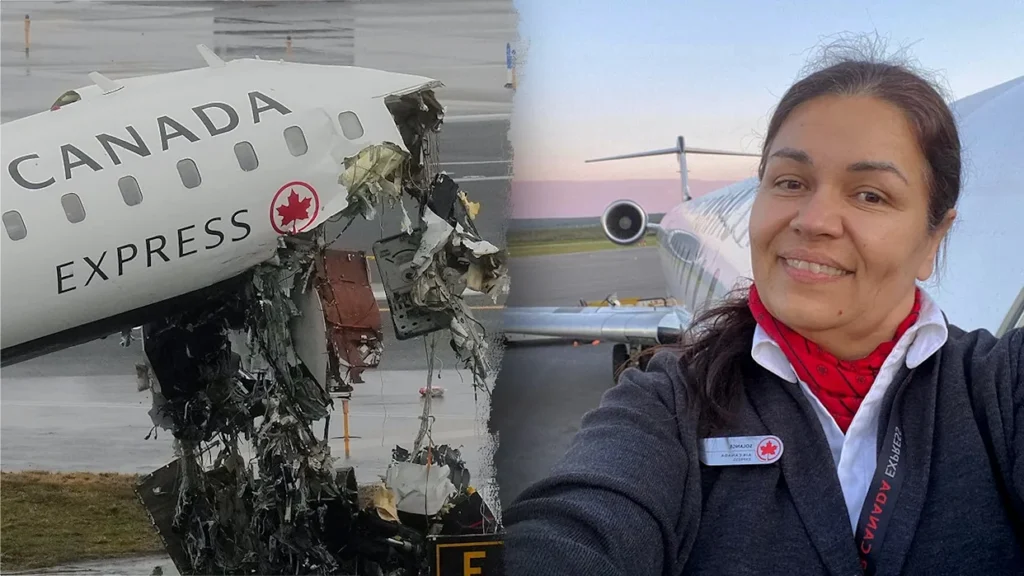
Miracle Air Canada Flight Attendant Survives Fatal Pilot Crash
In an incident that has sent shockwaves through the aviation community, a tragic accident involving an off-duty Air Canada pilot has underscored the profound risks and unpredictable nature of air travel. While the event ended in a heartbreaking fatality, it also contained a story of remarkable survival that borders on the miraculous. This is the story of a flight attendant who, against all odds, lived through a catastrophic crash.
A Routine Journey Ends in Tragedy
The incident did not involve a commercial airliner in flight, but a smaller, private aircraft. According to reports, an off-duty Air Canada pilot was operating a small plane when it met with disaster, crashing under circumstances that are still under investigation by authorities. The crash proved fatal for the pilot, a seasoned professional whose loss is being deeply mourned by colleagues, friends, and family.
The aviation world is a close-knit family, and the death of any pilot is felt as a collective loss. This individual was not just a name on a roster but a dedicated aviator who had spent years ensuring the safety of thousands of passengers aboard Air Canada flights. The focus of the investigation will now turn to understanding the mechanical, environmental, or human factors that led to this devastating outcome, with the goal of preventing similar tragedies in the future.
The Miraculous Survival of a Crew Member
Amidst the wreckage and tragedy, however, emerged a narrative of incredible survival. On board the aircraft was an Air Canada flight attendant, also off-duty at the time. In what first responders and officials are describing as nothing short of a miracle, this crew member survived the impact.
The survival is considered extraordinary given the severe nature of the crash. Details remain sparse as the investigation is in its earliest stages, but the fact that anyone could walk away from such an event has captured public attention. It speaks to a combination of fortune, the specific dynamics of the crash, and perhaps the crew member’s own training and instincts.
What Does It Take to Survive a Plane Crash?
While this incident involved a small aircraft, the flight attendant’s survival brings to mind the broader science and statistics of aviation accidents. Survival is not merely a matter of luck; it often involves a critical set of factors:
- Seat Location and Brace Position: Where one is sitting and how they brace for impact can be decisive.
- Post-Crash Factors: Surviving the initial impact is only the first hurdle. Avoiding fire, smoke inhalation, and being able to exit the wreckage quickly are paramount.
- The “Plus 90/Second” Rule: Aviation safety experts emphasize that the first 90 seconds after an accident are the most critical for evacuation.
- Training and Mindset: As aviation professionals, both the pilot and flight attendant possessed a deep understanding of aircraft, which may have subconsciously influenced actions during the emergency.
The crew member’s firsthand experience with safety protocols and emergency procedures, even if not directly utilized in a conscious way, may have contributed to a survivable outcome.
The Ripple Effect: Grief and Resilience in Aviation
The aftermath of such an event extends far beyond the crash site. The Air Canada family is now navigating a complex wave of emotions—grieving the loss of a respected pilot while being profoundly thankful for the survival of their colleague.
This incident starkly highlights the human element behind the uniforms and procedures. Pilots and flight attendants are not infallible; they are individuals who face risk both on and off the clock. The community is now rallying, offering support to the families involved and to each other, demonstrating the resilience that is a hallmark of those in the aviation industry.
For the surviving flight attendant, the road ahead will involve not only physical recovery but also the significant psychological journey of processing a traumatic event. The support systems within Air Canada and the broader aviation community will be crucial in this healing process.
Safety Under Scrutiny: Lessons from Disaster
Every accident, no matter how small the aircraft, triggers a meticulous investigative process. Transport Canada and other relevant bodies will pore over every piece of evidence:
- Examination of the wreckage for mechanical failure.
- Review of weather conditions and air traffic control communications.
- Analysis of the pilot’s records and the aircraft’s maintenance history.
The goal is never to assign blame simplistically, but to build a clearer picture of what happened so that tangible safety lessons can be learned and disseminated. These lessons often lead to updates in training protocols, maintenance checks, or operational guidelines, making the entire aviation ecosystem safer.
A Sobering Reminder of Aviation’s Dual Reality
Commercial aviation is the safest mode of long-distance travel, a fact achieved through relentless focus on safety, technology, and training. Yet, this tragedy is a sobering reminder that risk can never be entirely eliminated, especially in general aviation. It underscores the courage of those who fly, acknowledging that each flight, whether in a jumbo jet or a two-seater, involves a measure of vulnerability.
A Story of Contrasts: Mourning and Hope
The narrative of this event is one of painful contrast. It is a story of a life tragically cut short, a career of service ended too soon, and a family left to grapple with an immense loss. Concurrently, it is a story of almost inexplicable survival, a testament to the capricious nature of fate, and a source of hope and gratitude.
As the investigation continues to uncover the hard facts, the human story remains at the forefront. The aviation community will honor the memory of the pilot lost, celebrating his contributions and expertise. And they will also support their colleague who survived, a living reminder that even in the darkest moments, miracles can—and do—happen.
The skies will continue to carry millions safely to their destinations, piloted and cared for by professionals who understand the weight of their responsibility. This incident, in all its sadness and wonder, reinforces why that relentless commitment to safety must always remain aviation’s highest priority.

