
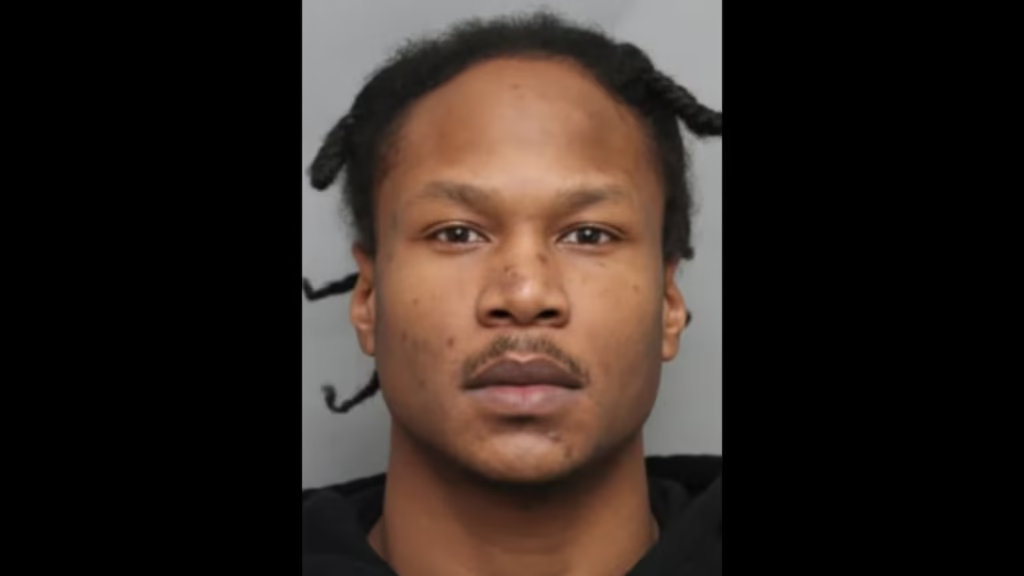
Wanted Canadian Murder Suspect Captured in U.S. After International Manhunt
A months-long international manhunt has reached a dramatic conclusion with the arrest of one of Canada’s most wanted fugitives. The suspect, wanted in connection with a brazen 2024 daylight shooting in Toronto, was apprehended by authorities in the United States, closing a critical chapter in a cross-border investigation.
From Toronto Street to National “Most Wanted” List
The case that propelled the suspect to infamy began on a summer afternoon in the bustling Eglinton West neighbourhood of Toronto. On June 16, 2024, a shooting erupted, claiming the life of a 39-year-old man. The violence, which police described as targeted, sent shockwaves through the community and launched a complex homicide investigation.
As evidence mounted, a suspect was identified. However, by the time authorities were ready to press charges, he had vanished. His alleged role in the killing and his disappearance led to his prominent placement on the Bolo Program’s “Top 25 Most Wanted” list, a national initiative designed to spotlight high-profile fugitives. For months, his face and details were circulated across Canada, with a substantial reward offered for information leading to his arrest.
The Breakthrough: A Cross-Border Capture
The breakthrough came not on Canadian soil, but south of the border. In a coordinated effort, the U.S. Marshals Service located and arrested the fugitive. While the exact location of his capture within the U.S. has not been widely publicized to protect operational details, the arrest highlights the seamless cooperation between Canadian and American law enforcement agencies.
Key players in the international operation included:
- Toronto Police Service: The lead investigative body that developed the case and secured a warrant for first-degree murder.
- The Bolo Program: Amplified the search nationally, keeping the case in the public eye and leveraging its reward offer.
- U.S. Marshals Service: Utilized its extensive fugitive task force networks to track and apprehend the suspect on American territory.
- Other Partners: Agencies like the RCMP and U.S. Customs and Border Protection (CBP) undoubtedly played supporting roles in intelligence sharing and border monitoring.
This capture is a textbook example of modern international policing, where borders do not shield those accused of serious crimes.
The Serious Charges and Legal Path Forward
The suspect now faces the severe charge of first-degree murder. In Canada, this indicates the prosecution believes the killing was planned and deliberate. With the arrest made in the United States, the legal process enters the extradition phase.
Extradition is the formal procedure where one country surrenders a person to another country for prosecution or punishment. The process involves:
- A formal request from the Canadian government (via the Department of Justice) to U.S. authorities.
- Court hearings in the U.S. to review the evidence and ensure the request meets the requirements of the extradition treaty between the two nations.
- A final decision by U.S. authorities to surrender the individual.
Given the serious nature of the charge and the strong treaty relationship between Canada and the U.S., legal experts anticipate the extradition will proceed, though it may take several months. Once back in Canada, the suspect will appear in a Toronto court to answer to the charge.
Community Impact and the Message from Police
The arrest brings a measure of relief to the Toronto community where the shooting occurred. Daylight violence of this nature creates lasting fear and trauma. The successful resolution of the manhunt demonstrates a commitment to holding perpetrators accountable, regardless of how far they run.
Toronto Police have emphasized that this arrest sends a clear message. A senior official stated that it underscores the force’s “relentless pursuit of those who commit acts of violence in our city” and the powerful results achieved through partnership. The collaboration between local police, national programs, and international allies creates a net that is increasingly difficult for fugitives to escape.
Analyzing the “Most Wanted” Strategy
The use of the Bolo Program’s “Top 25 Most Wanted” list is a strategic tool in modern policing. Its effectiveness lies in its dual approach:
- Public Engagement: By publicizing faces, names, and rewards, it transforms the public into a vast network of potential tips. Someone recognizing a fugitive at a gas station, workplace, or social gathering can be the key to an arrest.
- Psychological Pressure: Life on the run is difficult. Knowing one’s face is on posters and news sites nationwide increases paranoia, limits movement, and can force mistakes that lead to capture.
This case will likely be cited as a success story for the program, proving that sustained public attention can directly contribute to closing high-stakes investigations.
Looking Ahead: Justice and Closure
While the arrest is a pivotal moment, it marks the beginning of a new chapter: the pursuit of justice through the courts. The case will now move through the judicial system, where evidence will be presented, and a verdict will be sought. For the victim’s family and friends, this process is a painful but necessary path toward potential closure.
The seamless cross-border cooperation also sets a precedent. In an interconnected world, criminals often attempt to flee jurisdictions. This arrest reaffirms that law enforcement alliances are robust and capable of delivering fugitives to face trial.
The image of a wanted poster fading from bulletin boards symbolizes more than just the end of a search; it represents the unwavering principle that those accused of grave crimes will be found and will have their day in court. The capture of this fugitive in the United States is a stark reminder that there are fewer places to hide than ever before.

