
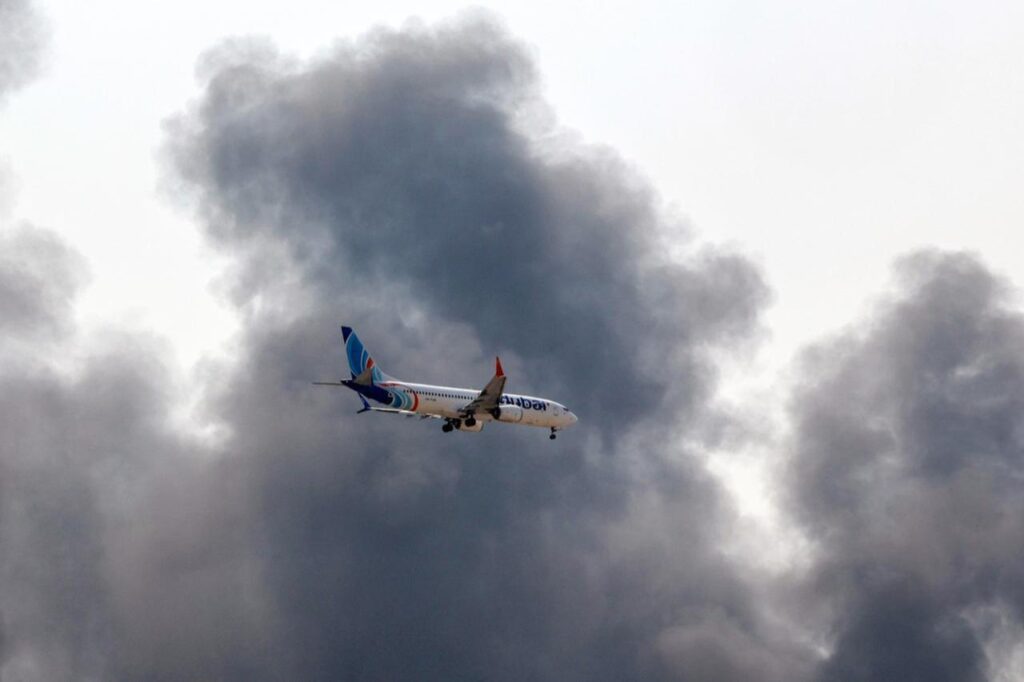
How a Middle East War Could Permanently Change Air Travel
The skies above the Middle East, long a critical global crossroads for aviation, have become a new front line. As geopolitical tensions escalate, the ripple effects are being felt far beyond the region’s borders, threatening to reshape the fundamental economics and pathways of international air travel. What began as a series of regional disruptions now has the potential to trigger permanent, structural changes in how we fly.
The Choke Point: Why the Middle East Airspace Matters
To understand the scale of the threat, one must first grasp the unparalleled importance of Middle Eastern airspace. It is the indispensable aerial bridge connecting Europe, Africa, and Asia. Major carriers from every continent rely on these corridors for efficient long-haul travel.
Key hubs like Dubai (DXB), Doha (DOH), and Abu Dhabi (AUH) have transformed into global mega-connectors, while the airspace over countries like Iran, Iraq, and Jordan serves as a vital throughway. When conflict closes or severely restricts these zones, the entire global network must contort itself to compensate, leading to cascading delays, skyrocketing costs, and untenable inefficiencies.
The Immediate Fallout: Longer Flights and Higher Costs
The most visible impact of airspace closures is the dramatic rerouting of flights. Airlines are forced to take lengthy detours to avoid conflict zones, adding hours to flight times and burning vast amounts of extra fuel.
Consequences for Airlines and Passengers:
- Soaring Operational Costs: Every extra hour in the air consumes thousands of dollars in additional fuel, crew costs, and aircraft wear-and-tear. These costs inevitably trickle down to passengers through higher ticket prices.
- Reduced Aircraft Utilization: A plane on a 14-hour detour cannot be used for as many flights per day. This effectively shrinks the global fleet’s capacity, reducing the supply of available seats.
- Passenger Inconvenience: Longer flight times mean more fatigue and tighter connections. For some routes, the added distance may make certain destinations commercially unviable, leading to suspended services.
The Long-Term Transformation: A Permanent Redrawing of the Map
While rerouting is an immediate tactical response, a prolonged crisis could force a strategic, permanent overhaul of global aviation routes. Airlines and aircraft manufacturers may begin planning for a world where the Middle Eastern shortcut is no longer a reliable option.
This could lead to:
- The Rise of New “Polar” and Southern Routes: We may see a significant increase in flights traversing Russian airspace (where politically permissible) or taking more southerly paths across the Indian Ocean. This would benefit airlines in regions like Southeast Asia and potentially revive interest in ultra-long-haul aircraft capable of bypassing hubs altogether.
- A Shift in Hub Power: The dominance of Gulf mega-hubs could be challenged if their geographic advantage is neutered by perpetual airspace risk. Airlines might strengthen alternative hubs in Turkey, India, or Central Asia.
- Re-evaluating the “Super-Connector” Model: The business model of funneling global traffic through one or two central points looks riskier when that point is in a volatile region. Point-to-point long-haul flights, enabled by new generation aircraft, could gain renewed appeal.
Beyond Routes: The Insurance and Security Earthquake
The conflict is triggering seismic shifts in two foundational pillars of aviation: insurance and security.
War Risk Insurance premiums for flights operating near or through the region have skyrocketed. In some cases, insurers may simply refuse coverage, forcing states to provide emergency guarantees. This added cost layer makes flying through or near the conflict zone prohibitively expensive, accelerating the move to reroute.
Furthermore, the threat to civilian aviation, underscored by past incidents, forces a total rethinking of risk assessment. Airlines and aviation authorities must now consider state-level military actions as a direct operational hazard, a complexity far beyond traditional terrorism threats. This necessitates unprecedented levels of coordination between civilian airlines, intelligence agencies, and military forces.
The Environmental and Economic Toll
The aviation industry is under immense pressure to reduce its carbon footprint. Massive, permanent reroutes represent a direct setback to these sustainability goals.
Millions of tons of extra CO2 emissions from longer flights would be generated annually, undermining global climate targets and potentially leading to stricter environmental regulations and taxes on the industry. Economically, the increased cost of global connectivity acts as a tax on trade, tourism, and diplomatic exchange, potentially slowing economic growth and globalization itself.
Navigating the New Normal: What Comes Next?
The future of air travel hangs in a delicate balance. The industry is hoping for a rapid de-escalation to return to normalcy. However, the genie of geopolitical risk may not go back in the bottle so easily.
Airlines are now stress-testing their networks against scenarios once considered unthinkable. Resilience and redundancy are becoming the new watchwords, potentially valued over pure efficiency. This could mean:
- Investing in more flexible route-planning software and intelligence capabilities.
- Diversifying hub dependencies and fleet composition.
- Advocating for stronger international frameworks to protect civilian air corridors during conflicts.
The convenience and affordability of modern air travel were built on a foundation of stable geopolitics and open skies. As that foundation shakes, the entire structure of global aviation must adapt. The conflict in the Middle East is not just a temporary disruption; it is a potent catalyst that may well force the world to redraw its flight maps for good, making air travel more expensive, less direct, and fundamentally reshaped by the realities of a new geopolitical age. The path the industry takes now will determine the shape of our connected world for decades to come.

