Canada and Mercosur Forge Historic Free Trade Agreement in 2024
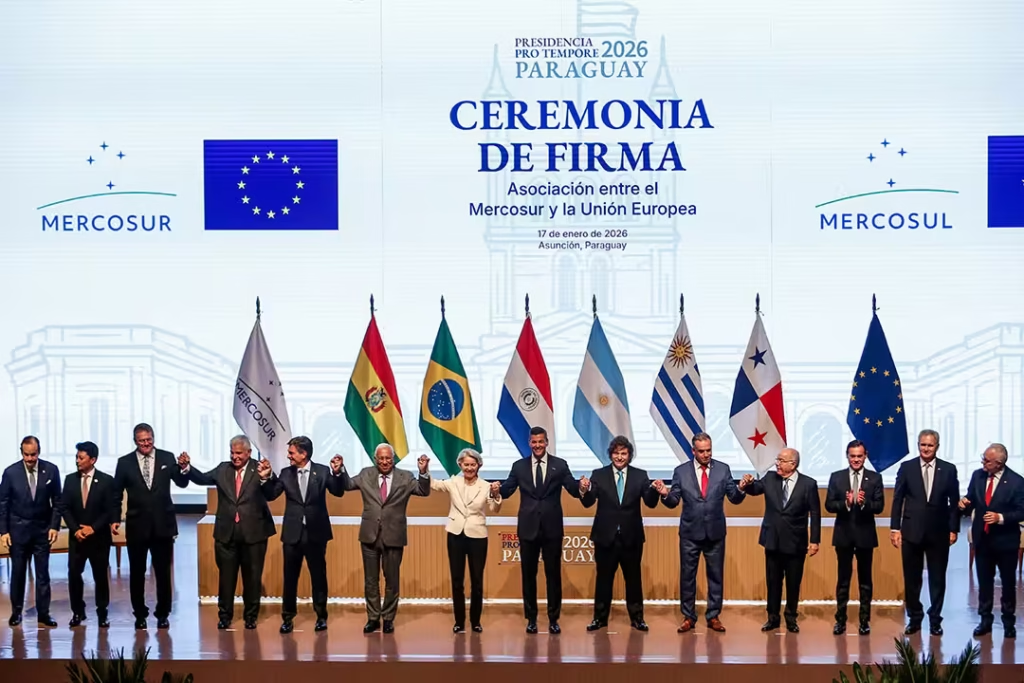
In a landmark move set to reshape economic ties across the Americas, Canada and the Mercosur trade bloc have announced a pivotal breakthrough in negotiations, aiming to finalize a comprehensive free trade agreement this year. This ambitious pact, linking the world’s tenth-largest economy with a South American powerhouse representing over 260 million consumers, promises to unlock unprecedented opportunities for trade, investment, and strategic partnership. After years of intermittent talks, the renewed commitment from both sides signals a new chapter in transcontinental commerce.
Unpacking the Mercosur-Canada Trade Deal: A New Economic Corridor
The potential agreement between Canada and Mercosur—comprising Argentina, Brazil, Paraguay, and Uruguay—is more than just a tariff-reduction exercise. It represents the creation of a major new economic corridor linking North and South America. For Canada, a nation whose trade policy has been heavily focused on the United States and Europe, this deal is a strategic diversification play. For Mercosur nations, it offers access to a stable, high-tech economy and a gateway to broader global value chains.
The core objectives of the negotiations are multifaceted:
- Tariff Elimination: Dramatically reducing or eliminating duties on a vast majority of traded goods, from Canadian machinery and aerospace parts to South American agricultural products and minerals.
- Modern Trade Rules: Establishing contemporary frameworks for digital trade, intellectual property, and cross-border data flows that reflect 21st-century commerce.
- Service Sector Access: Opening new markets for Canadian financial, professional, and technology services while creating opportunities for Mercosur firms.
- Investment Protection: Creating predictable, transparent rules to encourage and protect bilateral investments in key sectors like infrastructure, energy, and mining.
Key Opportunities for Canadian Businesses and Exporters
Canadian industries stand to gain significantly from enhanced access to the vast Mercosur market. Sectors poised for growth include:
Agri-Food and Fertilizers: While sensitive agricultural products will be carefully negotiated, Canada can become a major supplier of high-quality wheat, pulses, and potash fertilizers crucial for South American agriculture. Processed food and beverage exporters also see a growing consumer market.
Clean Technology and Infrastructure: With Mercosur nations investing heavily in sustainable energy and transportation, Canadian expertise in hydroelectric power, smart grid technology, and engineering services is in high demand.
Advanced Manufacturing and Aerospace: Canada’s strengths in aerospace components, industrial machinery, and information and communications technology (ICT) align well with Mercosur’s industrial development goals, offering a competitive alternative to other global suppliers.
What Mercosur Nations Gain from the Partnership
For the Mercosur bloc, the agreement is a gateway to innovation, investment, and value-added exports.
- Agricultural Market Access: Securing preferential access for key exports like beef, soy products, citrus, and coffee to Canada’s affluent market is a primary objective.
- Technology Transfer and Investment: Attracting Canadian capital and expertise into sectors like mining, oil and gas, and renewable energy can drive modernization and productivity gains.
- Economic Integration: The deal encourages Mercosur producers to integrate into more sophisticated supply chains, moving beyond commodity exports to higher-value goods and services.
Navigating Challenges and Sensitive Sectors
No trade negotiation of this scale is without its complexities. Both sides must navigate sensitive domestic interests to reach a final, balanced text.
For Canada, the most sensitive issue revolves around agricultural supply management, particularly for dairy, poultry, and eggs. The government has consistently defended these sectors in past agreements. Any market access granted to Mercosur’s efficient agricultural producers will be a critical point of negotiation and likely involve long phase-out periods and limited quotas.
For Mercosur, concerns include protecting nascent industries from foreign competition and ensuring the deal supports broader industrial development goals. Furthermore, environmental and labor standards are expected to be a key component, with Canada pushing for strong, enforceable commitments on sustainable development, climate change, and workers’ rights—topics that have been points of discussion in Mercosur’s dealings with other partners.
The Geopolitical Significance: Strengthening Ties Across the Americas
Beyond pure economics, the Canada-Mercosur agreement carries substantial geopolitical weight. It solidifies Canada’s role as a committed partner in the Western Hemisphere beyond its traditional alliances. In an era of global trade uncertainties and shifting supply chains, building resilient, rules-based partnerships with like-minded democracies is a strategic imperative for both sides.
The pact also positions Canada and Mercosur as more attractive hubs for international investment, offering companies a combined market with complementary strengths—from Canada’s innovation and financial depth to Mercosur’s vast natural resources and youthful demographic.
The Road Ahead: From Negotiation to Ratification
While the aim to sign in 2024 is clear, the path forward involves intense technical work. Negotiators will be working through the summer and fall to resolve outstanding issues on market access, rules of origin, and legal texts. Once a deal is reached, it must undergo a legal review, translation, and finally, signature.
The process does not end there. The agreement will then face the critical stage of domestic ratification. In Canada, this will involve parliamentary scrutiny and likely public consultations. In Mercosur nations, each country’s legislative body will need to approve the pact according to its own constitutional processes—a step that has proven challenging for similar agreements in the past.
A Transformative Deal for the Future
The prospective free trade agreement between Canada and Mercosur is a forward-looking endeavor. It is designed not just to address today’s trade flows but to build a framework for the economic relationships of the coming decades. By fostering cooperation on innovation, sustainability, and inclusive growth, this partnership has the potential to be a model for progressive trade in the Americas.
For businesses, the message is to start preparing. Understanding the new market landscapes, potential supply chain configurations, and regulatory environments will be key to capitalizing on the opportunities this historic agreement will unlock. As 2024 progresses, all eyes will be on the negotiation tables where this new trans-American economic bridge is being built.