
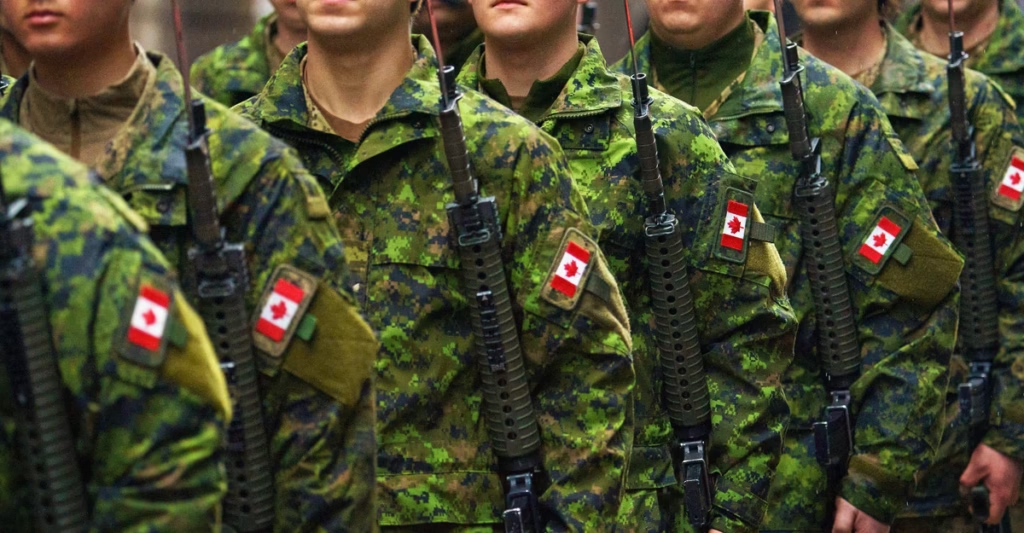
Why Canada Is Rethinking Its Military Strategy
Canada has spent decades building its military around close cooperation with the United States. Now, growing international security concerns and tensions with Washington are prompting the Canadian government to reconsider how much it depends on its southern neighbor for national defense.
Under Prime Minister Mark Carney, Canada is pursuing a larger military and a stronger domestic defense industry. The challenge is that changing decades of military integration requires more than increasing budgets or purchasing new equipment.
The country must also develop industrial capacity, maintain existing partnerships, and ensure that its armed forces can operate effectively if access to American support becomes less dependable.
How the United States Became Central to Canadian Defense
Canada’s military relationship with the United States has deep historical roots. In 1957, the two countries established the North American Aerospace Defense Command, commonly known as NORAD, to coordinate the defense of North American airspace.
Over the following decades, their armed forces developed closely connected systems for intelligence, communications, command operations, and military planning. This arrangement allowed Canada to cooperate with a much larger military rather than independently developing every capability it needed.
However, that integration also created dependencies. Canadian forces rely on American support for certain critical operations, and the country cannot independently conduct major overseas military operations without US assistance, according to the discussion of Canada’s defense limitations in The Atlantic.
Consequently, reducing dependence on Washington is not simply a matter of replacing American equipment with products from another country. Canada must consider how different systems communicate, share information, and coordinate operations with allied forces.
Mark Carney’s Plan to Strengthen Canadian Defense
Prime Minister Mark Carney is pursuing a defense strategy that combines increased military investment with efforts to expand Canada’s domestic defense industry. The government wants Canadian companies to play a larger role in producing and supplying military equipment.
One important target is to direct 70 percent of defense contracts to Canadian firms. Achieving this objective could help strengthen local manufacturing, support specialized employment, and give the country more control over parts of its military supply chain.
Yet expanding domestic production will take time. Canadian businesses need the facilities, technical expertise, skilled workers, and reliable supply chains required to manufacture sophisticated military equipment at scale.
Canada must also decide which capabilities it can realistically produce at home and where cooperation with foreign partners remains necessary. Building every military system domestically would be expensive and difficult, particularly for a country whose defense industry is relatively small compared with that of the United States.
Why Rising Defense Spending Does Not Solve Everything
Canada’s military expansion involves a substantial increase in planned spending. Figures discussed in the source coverage project defense spending rising from $64 billion in 2025 to $160 billion by 2035.
These figures illustrate the scale of the proposed expansion, but projected spending should not be confused with money already spent or capabilities already delivered. The long-term financial feasibility of such an increase remains an important question.
Military budgets must cover more than new aircraft, ships, weapons, and surveillance equipment. Governments also need to fund personnel, training, maintenance, infrastructure, communications, and the systems that allow different military units to operate together.
Equipment procurement can also take years. Even when a government approves a purchase, manufacturers must produce the equipment, personnel must learn to operate it, and military organizations must integrate it into existing operations.
For that reason, the effectiveness of Canada’s buildup will depend on how well spending translates into usable military capabilities. Budget announcements alone cannot demonstrate that the armed forces are ready to meet new threats.
Why Breaking Away From American Equipment Is Difficult
Canada’s previous military procurement decisions complicate its efforts to become more independent. Former Prime Minister Justin Trudeau’s government committed to major purchases of American military equipment, including 88 F-35 fighter aircraft.
Such commitments have consequences beyond the initial purchase price. Modern combat aircraft and other advanced systems depend on specialized maintenance, technical support, training, communications, and operational infrastructure.
Replacing these systems could require substantial additional investment and years of preparation. Canada would also have to consider whether alternative equipment can meet its operational requirements and work effectively with the forces of its allies.
The country therefore faces a balancing act. Continuing to purchase American equipment may preserve existing interoperability, while diversifying suppliers could reduce some long-term dependencies.
Neither approach automatically guarantees greater security. Canadian decision-makers must weigh the cost of changing equipment against the strategic benefits of having more choices in the future.
Political Tensions Are Adding Pressure
Relations between Canada and the United States have become more complicated amid tensions during US President Donald Trump’s administration. Trade disputes and Trump’s controversial comments about Canada’s future have contributed to concerns about the reliability of the bilateral relationship.
Defense cooperation has also experienced strain. In May 2026, the United States suspended its participation in a joint continental-defense board dating back to World War II. The decision highlighted how political disagreements can affect established defense arrangements.
Nevertheless, the two countries remain closely connected through military cooperation. Their shared geography and responsibility for defending North America make coordination important even when their governments disagree.
Canada must therefore prepare for greater uncertainty without assuming that cooperation with Washington will disappear. Maintaining working relationships while developing alternative capabilities is a central challenge for its defense planners.
Can Canada Build Stronger Partnerships Beyond the US?
Another part of Canada’s strategy is to diversify its international defense relationships. Closer cooperation with European NATO allies could help Canada develop alternatives in areas where American systems currently dominate.
Such partnerships may provide opportunities for joint procurement, technology development, industrial collaboration, and coordinated military planning. They could also help Canadian companies participate in broader international defense supply chains.
However, working with additional partners introduces its own challenges. Military systems must be compatible, procurement schedules must align, and participating countries must agree on responsibilities, costs, and operational requirements.
Cooperation with European allies would therefore complement Canada’s efforts to strengthen its domestic capabilities rather than provide an immediate replacement for its relationship with the United States.
What Canadians Should Watch Over the Next Decade
The progress of Canada’s military expansion will become clearer through measurable developments rather than announcements alone. Several indicators can help readers assess whether the strategy is delivering practical results.
- Defense spending: Watch annual government budgets and financial reports to see whether planned investments are funded and sustained.
- Domestic production: Follow new contracts awarded to Canadian companies and determine whether those contracts lead to actual manufacturing capacity.
- Military readiness: Look for evidence of improved equipment availability, personnel recruitment, training, and operational preparedness.
- International partnerships: Track new procurement agreements and defense initiatives involving European NATO allies and other partners.
- Continental cooperation: Monitor developments in NORAD and other joint arrangements that remain important to North American security.
For Canadians interested in the financial implications, the practical next step is to review federal budget announcements and publications from Canada’s Department of National Defence. These documents can help distinguish proposed spending from approved funding and completed projects.
Canada’s Defense Future Will Depend on Execution
Canada is trying to strengthen its military at a time when its security environment and relationship with the United States are becoming less predictable. The government’s approach combines higher defense spending, greater support for Canadian manufacturers, and efforts to establish a wider network of international partners.
Still, reducing dependence on the United States will be a gradual process. Decades of cooperation have shaped Canada’s equipment, operational planning, and access to essential military capabilities, making a rapid separation difficult.
Over the coming years, the most important developments to watch will be whether planned investments produce operational improvements, whether Canadian industry can fulfill a larger share of defense needs, and whether new partnerships deliver dependable alternatives.
Canada’s progress will ultimately be measured not by how much it promises to spend, but by whether it can turn those commitments into a more capable military while preserving the cooperation necessary to defend North America.