A Canadian Mother’s Struggle Inside a U.S. ICE Detention Center
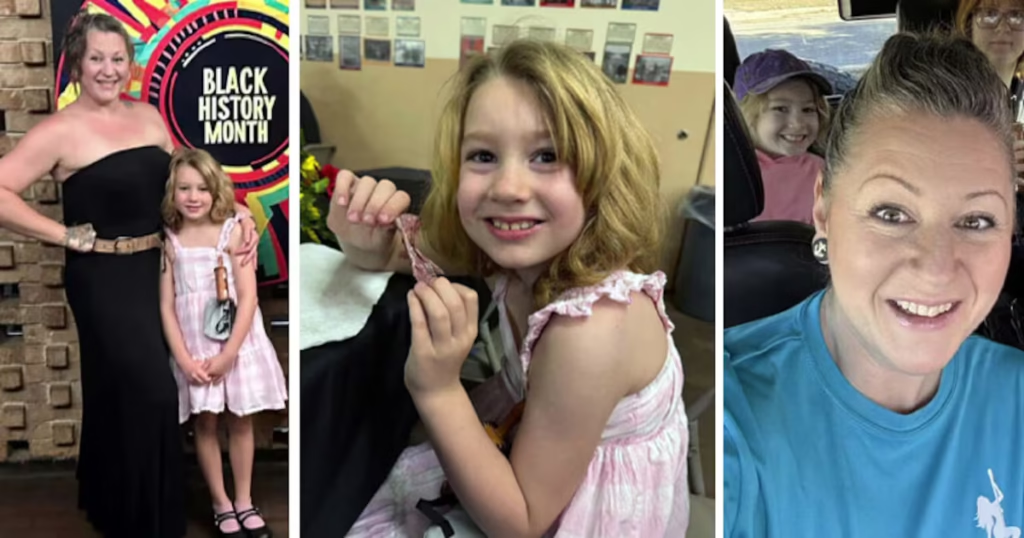
The image of a U.S. Immigration and Customs Enforcement (ICE) detention center often conjures stark, impersonal scenes. But for one Canadian mother, it became the unimaginable backdrop to her 7-year-old daughter’s childhood. In a heart-wrenching interview, she has broken her silence, revealing the profound psychological toll and daily struggle of life confined with her young child in a system designed for adults.
A Mother’s Worst Nightmare: From Vacation to Detention
The family’s ordeal began not with a clandestine border crossing, but as a trip to visit relatives. Details of their specific immigration status are complex, but the result was catastrophic: mother and child were taken into ICE custody. Suddenly, their world shrunk to a detention facility, a place of concrete, regulations, and limited horizons.
“She’s pretty stressed out,” the mother told CTV News, her voice heavy with emotion as she described her daughter’s state. The simple statement underscores a devastating reality—the innocent anxiety of a child confused by her surroundings, missing school, friends, and the stability of home.
The Daily Reality of Detention with a Child
Life inside the center is a study in contradiction for a parent. Her primary role is to protect and nurture, yet the environment is inherently traumatic. The mother detailed a routine defined by lack:
- Loss of Routine: No school, no playgrounds, no normal childhood milestones. Education and play are fragmented, if they exist at all.
- Constant Anxiety: The stress of uncertain release dates, legal proceedings, and the palpable tension of the facility is a constant presence, absorbed by both mother and child.
- Inadequate Facilities: Spaces are not designed for families. Privacy is scarce, sleeping arrangements are institutional, and access to appropriate nutrition or pediatric healthcare is a persistent concern.
“You try to be strong for them, to make it a game,” the mother shared, “but the walls are real. The locks are real. She feels it.” This effort to normalize the un-normalizable is a tremendous psychological burden.
The Invisible Scars: Psychological Impact on a Young Child
Experts in child development and trauma have long warned about the impact of detention on minors. For a 7-year-old, this experience isn’t just an interruption; it can reshape their understanding of safety, authority, and their own worth.
The mother reports signs of regression and emotional distress in her daughter—clinginess, nightmares, and bouts of unexplained sadness. These are classic trauma responses. The child is living in a state of “toxic stress,” where the body’s fear response is constantly activated, potentially affecting brain development and long-term mental health.
The cruel irony is that the very system purportedly enforcing the law is, in this case, actively harming a child it has a duty to protect under international norms and humanitarian principles.
A Broken System: The Broader Context of Family Detention
This Canadian family’s plight is not an isolated incident. It casts a spotlight on the controversial U.S. practice of family immigration detention. While policies have shifted over various administrations, the detention of children, even with parents, remains a focal point of human rights critiques.
Organizations like the American Academy of Pediatrics have unequivocally stated that detention is no place for a child. They argue it undermines a child’s health and well-being, regardless of the conditions, and that community-based alternatives are more humane and effective.
The mother’s account adds a powerful, personal voice to this clinical assessment. It moves the debate from policy papers to the palpable fear in a young girl’s eyes and the desperate resilience of her mother.
Advocacy and the Fight for Release
Amidst the darkness, the mother’s voice itself is an act of defiance. By speaking publicly, she advocates not just for her own child, but for all families in similar situations. Her goals are clear:
- Immediate Release: To be reunited with the wider family and allow her daughter to heal in a supportive, stable environment.
- Legal Resolution: To pursue their immigration case from a place of dignity, not detention.
- Raising Awareness: To show the world that behind the headlines about border policies are real people, especially vulnerable children, paying the highest price.
Her story challenges us to consider: what does it say about a society when a 7-year-old’s mental health is collateral damage in a bureaucratic process?
A Plea for Humanity
The journey of this Canadian mother and her daughter is a stark reminder of the human cost of rigid immigration systems. It transcends borders and politics, touching on a universal tenet: the protection of children.
As their legal battle continues, the mother’s love remains her daughter’s primary shield. But love should not have to be a defense against institutional trauma. Their story is a plea for compassion, for a re-evaluation of policies that detain families, and for the recognition that no child’s well-being should be negotiable in the name of enforcement.
The world is watching, hoping for a resolution that allows this little girl to trade the memory of concrete walls for the freedom of a playground, and the stress of detention for the simple, carefree joy of being seven years old.