
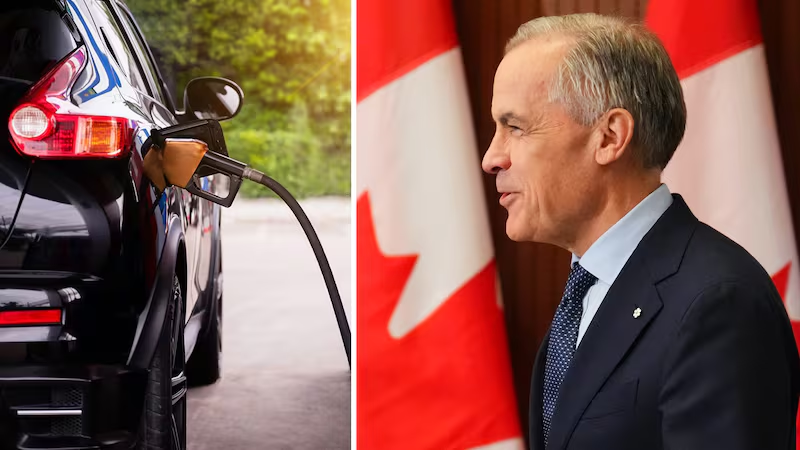
Carney’s Gas Tax Holiday: Relief at the Pump Starts Next Week
For Canadian drivers weary of watching their hard-earned dollars vanish at the fuel pump, a long-promised respite is finally on the horizon. Starting next week, the federal government under Prime Minister Mark Carney will officially suspend the collection of the federal fuel excise tax, delivering immediate price relief at gas stations across the country. Dubbed the “Gas Tax Holiday,” this temporary measure marks one of the government’s most direct interventions to combat cost-of-living pressures and is poised to put billions back into the pockets of Canadians.
What the Federal Gas Tax Suspension Means for You
At its core, the policy is straightforward. As of next week, the federal government will cease collecting its excise tax on gasoline and diesel, which currently sits at 14 cents per litre for gasoline and 17 cents per litre for diesel. This is not a rebate or a future credit; it is an immediate reduction in the tax component built into the price you see on the station’s sign.
Calculating Your Savings at the Pump
The savings, while not a magic bullet for overall inflation, are tangible. Based on current average prices and typical consumption:
- For a driver filling a 50-litre tank with gasoline, each fill-up will be approximately $7.00 cheaper.
- For a commercial transport truck with a 300-litre tank filling with diesel, the savings jump to roughly $51.00 per fill.
- Over the course of the suspension, the average household could save between $150 and $300, depending on driving habits and region.
The government estimates the total fiscal impact of this pause will be several billion dollars, funds that will remain in the Canadian economy. The critical mechanism is that the tax collection stops at the distributor level, meaning the reduction should flow directly to retail prices without bureaucratic delays.
The Driving Forces Behind the Policy
This move does not exist in a vacuum. It is the culmination of sustained political pressure and a clear response to an economic pinch point felt nationwide.
Addressing the Cost-of-Living Crisis
Inflation, while cooling from its peak, has left the prices of essentials—including food, housing, and transportation—stubbornly high. For many Canadians, commuting is non-negotiable, whether for work, school, or family. The gas tax represents a fixed, federally controlled cost within the volatile price of fuel. By suspending it, the Carney government is directly targeting a specific and visible pain point, offering psychological and financial relief to consumers and businesses alike.
Political Strategy and Promises Kept
The Gas Tax Holiday was a cornerstone of Prime Minister Carney’s election platform, framed as a practical measure to provide “breathing room.” Following through delivers on a key campaign promise and demonstrates action at a time when governments globally are grappling with how to support citizens without exacerbating inflation. It also places pressure on provincial governments, some of which have their own per-litre taxes, to consider similar relief.
Broader Economic Implications and Industry Impact
While consumers are the primary beneficiaries, the suspension sends ripples throughout the economy.
- Logistics and Transportation: The trucking, shipping, and aviation industries face massive fuel bills. A 17-cent reduction on diesel significantly lowers operational costs, which could help stabilize the price of goods transported across the country.
- Consumer Spending: Money saved on fuel is likely to be redirected into other parts of the economy—be it retail, hospitality, or services—providing a potential stimulative effect.
- Inflation Metrics: A direct drop in fuel prices will mechanically lower the Consumer Price Index (CPI), potentially allowing the Bank of Canada more flexibility in its future interest rate decisions.
Criticisms and Considerations: The Other Side of the Coin
No major fiscal policy is without its detractors, and the Gas Tax Holiday has faced pointed criticism from economists and environmental advocates.
The Environmental Dilemma
The most potent criticism is environmental. By making fossil fuel consumption cheaper, the policy could disincentivize the transition to electric vehicles and public transit at a time when climate goals demand the opposite. Critics argue that this short-term relief undermines long-term climate commitments and carbon pricing mechanisms designed to shift behavior. The government has countered by stating the measure is temporary and that concurrent investments in EV infrastructure and green technology continue unabated.
Fiscal Responsibility and Infrastructure Funding
The federal gas tax is not just general revenue; a portion of it is traditionally earmarked for the Canada Community-Building Fund, which finances municipal infrastructure projects like roads, bridges, and transit. The government has assured municipalities that this funding stream will be held harmless, with lost revenues backfilled from the general treasury. Skeptics question the long-term sustainability of this approach and the message it sends about dedicated environmental taxes.
Will the Savings Be Fully Passed On?
A perennial concern with tax suspensions is whether the full amount will reach the consumer. The government has stated it will monitor prices closely and engage with the Competition Bureau to ensure retailers and distributors pass the savings through. However, market dynamics, refinery constraints, and global oil price volatility mean the discount may not always appear as a perfect 14-cent drop on the litre.
How to Maximize Your Relief and What Comes Next
With the suspension beginning imminently, drivers should be aware of a few key points:
- The reduction will be applied automatically; no applications or coupons are needed.
- Savings may take a few days to fully propagate to all gas stations, especially in remote areas, as distributors work through existing, taxed inventory.
- The holiday is temporary. The government has currently legislated it for six months, after which the tax will be reinstated in a phased return over a subsequent quarter.
This sunset clause is deliberate, aiming to avoid a sharp price shock when the policy ends. It also provides a clear timeline for the government to assess the measure’s effectiveness and for Canadians to adjust their budgets accordingly.
A Temporary Lifeline in Uncertain Economic Times
The launch of the Gas Tax Holiday is a defining moment for the Carney government, a high-visibility policy experiment in targeted fiscal relief. Its success will be judged not just at the pump, but in its wider economic effects and the political capital it generates. For Canadians, it offers a welcomed, though finite, buffer against the costs of mobility. As the suspension takes effect next week, it will provide a real-world test of how much direct intervention can ease household budgets and whether the benefits outweigh the potential trade-offs for the nation’s fiscal and environmental roadmap. The relief is real, but the journey—for both consumers and policymakers—is far from over.

