Alberta Deploys AI Drones to Combat Invasive Wild Boar Threat
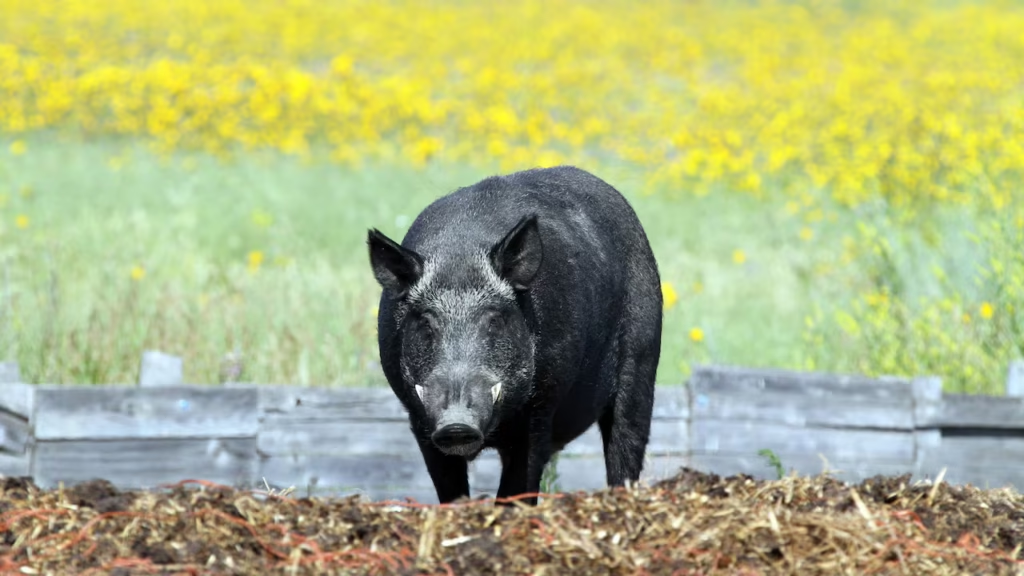
For years, a silent and destructive invasion has been rooting through Alberta’s farmlands and forests. Feral wild boars, often dubbed “ecological train wrecks,” have proven to be one of the province’s most resilient and damaging invasive species. Their intelligence, rapid reproduction, and nocturnal habits have made traditional tracking and culling methods a frustrating game of cat and mouse. But now, Alberta is fighting back with 21st-century technology. In a groundbreaking move, the province is deploying a fleet of AI-powered drones, turning the tide in this ongoing war on the wild.
The “Super Pig” Problem: Why Wild Boars Are a Crisis
To understand the urgency of this high-tech response, one must first grasp the scale of the problem. These are not the docile pigs of a barnyard. Descended from domesticated pigs that were either released or escaped, these feral animals have reverted to a wild state. They are incredibly adaptable, thriving in everything from dense boreal forest to agricultural heartland.
An Agricultural and Ecological Nightmare
The damage they inflict is multi-faceted and severe:
- Crop Destruction: They root up fields with their powerful snouts, destroying crops like canola, wheat, and hay, causing millions in agricultural losses.
- Environmental Degradation: Their rooting behavior erodes soil, damages sensitive ecosystems, and contaminates water sources.
- Disease Vectors: They can carry and transmit up to 89 diseases and parasites, threatening domestic swine herds and potentially human health.
- Rapid Reproduction: A single sow can have multiple litters per year, with 6+ piglets each, allowing populations to explode if left unchecked.
Their elusive nature—primarily active at night and in remote cover—has made them notoriously difficult to find and eradicate. Ground traps and helicopters have had limited success against an enemy this smart and secretive.
The High-Tech Hunter: How AI Drones Are Changing the Game
Enter the drone squadron. Alberta’s latest strategy involves equipping specialized drones with thermal imaging cameras and sophisticated artificial intelligence software. This combination is a game-changer for wildlife management.
Eyes in the Dark Sky
The core advantage is the thermal camera. It detects heat signatures, making the boars’ nocturnal activities visible from the air, regardless of darkness or light foliage cover. A group of boars, or even a single animal, stands out as a bright blob on the cold landscape. But the real innovation is the AI layer. The software is trained to analyze the thermal footage in real-time, learning to distinguish the heat signature of a wild boar from that of a deer, moose, or cow. This drastically reduces false positives and allows pilots to accurately identify targets.
The Tactical Workflow: From Detection to Action
The operational process is a streamlined, tech-driven hunt:
- Pre-Programmed Patrols: Drones are sent on automated flights over known or suspected boar territory, often following creek beds and forest edges.
- AI-Powered Detection: The onboard AI scans the thermal feed, flagging potential boar signatures for the human operator.
- Human Verification & Tracking: The operator confirms the sighting and can then manually control the drone to track the sounder (group of boars), mapping their location and movement patterns.
- Ground Team Dispatch: Precise GPS coordinates are relayed to a waiting ground team equipped with traps or firearms, who can move in quickly for a targeted removal.
This method is not only more effective but also more efficient and safer, removing the need for low-flying helicopter chases in difficult terrain.
Beyond the Boom: A Strategic and Ethical Approach
It’s crucial to note that the drones themselves are surveillance and tracking tools, not weapons. They do not carry armaments. Their purpose is intelligence-gathering to enable precise, humane, and effective removal by trained professionals on the ground. This precision is a key ethical advantage, allowing for targeted culls that minimize stress to non-target animals and the environment.
Data as the Ultimate Weapon
Perhaps the most powerful long-term weapon is the data these drones collect. Every flight generates valuable information:
- Population density and distribution maps.
- Movement corridors and preferred habitats.
- Behavioral patterns related to weather and season.
- Reproductive success (by spotting sounders with piglets).
This intelligence allows Alberta’s wildlife managers to move from reactive culling to predictive population management. They can anticipate where boars might spread next and deploy resources proactively, stopping populations before they become established.
Challenges and the Road Ahead
While promising, the drone program is not a magic bullet. The technology faces challenges like flying in extreme cold, high winds, and heavily forested areas where canopy cover can block thermal views. Furthermore, the boars themselves may adapt, becoming even more wary of the silent drones overhead.
The program also operates within a complex framework of regulations and public perception. Privacy concerns are addressed through strict flight protocols, and the government emphasizes that the mission is one of protection—of livelihoods, ecosystems, and the food supply.
A Model for the World
Alberta’s initiative is being watched closely by other jurisdictions across North America grappling with similar feral swine invasions. By pioneering the integration of AI drone technology into invasive species control, Alberta is not just protecting its own borders; it is developing a scalable, high-tech template that could be used to manage invasive species globally, from feral hogs in the southern United States to other destructive fauna elsewhere.
Conclusion: A New Front in an Old War
The battle against feral wild boars is a testament to the destructive power of invasive species and the ingenuity required to stop them. Alberta’s deployment of AI drones marks a significant evolution in this fight. It represents a shift from brute-force methods to a smarter, data-driven strategy. By leveraging the power of thermal imaging, artificial intelligence, and real-time data, the province is finally gaining the upper hand against an enemy that has long operated under the cover of darkness. This isn’t just about eliminating a pest; it’s about using innovation to safeguard agriculture, preserve native ecosystems, and protect an industry vital to Alberta’s identity. The high-tech hunt is on, and its success could echo far beyond the province’s fields and forests.