
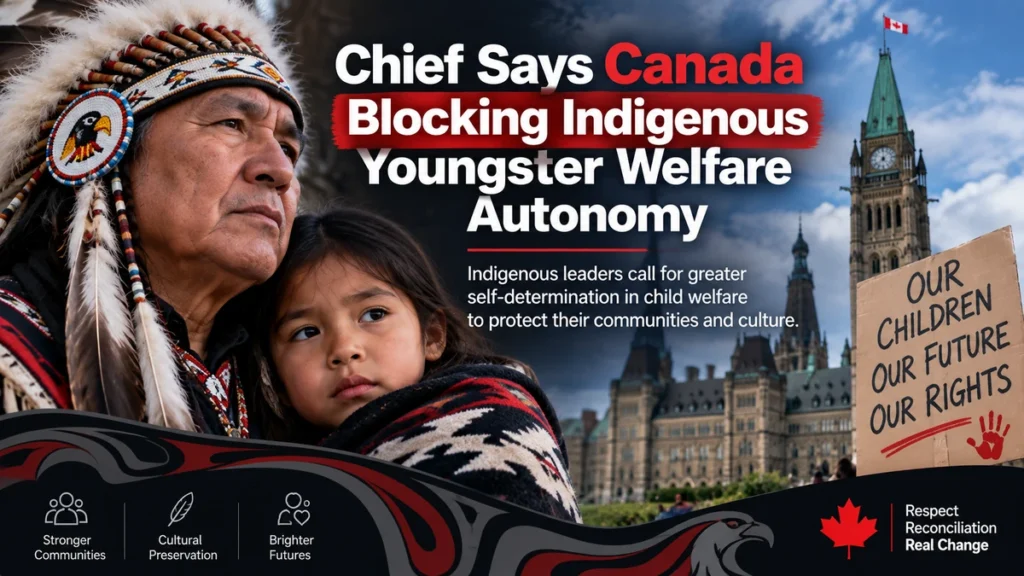
Chief Says Canada Blocking Indigenous Youngster Welfare Autonomy
Canada’s federal authorities is stopping Indigenous nations from regaining management of kid and household companies. Study in regards to the limitations Taykwa Tagamou Nation faces.
Indigenous baby welfare management
When Authorities Management Turns into a Barrier to Therapeutic
For many years, Indigenous communities throughout Canada have watched their kids enter the kid welfare system at disproportionately excessive charges. The Taykwa Tagamou Nation, situated in northern Ontario, represents one among many First Nations decided to reclaim authority over baby and household companies—a duty that was stripped away generations in the past. But in keeping with Chief of Taykwa Tagamou Nation, federal forms continues to dam these efforts, leaving households fragmented and communities unable to heal on their very own phrases.
The irony is stark: the identical authorities that created the disaster via residential faculties and compelled assimilation insurance policies now makes use of purple tape to stop Indigenous nations from fixing the injury themselves.
Understanding the Present System and Its Affect
Youngster and household companies in Ontario fall beneath provincial jurisdiction, however when Indigenous communities are concerned, the system turns into difficult by overlapping federal, provincial, and band-level authorities. This fragmentation signifies that choices affecting Indigenous kids typically occur with out significant enter from the nations themselves.
The Taykwa Tagamou Nation, like many First Nations, operates beneath its personal governance construction however lacks the authorized authority to completely management how baby welfare is run on its territory. As an alternative, provincial baby safety businesses make essential choices about Indigenous kids, typically eradicating them from their communities and putting them with non-Indigenous households or in institutional care.
The Historic Context: Why This Issues
Canada’s historical past with Indigenous baby welfare is a darkish one. From residential faculties to the Sixties Scoop, successive governments systematically separated Indigenous kids from their households and cultures. These insurance policies had been designed to assimilate Indigenous peoples and erode their connection to their heritage.
The legacy persists immediately. Indigenous kids characterize about 7 p.c of Canada’s baby inhabitants however account for practically 50 p.c of youngsters in foster care. This disparity is not a coincidence—it displays systemic discrimination baked into how baby welfare techniques function throughout the nation.
For Taykwa Tagamou Nation and related communities, regaining management of kid and household companies is not simply administrative reform. It is about breaking a cycle of trauma and rebuilding household constructions in keeping with Indigenous values and practices.
What Taykwa Tagamou Nation Is Making an attempt to Accomplish
The Taykwa Tagamou Nation has developed its personal framework for baby and household companies that prioritizes preserving kids related to their households, neighborhood, and tradition. This strategy aligns with Indigenous views on child-rearing and neighborhood duty—ideas that existed lengthy earlier than colonial governments arrived.
Their mannequin emphasizes prevention and early intervention, supporting households earlier than crises happen quite than solely intervening after issues escalate. It additionally prioritizes kinship care, putting kids with prolonged members of the family quite than eradicating them solely from their neighborhood.
These practices mirror what analysis more and more confirms: kids thrive after they stay embedded of their cultural communities and preserve household connections. But the federal authorities’s resistance prevents Taykwa Tagamou from totally implementing this imaginative and prescient.
The Federal Limitations: What’s Really Blocking Progress
Based on the Chief of Taykwa Tagamou Nation, the federal authorities has created procedural and authorized obstacles that make it practically unimaginable for the nation to imagine full management of kid and household companies. These limitations embrace funding restrictions, lack of recognition of Indigenous jurisdiction, and necessities to function inside provincial frameworks that battle with Indigenous governance.
One main impediment includes funding mechanisms. Federal cash for baby welfare typically comes with circumstances that require First Nations to comply with provincial procedures and reporting necessities. This creates a dependency relationship the place communities can’t make autonomous choices even after they have the experience and cultural data to take action.
One other barrier is jurisdictional ambiguity. Federal legislation would not clearly set up Indigenous nations’ authority over baby and household companies inside their territories. This authorized gray space offers provincial governments and federal businesses leverage to keep up management and resist Indigenous self-determination.
The Sensible Affect on Households
These bureaucratic limitations have actual penalties for actual households in Taykwa Tagamou. Youngsters proceed to be faraway from their communities and positioned in unfamiliar environments. Households wrestle to navigate a system designed by outsiders who do not perceive their values or wants.
Dad and mom within the nation could face baby welfare interventions primarily based on standards developed in Toronto or Ottawa that do not account for Indigenous child-rearing practices. Poverty, housing challenges, or parenting approaches that differ from mainstream norms can set off involvement from provincial businesses, even when kids are secure and beloved.
This creates a vicious cycle: communities change into distrustful of social companies, households disguise issues quite than in search of assist, and youngsters endure in silence quite than connecting with helps that would assist them.
A Path Ahead: What Indigenous Self-Dedication May Look Like
If the federal authorities eliminated these limitations, Taykwa Tagamou Nation may implement baby and household companies that mirror their values and priorities. This would possibly embrace involving Elders in decision-making, utilizing conventional dispute decision practices, or creating community-based help techniques quite than institutional ones.
A number of Indigenous communities throughout Canada have efficiently negotiated agreements that give them larger management over baby welfare. These examples show that Indigenous-led techniques can work successfully when given the sources and authority to take action.
What’s required is not invention—it is belief. The federal authorities should acknowledge that Indigenous nations perceive their very own communities higher than any exterior company and that they are able to defending their kids whereas sustaining cultural continuity.
What Must Change Now
The federal authorities should amend laws to obviously set up Indigenous jurisdiction over baby and household companies inside their territories. This contains updating the Indian Act or creating new agreements that formalize this authority with out restrictive circumstances.
Funding mechanisms want restructuring to supply versatile sources that enable First Nations to design and implement companies in keeping with their very own frameworks quite than provincial mandates. Multi-year funding agreements would allow long-term planning and stability.
Should you’re a part of an Indigenous neighborhood concerned about exploring related reforms, reaching out to organizations that help Indigenous governance and connecting with different First Nations who’ve navigated this course of can present useful steering and precedent.
Why This Issues Past Taykwa Tagamou
The wrestle of Taykwa Tagamou Nation displays a broader rigidity in Canada’s relationship with Indigenous peoples. The federal government speaks of reconciliation whereas concurrently blocking Indigenous communities from exercising self-determination in areas essential to their survival and thriving.
Youngster and household companies characterize probably the most intimate points of neighborhood life. When governments preserve management over these companies in Indigenous territories, they proceed a colonial sample of controlling Indigenous households and futures.
Change requires federal dedication to significant decolonization—not simply in phrases however via concrete coverage shifts that switch energy and sources to Indigenous nations. The Taykwa Tagamou Nation’s efforts characterize a check case for whether or not Canada will actually help Indigenous self-determination or proceed paying lip service whereas defending bureaucratic management.
Look ahead to developments in Taykwa Tagamou’s negotiations with federal and provincial authorities, as outcomes may set up precedents affecting baby welfare reform throughout different First Nations.

