
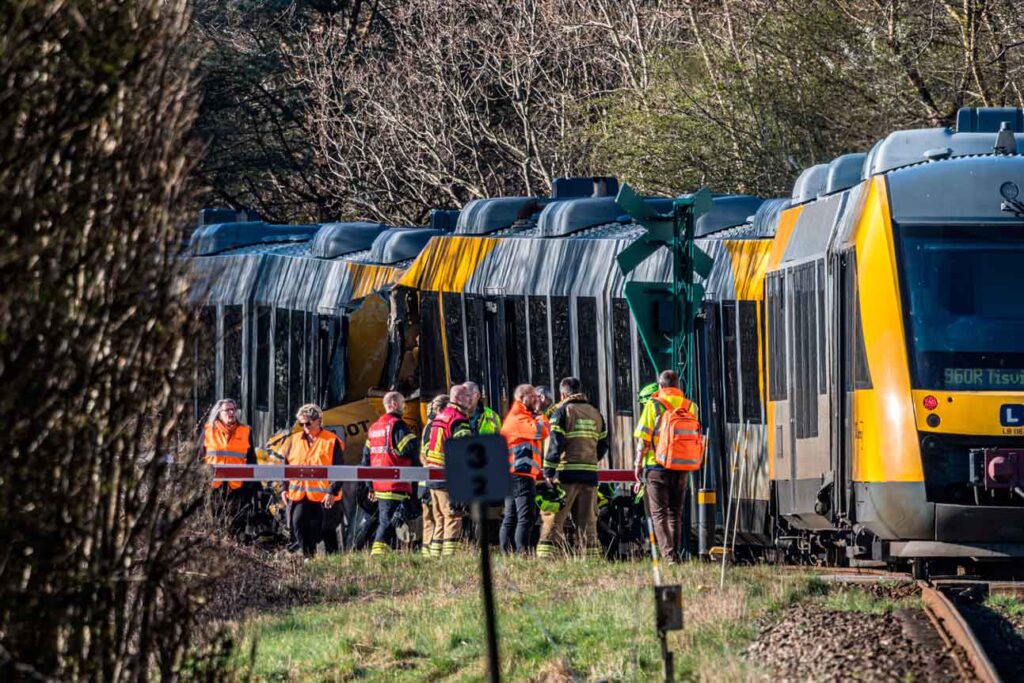
Denmark Train Crash Prompts Massive Emergency Response Near Copenhagen
A devastating collision between two trains north of Denmark’s capital has triggered a large-scale emergency response, leaving multiple people injured and raising urgent questions about railway safety in one of Europe’s most modern transit networks.
On a calm Tuesday morning, what should have been an ordinary commute turned into a scene of chaos and tragedy. Two trains collided on the Øresund rail line just north of Copenhagen, sending shockwaves through the local community and drawing a massive deployment of emergency personnel. The incident, which occurred near the town of Kokkedal, has become the subject of intense investigation as authorities work to determine how such a catastrophic event could occur on a system known for its reliability.
The Incident: What We Know So Far
The collision involved a passenger train and a freight train, both operating on the same stretch of track when something went catastrophically wrong. Early reports from Danish police and railway officials indicate that the passenger train, carrying dozens of commuters, was traveling southbound toward Copenhagen when it struck the freight train.
Key details confirmed by emergency responders include:
- The crash occurred at approximately 8:30 AM local time, during peak commuting hours.
- Several passengers were trapped in the wreckage and required extrication by fire crews.
- A total of 16 people were transported to hospitals, with injuries ranging from minor to serious.
- No fatalities have been reported as of the latest updates, though officials warned the situation remains fluid.
- The freight train was carrying industrial goods, but no hazardous materials were involved.
Eyewitnesses described a loud, grinding screech followed by a violent jolt. One passenger told local media that the train “shook like an earthquake” before coming to an abrupt halt. Another recalled seeing sparks and debris flying as the trains made contact.
The Massive Emergency Response
Within minutes of the collision, emergency services from across the region converged on the site. The scale of the response was nothing short of extraordinary.
Emergency assets deployed included:
- Over 50 ambulances and medical transport vehicles.
- Multiple fire brigades from Copenhagen, Helsingør, and surrounding municipalities.
- Three emergency helicopters dispatched to airlift the most critically injured patients.
- Police drones and search dogs to ensure no victims were overlooked.
- A mobile hospital unit set up at a nearby school to triage the wounded.
The operation was coordinated by Falck, Denmark’s primary emergency services provider, alongside the Danish Defence Emergency Management Agency. Rescue workers worked tirelessly for hours, cutting through twisted metal and debris to reach those trapped inside the passenger cars.
The Investigation: What Caused the Collision?
As investigators begin their work, the key question remains: how did two trains end up on the same track?
Early theories include:
- Signal failure or malfunction in the automatic train control system
- Human error by a train driver or dispatcher
- Mechanical failure, such as brake malfunction
- Infrastructure issues, including track damage or obstruction
The Danish Accident Investigation Board has launched a full inquiry, analyzing black box data and rail system logs. Officials are also reviewing whether the European Train Control System (ETCS) functioned correctly at the time of the crash.
Railway Safety in Denmark
Denmark is known for having one of Europe’s safest rail systems, with advanced signaling and strict operational standards. Despite this, the incident has raised concerns about potential vulnerabilities in high-traffic commuter corridors.
Experts emphasize that even advanced systems are not immune to failure, especially when multiple risk factors overlap.
Community Reaction and Recovery
Local residents, officials, and emergency teams have shown strong solidarity following the crash. Hospitals across the region remain on high alert, while support centers have been established for families and survivors.
Danish leaders have pledged a full and transparent investigation, with early findings expected in the coming weeks.
Final Thoughts
The train crash near Copenhagen is a stark reminder that even highly developed transport systems can face unexpected failures. As investigations continue, the focus remains on supporting victims, restoring service, and ensuring such an incident does not happen again.

