ICC Confirms Arrest Warrant vs. Bato dela Rosa: What It Means and What Happens Next
In a dramatic turn that riveted the nation on May 11, 2026, the International Criminal Court (ICC) confirmed what had been rumored, disputed, and denied for months: a formal warrant of arrest has been issued against Senator Ronald “Bato” dela Rosa. The court’s confirmation came on Monday night, capping a day of extraordinary scenes inside the Philippine Senate — a chase through its hallways, a physical altercation, a legislative lockdown, and a senator who had been invisible since November suddenly casting a pivotal vote on the Senate floor.
This is not political theater. This is international criminal law arriving at the doorstep of a sitting senator — and understanding what it means requires cutting through the noise.
What the ICC Confirmed
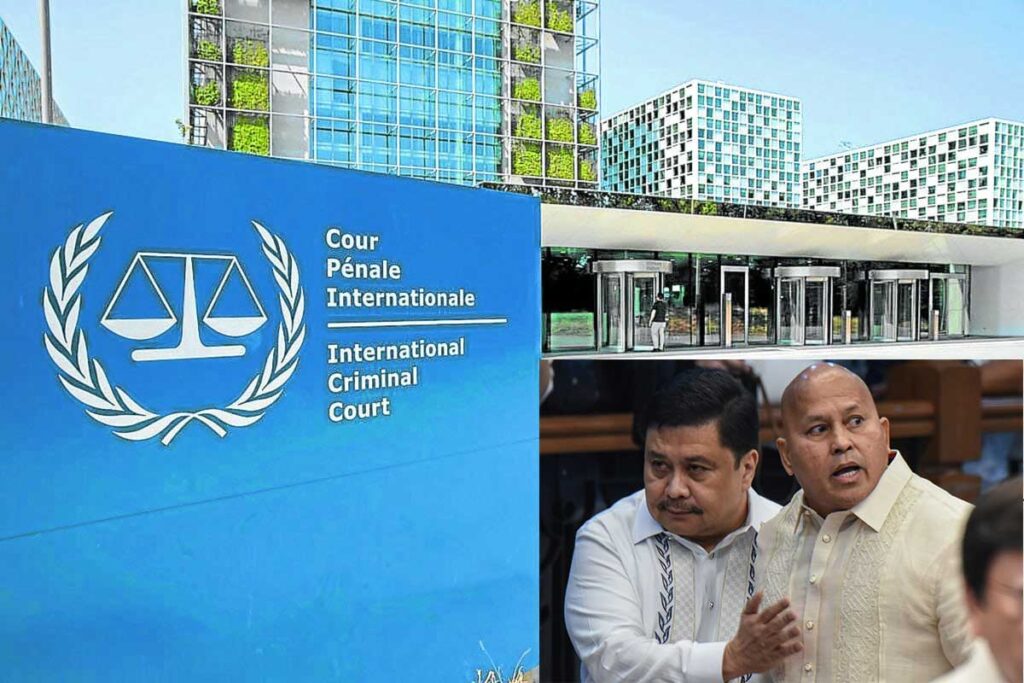
The ICC’s statement on the evening of May 11, 2026 was unambiguous. Spokesperson Oriane Maillet confirmed that “the document published by national authorities of the Republic of the Philippines and circulated in media is indeed a formal ICC document.” The warrant, the ICC clarified, was issued confidentially and under seal by Pre-Trial Chamber I on November 6, 2025 — a date that lines up precisely with when then-Justice Secretary Jesus Crispin Remulla first disclosed the warrant’s existence.
Until Monday, the ICC had maintained publicly — including as recently as May 9 — that no public arrest warrant had been issued in connection with the Philippines situation. That statement was technically accurate: the warrant remained sealed. On May 11, the court formally unsealed it and made it public.
The timing of the unsealing is significant. Under the Rome Statute, the ICC may keep warrants confidential to prevent flight or evidence destruction. The warrant for former President Rodrigo Duterte followed the same pattern — issued in secret on March 7, 2025, made public and executed on March 11, 2025, the day of his arrest at NAIA. Dela Rosa’s warrant followed a different path: sealed in November, partially leaked, hotly disputed, and ultimately confirmed under pressure as the subject himself walked back into the Senate.
What the Warrant Alleges
According to the ICC document, Dela Rosa is alleged to be liable as an indirect co-perpetrator for crimes against humanity — specifically, the unlawful killing of no fewer than 32 individuals between July 2, 2016, and the end of April 2018. The period coincides directly with the early years of the Duterte administration’s anti-drug campaign, when Dela Rosa served as Chief of the Philippine National Police.
The warrant further alleges that Dela Rosa helped conceive and implement a style of police operations referred to as “Tokhang” — a portmanteau of the Visayan words for knock and plead — which became the operational template for drug war house visits that critics and human rights organizations say functioned as a systematic license to kill.
This framing matters legally. The ICC is not alleging that Dela Rosa personally pulled a trigger. It is alleging that he was a key architect of a system that, as a foreseeable consequence, produced mass unlawful killings — and that he bears individual criminal responsibility for that system. This is the doctrine of indirect co-perpetration under Article 25(3)(a) of the Rome Statute, the same framework applied to Duterte himself.
In February 2026, the ICC had already named Dela Rosa alongside Senator Christopher “Bong” Go as co-perpetrators in the Duterte crimes against humanity case — signaling that warrants were a matter of when, not if.
How the Day Unfolded
Dela Rosa had not been seen in a public official capacity since November 11, 2025 — the day after Ombudsman Remulla’s disclosure of the warrant. He missed Senate sessions, drew scrutiny over unexcused absences, and reportedly moved between locations in Mindanao.
On Monday, May 11, he returned — not to surrender, but to vote.
Dela Rosa appeared at the Senate plenary and cast a vote that helped oust Senate President Vicente “Tito” Sotto III and install Alan Peter Cayetano in his place. As he entered the Senate building, however, agents from the National Bureau of Investigation (NBI) attempted to intercept him. Dela Rosa claimed he physically wrestled himself free. He later appeared before colleagues with an injury to his finger.
Former Senator Antonio Trillanes IV had arrived at the Senate alongside the NBI, carrying what he described as a copy of the ICC arrest warrant. Trillanes presented the document to the media, displaying a page marked “secret” bearing Dela Rosa’s photo from his time as PNP chief alongside the ICC logo. The Department of Justice said at the time that it had not received or seen any copy. Interior Secretary Jonvic Remulla said the same.
By Monday evening, the ICC had rendered all of that moot.
The Senate Responds
The new Senate leadership under Cayetano moved quickly. Dela Rosa was placed under Senate protective custody following a motion by Senator Rodante Marcoleta, who invoked Senate Resolution No. 44 and Article 59 of the Rome Statute — which requires any person subject to an ICC warrant to first be brought before a competent judicial authority to verify identity and ensure rights are protected.
Cayetano approved the motion without objection, calling it consistent with Senate rules and precedents. The Senate also ordered a probe into the day’s events, released CCTV footage of the building chase, and cited in contempt several individuals involved in the incident — including Trillanes and the NBI personnel present.
The move puts the Senate in a constitutionally delicate position: a chamber of the Philippine legislature asserting its prerogative to shield one of its members from international criminal process, even as the ICC’s jurisdiction over the Philippines remains contested.
The Legal Battlefield
Dela Rosa’s legal team has moved on multiple fronts. The Law Firm of Torreon and Partners filed an urgent manifestation with omnibus motion before the Supreme Court en banc, seeking protection against what they described as a “three-layered enforcement strategy” — combining alleged ICC processes, Interpol mechanisms, and domestic police action.
Among the specific actions challenged: the reported preparation of a 10,000-strong DILG task force for possible arrest operations; a CIDG subpoena requiring Dela Rosa to appear at Camp Crame on May 14, 2026; and references to enforcement through an Interpol Red Notice or diffusion notice. The legal team called the subpoena a “surrogate arrest mechanism” — an attempt to compel physical presence at Camp Crame in anticipation of an international warrant, without a Philippine court-issued warrant.
They also raised the doctrine of complementarity, a cornerstone of the Rome Statute, which holds that the ICC exercises jurisdiction only when national courts are unwilling or unable to genuinely prosecute. Dela Rosa’s lawyers argue that the Philippines’ own judicial processes should take precedence — an argument that gains legal traction if the Philippine justice system actively investigates the same conduct. Critics, however, note that the ICC initiated its probe precisely because those domestic mechanisms failed to act for years.
The Supreme Court, notably, took the same posture during the Duterte ICC proceedings — ultimately declining to issue a TRO to block cooperation with the court.
The Broader Context: After Duterte
The confirmation of Dela Rosa’s warrant does not exist in a vacuum. It arrives fourteen months after Duterte himself was arrested at NAIA in March 2025, transferred to The Hague, and detained pending trial on crimes against humanity charges. Duterte’s health has reportedly declined significantly since his surrender — his defense team filed a motion in May 2026 citing multiple falls and cognitive deterioration as grounds to reconsider his detention conditions.
The Dela Rosa warrant represents the ICC’s extension of criminal accountability beyond Duterte himself, down into the command structure that operationalized the drug war. If enforced, it would mark the second time a senior Philippine government official has been transferred to ICC custody — and it would validate the court’s theory that the killings were not random police misconduct, but a coordinated policy executed through institutional hierarchies.
The Philippine government under President Ferdinand Marcos Jr. faces intensifying pressure to define its posture. The country formally withdrew from the Rome Statute in 2019 under Duterte, but the ICC ruled in 2021 that it retains jurisdiction over crimes committed while the Philippines was still a member state — a ruling the Marcos administration has effectively accepted through its cooperation in the Duterte arrest.
Whether that cooperation extends to Dela Rosa — a sitting senator who just helped reshape the Senate’s leadership — is the question that now sits at the center of Philippine politics.
What Comes Next
The unsealing of the warrant is the beginning of a legal and political process, not its resolution. Several things will determine how this unfolds:
Supreme Court action. Dela Rosa’s petition for a TRO and writ of prohibition asks the Court to intervene before any enforcement makes judicial review moot. The Court’s precedent from the Duterte proceedings suggests it will not block ICC cooperation, but the specific constitutional questions around the CIDG subpoena and domestic enforcement mechanisms may receive a different analysis.
Government cooperation. The DOJ and DILG must decide whether to formally receive and act on the ICC warrant. Interior Secretary Remulla’s task force reportedly remains on standby. The transmittal of the warrant to the Philippine Center on Transnational Crime (PCTC) — the standard procedural step before enforcement, as seen in the Duterte case — has not been officially confirmed.
Senate protective custody. The Senate’s invocation of its prerogative to protect Dela Rosa creates a political buffer that has no direct legal equivalent in international criminal law. The ICC’s warrant creates an obligation on state parties — and while the Philippines is no longer formally a member, the court’s retained jurisdiction complicates that calculus.
The warrant’s scope. The ICC is still in the process of fully unsealing and officially circulating the complete warrant document. Additional details about the alleged conduct, the evidentiary basis, and any conditions or limitations may become public in the coming days.
The Significance
The arrest of Rodrigo Duterte was a historic rupture — a former head of state taken from his own country to face international justice. The ICC warrant for Bato dela Rosa, now confirmed, signals that it was not an isolated event. It was the opening chapter of a broader accountability reckoning for the architects of a drug war that, by the government’s own count, left thousands dead.
For Dela Rosa, a man who once boasted about killing drug suspects as mayor of Digos City before replicating the model nationwide, the legal walls have been formally closed in. The question is no longer whether the ICC wants him. It is whether the Philippine state — and the Philippine Senate — will stand between him and the court.
This article was written on May 11, 2026, and reflects confirmed developments as of the ICC’s official statement on the evening of that date.