
Iran’s Tense Strait of Hormuz Warning to US Warships Revealed
A newly released video from Iran’s Revolutionary Guard has thrust the volatile waters of the Strait of Hormuz back into the global spotlight. The footage, portraying a high-stakes naval standoff, serves as a stark reminder of the ever-present risk of miscalculation in one of the world’s most critical maritime chokepoints. This incident, framed by Tehran as a firm response to “terrorism,” underscores the fragile security balance in the region and the ongoing war of narratives between Iran and the United States.
A Confrontation Captured on Camera
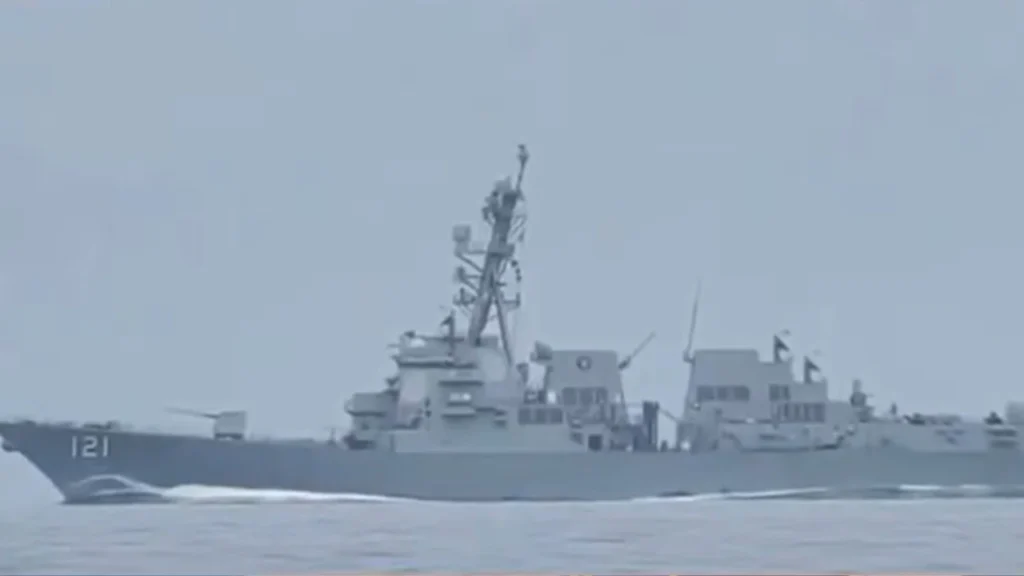
The video, published by the public relations arm of the Islamic Revolutionary Guard Corps (IRGC) Navy, depicts a tense encounter between Iranian speedboats and much larger U.S. Navy warships. The IRGC narrative states the incident occurred as the American vessels, identified as the USS Lewis B. Puller and USS Philippine Sea, were attempting to enter the Persian Gulf via the Strait of Hormuz.
According to the Iranian account, their patrol units issued repeated radio warnings to the U.S. ships, demanding they change course and cease their approach. The climax of the released footage shows an Iranian soldier speaking into a radio, delivering what is subtitled as a “final warning” before the U.S. ships ultimately alter their path. The IRGC labeled the American movement as “unprofessional and risky,” accusing the U.S. fleet of engaging in “terrorist actions” and violating international maritime regulations.
The Strategic Heart of Global Energy
To understand the gravity of this encounter, one must appreciate the strategic importance of the Strait of Hormuz. This narrow waterway, barely 21 nautical miles wide at its narrowest point, is the lifeline for global oil and gas shipments.
Why the Strait is a Global Flashpoint
- Oil Transit: Approximately 20-30% of the world’s seaborne oil trade passes through the strait, primarily from producers like Saudi Arabia, the UAE, Kuwait, Iraq, and Iran itself.
- Liquefied Natural Gas (LNG): It is also a vital route for LNG exports from Qatar, a top global supplier.
- Geographic Bottleneck: The navigable channels are so narrow that shipping traffic must pass through Iranian and Omani territorial waters, making it inherently susceptible to interdiction.
This geographic reality gives Iran a powerful asymmetric advantage. The IRGC Navy, equipped with hundreds of fast-attack craft, anti-ship missiles, and coastal defense systems, has repeatedly demonstrated its capacity to harass shipping or, in a worst-case scenario, attempt to close the strait—a red line for the U.S. and its allies that would likely trigger a major military conflict.
Decoding the “Terrorism” Accusation and US Response
The Iranian charge of U.S. “terrorist actions” is not a casual insult but a specific part of Tehran’s political lexicon. It typically refers to:
- The presence of U.S. military forces in the region, which Iran views as an occupying and destabilizing force.
- U.S. sanctions, which Iran labels as “economic terrorism” for their devastating impact on the country’s economy and populace.
- Historical grievances, including U.S. support for Iraq during the Iran-Iraq War in the 1980s.
The United States, for its part, maintains a different perspective. The U.S. Navy’s 5th Fleet, based in Bahrain, has not publicly commented on this specific video release but has a long-standing pattern of response to such incidents. The standard U.S. position is that its warships were conducting routine operations in international waters in full compliance with maritime law. The U.S. frames its mission as one of ensuring freedom of navigation and protecting the free flow of commerce, a mission it extends to allies and partners in the region.
These near-daily interactions follow a well-rehearsed but dangerous script: Iranian fast boats make high-speed, close-pass maneuvers, often ignoring internationally recognized distress signals, while U.S. crews issue warnings and prepare defensive measures.
A Pattern of Brinkmanship, Not an Isolated Event
This latest video release is not an isolated event but part of a sustained pattern of Iranian naval brinkmanship. Similar incidents have occurred for years, with the tempo often increasing during periods of heightened political tension, such as during negotiations over Iran’s nuclear program or following the targeted killing of IRGC General Qasem Soleimani.
The primary goal for Iran appears to be twofold: to assert its sovereignty and military capability in its perceived sphere of influence, and to gain leverage in broader geopolitical negotiations. By publicly showcasing its ability to challenge the world’s foremost naval power on its doorstep, Iran sends a message to regional rivals and the international community about the costs of confronting it.
The Ever-Present Risk of Miscalculation
While both sides have so far avoided a shooting war, the risk of a deadly error is constant. In crowded, tense waterways, a misinterpreted signal, a mechanical failure, or a split-second decision by a junior officer could escalate into a kinetic exchange. Such an event could rapidly draw in other regional actors and have immediate, catastrophic effects on global energy markets and the world economy.
The Broader Implications for Regional Security
The standoff in the Strait of Hormuz is a microcosm of the broader cold war between Iran and a U.S.-backed coalition of Gulf Arab states. It highlights:
- The Limits of Deterrence: Both sides are engaged in a continuous test of the other’s red lines and response thresholds.
- The Role of Strategic Messaging: The deliberate release of the video is as much an act of communication for domestic and international audiences as it is a military report.
- The Enduring Stalemate: In the absence of diplomatic breakthroughs, these dangerous maneuvers represent the unstable status quo—a managed but perpetual state of crisis.
For global observers and markets, the incident is a sobering reminder that the Strait of Hormuz remains the world’s most precarious shipping lane. The “final warning” captured in the IRGC video is not just a message to a few U.S. warships on a single day; it is a persistent warning to the world about the fragility of peace in the Middle East and the high stakes of geopolitical rivalry in the age of energy dependence. As long as regional tensions simmer and diplomatic channels remain strained, the waters of the Hormuz will continue to be a theater for shadow boxing, where every close pass carries the potential for unintended catastrophe.

