
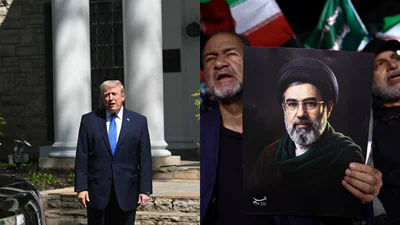
US Ceasefire Proposal Rejected by Iran Amid Rising Tensions
The geopolitical chessboard of the Middle East witnessed a significant, if unsurprising, move this week. According to reports, the United States presented a ceasefire proposal aimed at de-escalating regional hostilities, a plan swiftly and firmly dismissed by Tehran. This exchange underscores the profound and persistent rift between Washington and Iran, revealing a diplomatic stalemate that continues to fuel instability across a region already on a knife’s edge.
A Proposal Across the Divide
The reported US ceasefire plan was transmitted through intermediaries, a common practice given the absence of direct diplomatic relations. While the full details remain confidential, the broad objective was clear: to halt the escalating cycle of violence that has gripped the region since the outbreak of the Israel-Hamas war in October. The proposal likely sought to address the multifaceted proxy and direct conflicts involving Iranian-backed groups like Hezbollah in Lebanon and the Houthis in Yemen.
For the Biden administration, such a plan represents an attempt to prevent a regional conflagration and create space for a more sustainable political solution in Gaza. It aligns with Washington’s stated goals of containing the conflict and securing the release of hostages. However, from the outset, the proposal faced a steep uphill battle, not least because of the entrenched positions of the two principal actors.
Tehran’s Firm Rejection: Sovereignty and Stance
Iran’s response was unequivocal. A spokesperson for Iran’s foreign ministry publicly rejected the idea of negotiating with Washington, framing it as a non-starter. The dismissal was rooted in two core pillars of Iran’s revolutionary ideology and foreign policy:
1. The Principle of “Resistance”: Iranian officials consistently state that the path to peace in Palestine runs through continued resistance against Israel, not through US-brokered ceasefires which they view as favoring Israeli security at the expense of Palestinian rights.
2. Distrust of Washington: Decades of sanctions, the Trump administration’s withdrawal from the 2015 nuclear deal (JCPOA), and targeted military strikes have bred deep-seated hostility. Tehran perceives the US as an unreliable partner acting in bad faith, making any public negotiation politically toxic for the Iranian leadership.
This rejection is more than a simple “no.” It is a strategic declaration of autonomy. By publicly dismissing the US proposal, Iran reinforces its narrative as the leader of an “Axis of Resistance” independent of Western dictates, a crucial message for its domestic base and regional allies.
The Regional Tinderbox: Proxy Forces and Red Lines
The ceasefire proposal exists within a complex ecosystem of interconnected conflicts. Iranian-backed militias have been active on multiple fronts:
- Yemen: Houthi rebels continue to launch drones and missiles at international shipping in the Red Sea, demanding an end to the war in Gaza.
- Lebanon: Hezbollah and Israeli forces engage in daily cross-border strikes, raising fears of a full-scale war.
- Iraq and Syria: Militias have targeted US forces with rockets and drones, prompting retaliatory strikes.
Iran exercises a degree of strategic influence over these groups but does not have absolute control. This creates a dangerous dynamic where miscalculation by a proxy could trigger a direct confrontation between Iran and the US or Israel, a scenario all sides claim to want to avoid but are steadily drifting toward.
Analysis: Why Diplomacy Remains Stalled
The failure of this ceasefire initiative is symptomatic of larger, unresolved issues. The core obstacles to any meaningful US-Iran dialogue are:
- The Nuclear File: Efforts to revive the JCPOA are effectively frozen. Without progress here, the foundation for broader talks is absent.
- Regional Order: The US and Iran have diametrically opposed visions for the Middle East. Washington seeks to contain Iranian influence and integrate Israel, while Tehran aims to expel US forces and bolster its network of allies.
- Domestic Politics: In both capitals, hardline factions benefit from heightened tensions. Negotiating with “the Great Satan” (US) or the “terrorist state” (Iran, as labeled by the US) carries immense political risk for any leader.
The Path Forward: Is De-escalation Possible?
In the immediate term, the prospects for a grand bargain are negligible. However, the rejection of a formal plan does not mean all channels are closed. De-escalation, if it comes, will likely be achieved through:
Indirect, Tacit Understandings: Back-channel communications via Oman, Qatar, or Switzerland could be used to establish unofficial “rules of engagement” or red lines to prevent unintended escalation.
Sequential Calm: A sustained ceasefire in Gaza is widely seen as the single most important factor for calming the region. If achieved, it could reduce the operational rationale for Iranian proxies to attack.
Focus on Humanitarian Pauses: Narrow, practical agreements on humanitarian aid or prisoner exchanges may be more feasible than comprehensive political deals, offering small building blocks of trust.
Conclusion: A Tense Status Quo Prevails
The swift dismissal of the US ceasefire proposal by Iran confirms that the deep structural tensions between the two nations remain unbridgeable for now. Both sides are entrenched in positions that serve their perceived strategic and ideological interests, even at the risk of regional war.
The Middle East remains in a precarious state of managed conflict, where the immediate goal for global powers is not peace, but prevention of a catastrophic wider war. While diplomatic proposals will continue to be floated, their success hinges on a fundamental shift in the political landscape—either through a change in leadership priorities, a decisive military outcome, or the sheer exhaustion of perpetual crisis. Until then, the world watches and waits, hoping that the threads of communication, however frayed, can hold back the tide of a broader conflict.

