
Israeli Prime Minister’s Plane Transits Canadian Airspace
Israeli Prime Minister Benjamin Netanyahu travelled through Canadian airspace on Thursday despite an active international arrest warrant, raising questions about Canada’s obligations to world courts.
A Diplomatic Crossing Amid Legal Tensions
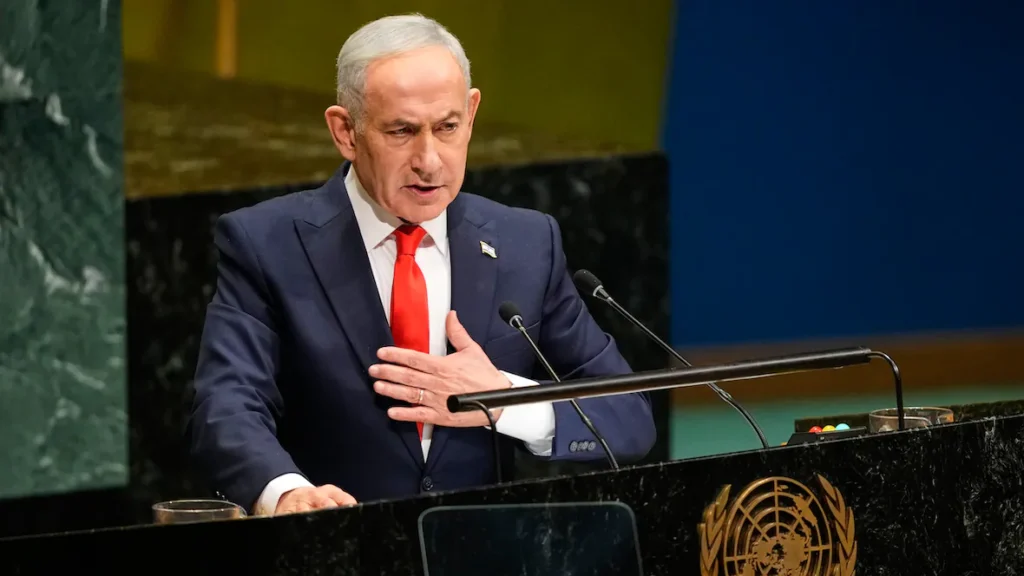
On September 25, 2026, Israeli Prime Minister Benjamin Netanyahu flew through Canadian airspace en route to New York to address the United Nations General Assembly. Flight tracker data confirmed his aircraft passed over Greece, Italy, France, and Canadian territory before reaching its destination. The transit occurred despite an arrest warrant issued by the International Criminal Court in November 2024 for alleged war crimes in the Gaza Strip.
This crossing represents the latest instance of Netanyahu’s plane using Canadian skies while facing legal jeopardy. The situation has created an awkward diplomatic situation for Canada, caught between its obligations as an ICC member state and the practical realities of international airspace.
What Changed Canada’s Position
In October 2025, Canadian Prime Minister Mark Carney made a clear public statement: the Israeli leader would be arrested if he entered Canada. That declaration set expectations for how the country would handle any future visit by Netanyahu. Yet Thursday’s flight appears to test the boundaries of that commitment by remaining in airspace rather than landing on Canadian soil.
The distinction matters legally. Overflight—allowing an aircraft to pass through a nation’s airspace without landing—operates under different rules than physical entry into a country. Canada’s decision to permit the transit suggests the government interpreted its arrest warrant obligation as applying to ground entry, not passage through the sky above.
How Canada Explained Its Decision
Myah Tomasi, a spokesperson for Foreign Affairs Minister Anita Anand, provided the official government position. She stated that authorization to pass through Canadian airspace should not be interpreted as an endorsement of any government’s policies or actions. In this case, she explained that the overflight request was connected to the United Nations General Assembly, which she characterized as a critical forum for diplomatic engagement.
Tomasi’s statement attempted to thread a needle: granting the overflight while maintaining distance from Netanyahu’s government. The framing suggests Canada viewed the UN meeting as a special circumstance warranting the transit, even if the same access might not extend to other scenarios.
The International Arrest Warrant and Its Limits
The International Criminal Court issued its arrest warrant against Netanyahu in November 2024 for alleged war crimes related to the Gaza Strip. As a signatory to the Rome Statute that established the ICC, Canada is theoretically obligated to arrest and surrender individuals subject to ICC warrants who enter its territory. However, the practical application of this obligation has proven more complex than the legal framework suggests.
Canada’s decision to allow the overflight rather than block it raises questions about how countries interpret their ICC obligations. Some observers argue that permitting transit without landing is a reasonable distinction, while others contend it undermines the court’s authority by allowing wanted individuals to use Canadian airspace as a convenience.
Netanyahu’s History of Using Canadian Airspace
This September 2026 crossing was not Netanyahu’s first time flying through Canadian skies while under an arrest warrant. In July 2026, the Israeli Prime Minister again used Canadian airspace while traveling to Washington, D.C. That earlier transit also sparked debate about whether Canada should have blocked the flight, though fewer details about government deliberation were publicly disclosed at that time.
The pattern of repeated overflights suggests either that Canada has settled on a consistent policy of permitting transit, or that the government processes each request individually without a fixed standard. Neither approach fully resolves the underlying tension between Canada’s legal commitments and its diplomatic relationships.
The Diplomatic Balancing Act
Canada’s position reflects the broader challenge faced by nations that are ICC members but also maintain complex relationships with states involved in conflicts. The United Nations General Assembly remains a venue where diplomatic engagement across divides is expected, and blocking a leader’s transit to attend could be seen as an unusually harsh political move for a country that positions itself as a global diplomatic player.
Foreign Affairs Minister Anita Anand’s office emphasized this framing through Tomasi’s statement. By connecting the overflight approval to the UN forum specifically, the government signaled that it was making a tailored decision based on the circumstances, rather than establishing a blanket policy of permitting Netanyahu to cross Canadian airspace under any circumstances.
What Comes Next
The September 2026 overflight has not yet triggered the kind of public backlash or parliamentary scrutiny that might have followed an explicit decision to allow Netanyahu to land and stay in Canada. However, advocates for the ICC and opponents of Netanyahu’s government have noted the development, and the issue may resurface if he requests overflight approval again.
Prime Minister Carney’s October 2025 statement that Netanyahu would face arrest if he entered Canada remains technically intact, as the aircraft did not land. Yet the repeated use of Canadian airspace by a wanted individual raises questions about whether that commitment has practical force or has been narrowed to apply only to conventional entry scenarios.
Canada’s approach may also influence how other ICC member states handle similar requests. If major democracies consistently permit overflights while drawing the line at physical entry, it could reshape how the arrest warrant system functions in practice, creating a de facto exception for air travel that was not explicitly part of the ICC framework.
The Broader Context
The Netanyahu overflight sits within a larger conversation about Canada’s role in international law and its responsibilities as an ICC member. The country has positioned itself as a champion of international justice and human rights, but practical diplomatic considerations often pull in different directions.
This particular case does not involve a hypothetical scenario—Netanyahu has now used Canadian airspace at least twice while an active ICC arrest warrant was in effect. Canadians monitoring the situation should understand that their government has chosen to permit these transits, and that this choice reflects a deliberate interpretation of Canada’s legal obligations rather than a technical accident or oversight.

