
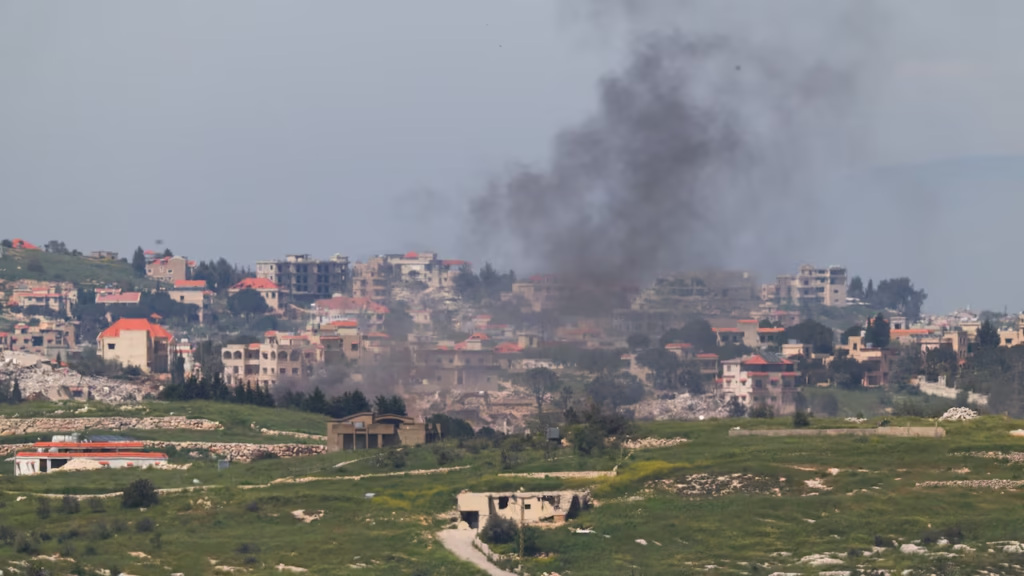
Ceasefire Shattered: Israeli Airstrikes in Lebanon Leave 6 Dead – What Triggered the Latest Attack?
The fragile quiet along the Israel-Lebanon border has been violently broken. Despite a recently brokered ceasefire intended to halt escalating cross-border fire, Israeli airstrikes have killed at least six people in southern Lebanon. This attack represents one of the most significant violations of the truce since it was signed, sending shockwaves through the region and raising urgent questions about the viability of any lasting peace.
This is not a minor skirmish. For families in southern Lebanon, this is a return to the nightmare of airstrikes, rubble, and sirens. For the international community, it is a stark reminder that ceasefires are only as strong as the political will to uphold them.
The Attack: What We Know So Far
Early this morning, Israeli military forces launched strikes on multiple locations in southern Lebanon. According to Lebanese security sources, the targets were not isolated military outposts but areas that included residential infrastructure.
Key details from the ground include:
- Casualties: At least six people have been confirmed dead. Local hospitals are reporting that the victims include civilians who were in their homes when the strikes hit.
- Location: The strikes primarily affected villages and towns near the Blue Line, the unofficial border demarcation line between Lebanon and Israel.
- Infrastructure Damage: Emergency responders are pulling bodies from collapsed buildings. Smoke plumes were seen rising over multiple towns, indicating significant structural damage.
- Response Time: Rescue teams arrived quickly, but the intensity of the strikes overwhelmed local medical facilities.
Lebanese authorities have labeled the attack a “flagrant aggression” and a direct breach of the ceasefire terms. Meanwhile, sources within Hezbollah have already signaled that this level of aggression will not remain unanswered.
The Fragile Ceasefire: A Truce on Paper Only?
To understand why this attack is so damaging, we have to look back at the ceasefire agreement. It was designed to stop weeks of intense exchanges that threatened to spiral into a full-scale war.
What the Ceasefire Was Supposed to Do
The deal called for an immediate halt to all offensive operations, a withdrawal of forward-deployed forces, and a return to the status quo ante. International mediators hailed it as a diplomatic victory that would allow for humanitarian relief and de-escalation.
Why It Failed to Hold
The current strikes suggest that the agreement was never built on a solid foundation. Deep-seated mistrust, conflicting territorial claims, and the presence of heavily armed non-state actors made the ceasefire inherently fragile.
The attack reveals three critical problems:
- No Enforcement Mechanism: The ceasefire lacked a robust, on-the-ground monitoring force capable of intervening in real time.
- Vague Language: Terms like “proportional response” and “legitimate self-defense” can be interpreted differently by each side, leading to violations.
- Spoilers Exist: Hardline elements on both sides may view the ceasefire as a strategic loss and actively seek to provoke a new cycle of violence.
Now, the question on everyone’s mind is simple: Was this attack a calculated attempt to reset the battlefield, or a tactical mistake that spiraled out of control?
Regional Repercussions: Why This Matters Beyond the Border
This is not a contained incident. The Middle East is a tinderbox, and a spark in southern Lebanon can ignite fires across the region.
Impact on Hezbollah
Hezbollah, the dominant military and political force in Lebanon, is under immense pressure. They have vowed to retaliate for every attack on Lebanese soil. If they follow through with a major response, the ceasefire will be rendered null and void, plunging both countries back into open conflict.
The Role of International Mediators
The United Nations Interim Force in Lebanon (UNIFIL) and Western diplomats are now scrambling to contain the damage. Their credibility is on the line. If they cannot restore the ceasefire, it will signal to the world that diplomatic solutions to Middle Eastern conflicts are becoming impossible.
Civilian Populations Caught in the Middle
Once again, the people who suffer most are those with no power to influence the decisions of generals or politicians. On the Lebanese side, families in the south are already fleeing their homes. On the Israeli side, residents of northern settlements are bracing for rocket fire that may come in retaliation.
Humanitarian Crisis: The Civilian Toll
The immediate aftermath of these strikes is not just about military strategy; it is about human tragedy.
The humanitarian situation is deteriorating rapidly:
- Displacement: Hundreds of residents in southern Lebanon have already begun evacuating, fearing further strikes.
- Medical Shortages: Hospitals that were already strained by previous rounds of violence are now overwhelmed with trauma cases.
- Infrastructure Loss: Water and power lines have been damaged, complicating rescue efforts and creating long-term hardship.
International aid organizations have expressed “deep alarm” and called for an immediate de-escalation to allow for safe humanitarian access.
What Happens Next? Three Scenarios for Escalation
The next 48 hours will be critical. Based on how previous cycles of violence have unfolded, analysts point to three possible outcomes.
Scenario 1: Condemnation Without Action
The international community issues strong statements, Lebanon files a complaint with the UN, and Hezbollah holds back to avoid a wider war. This would likely result in a return to the ceasefire, but with weakened trust.
Scenario 2: Limited Retaliation
Hezbollah responds with a calibrated rocket or drone strike on a military target inside Israel. Israel responds in kind. The violence remains contained to the border region but continues for weeks.
Scenario 3: Full Escalation
Hezbollah launches a massive barrage, Israel responds with deep strikes into Lebanese territory, and the ceasefire collapses completely. This is the worst-case scenario, and it remains a real threat.
Conclusion: A Peace That Was Never Meant to Last?
The killing of six people in southern Lebanon is more than just a news headline; it is a failure of diplomacy. It shows that ceasefires, when not backed by genuine commitment and robust enforcement, are merely pauses in an ongoing war.
For the families mourning their dead today, the ceasefire was a promise that was broken before it could ever be fulfilled. For the rest of the world, this is a warning. The Middle East is not moving toward peace. It is holding its breath, waiting for the next explosion.
The international community must now act with urgency. Condemnation alone will not stop the next strike. Only a combination of diplomatic pressure, credible deterrence, and humanitarian intervention can prevent this tragedy from becoming a full-blown catastrophe.

