Mark Carney’s Government Is Quietly Dismantling Extinction Safeguards for BC’s Iconic Killer Whales
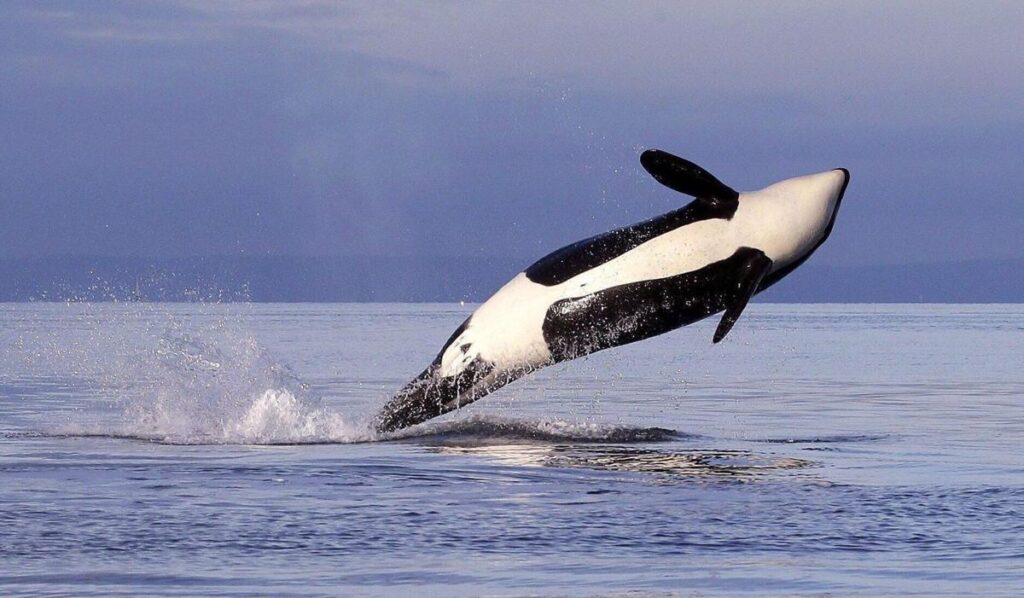
The Southern Resident killer whale population is at a precipice. With only 73 individuals remaining, each birth is met with cautious celebration and every death is a gut punch to marine biologists and coastal communities alike. Yet, a new federal proposal tabled by Prime Minister Mark Carney’s government is threatening to pull the rug out from under the legal mechanisms designed to drag this species back from the brink. The proposal doesn’t read like an obituary, but for the critically endangered orcas navigating the busy shipping lanes of British Columbia’s Salish Sea, it might as well be.
The news, which broke from Ottawa late this week, signals a fundamental shift in how Canada interprets its own Species at Risk Act (SARA) when corporate interests are placed on the scale opposite ecological collapse. The government is not merely tweaking administrative paperwork; it is seeking to change the regulatory goalposts for “extinction protections,” and environmental law experts are sounding the alarm.
The Legal Shield Under Attack: SARA’s Safety Net
To understand the gravity of the situation, you need to look at the architecture of Canadian conservation law. The Species at Risk Act is the strongest federal tool we have to prevent wildlife extinction. Unlike vague policy directives, SARA contains a prosecutable legal obligation. Once a species is listed as endangered, the law kicks in with mandatory protections, the most powerful of which is the prohibition against destroying any part of the species’ critical habitat.
For the Southern Residents, that critical habitat isn’t just a static boundary on a map. It encompasses specific acoustic environments, forage areas for dwindling Chinook salmon stocks, and migratory corridors through the Strait of Georgia. Destroying that habitat—whether through physical damage or acoustic disturbance that impedes the whales’ ability to echolocate—is illegal.
What Is the Carney Government Actually Proposing?
The proposal, buried in a regulatory package rather than a headline-grabbing press release, targets the language of “imminent threat” and seeks to narrow the triggers for mandatory protection orders. Specifically, the draft regulation aims to:
- Broaden ministerial discretion to waive critical habitat protections when economic costs are deemed “disproportionate.”
- Limit the scope of emergency protection orders, making it harder for environmental groups to petition for intervention when a project is actively harming a listed species.
- Shift the burden of proof from the project proponent (who must currently prove they are not harming the population) onto conservationists and government scientists, who would need to demonstrate severe and irreversible harm before a stop-work order is issued.
This is not an outright repeal of the Species at Risk Act; it is a surgical strike on its enforcement spine. The government’s framing suggests this is about “streamlining” and “certainty for businesses,” but conservation biologists translate it as a calculated risk to allow industrial expansion in sensitive marine ecosystems at the worst possible time.
The Science Doesn’t Lie: Why This Population Can’t Afford Loopholes
The Southern Resident killer whales are not just facing a single stressor; they are caught in a lethal entanglement of three converging threats: vessel noise, toxic contamination, and prey scarcity. It is a death by a thousand cuts scenario, where removing one protection can trigger a cascade effect that pushes the population past the point of no return.
Acoustic Smog and Silent Starvation
Killer whales hunt by sound. The waters off BC’s coast, however, have become a cacophony of commercial shipping, naval sonar, and recreational boat engine noise. Research from the University of British Columbia has demonstrated that this “acoustic smog” reduces the whales’ foraging efficiency by up to 62% during peak shipping periods. When the whales can’t hear a Chinook salmon’s swim bladder, they can’t eat. And when they don’t eat, their bodies start metabolizing their blubber, releasing a lifetime of stored PCBs and flame retardants into their bloodstream, poisoning them from the inside out.
The current critical habitat protections allow for mandatory slowdown zones and bubble curtain requirements for large infrastructure projects. The Carney proposal’s shift toward “economic disproportionality” directly jeopardizes these noise reduction mandates. If a port expansion argues that a 3-knot speed restriction cuts too deeply into their logistical bottom line, scientists fear the new rules would let the expansion proceed unabated, turning the Salish Sea into an acoustic desert.
The Prey Paradox
You cannot conserve a top predator without conserving its food. Chinook salmon stocks are in a state of collapse across the Pacific Northwest, with many runs in the Fraser River system facing critically low returns. Southern Residents are picky eaters; they have a cultural preference for large, fatty Chinook over the smaller, more abundant Chum or Pink salmon. The math is brutally simple:
- Fewer Chinook = malnourished orcas.
- Malnourished orcas = failed pregnancies (nearly 70% of Southern Resident pregnancies end in miscarriage or early calf mortality due to nutritional stress).
- Failed pregnancies = extinction trajectory.
Habitat protections don’t just guard the ocean; they guard the river mouths and spawning grounds where forestry and agriculture runoff degrade spawning gravel. By weakening the “no destruction of habitat” clause, the government is essentially green-lighting indirect destruction of the whales’ pantry.
The Political Calculus: Who Benefits?
It’s tempting to view this strictly through an ecological lens, but the proposal reeks of political expediency. The Trans Mountain Pipeline expansion (TMX) has already triggered a seven-fold increase in tanker traffic through the narrow Burrard Inlet and the Strait of Juan de Fuca—smack in the middle of designated critical habitat.
The shipping and energy lobby has long complained that SARA compliance adds months of consultation and millions of dollars in mitigation costs to projects. With the pipeline now operational, the regulatory friction is no longer a hypothetical cost; it is a real-time constraint on export capacity. The Carney government, looking to signal fiscal pragmatism and a cooperative relationship with Alberta’s energy sector, appears to be dismantling the safety valve that environmental groups have used to slow industrial expansion in the whales’ backyard.
This is not a partisan truism; it’s a geopolitical reality. The government is trying to thread a needle between its international climate and biodiversity pledges—such as the COP15 agreement to protect 30% of lands and waters by 2030—and the relentless pressure of resource extraction economics. The loser in that threading exercise is invariably the non-human species that lacks political representation.
The Precautionary Principle: Tipping the Scales Irreversibly
Canadian environmental law was built on the Precautionary Principle, the idea that in the face of scientific uncertainty, the benefit of the doubt must favor ecological protection. If you don’t know whether a shipping lane expansion will definitively wipe out the remaining calves, you don’t do it. The new proposal perverts this logic. It asks a question that science cannot answer with perfect statistical confidence: “Prove definitively that this specific project, and not the cumulative weight of 200 years of industrialization, will be the one to kill the last whale?”
This is an impossible quantification. Ecology is messy. Whales don’t die in controlled laboratory settings where variables are isolated. They disappear off the hydrophone array, or they wash up thin and emaciated after ingesting toxins mobilized by a hunger they didn’t feel until the noise drove away their dinner. By shifting the burden of proof onto the defenders of the sea, the government is creating a legal framework where paralysis is a feature, not a bug. If you can’t prove causality with absolute certainty, the bulldozer—or the dredger—wins.
What Happens Next?
The proposal is currently in a consultation phase, but advocates are already gearing up for a legal showdown. Here is the immediate terrain to watch:
- Legal Challenges: Organizations like Ecojustice and the David Suzuki Foundation have a near-perfect track record of successfully suing the federal government for failing to uphold SARA. If this regulatory amendment passes, an avalanche of judicial review applications is guaranteed, citing the government’s own scientific advisory committee’s warnings.
- International Embarrassment: The Southern Residents are a transboundary population. The United States protects them under the Endangered Species Act with robust Marine Mammal Protection Act enforcement. Canada backtracking on critical habitat will strain the bilateral conservation framework and alienate Washington State legislators who have invested heavily in ecological restoration.
- Public Mobilization: The resident orcas are the bald eagles of the sea—an emotional flashpoint for West Coast voters. A silent rollback of protections risks a consumer and tourist backlash that could dwarf any short-term industrial savings, particularly among the ecotourism operators who earn their living taking people to see J-Pod.
A Final Window of Intervention
Biologists estimate we have perhaps one generation of orcas left to reverse the decline. The matriarchs who remember the pre-industrial Salish Sea are dying, and with them goes the cultural knowledge of feeding grounds. Species at risk legislation was designed precisely for moments like this: a 73-count population flirting with the vortex of genetic bottlenecking.
Reducing existential protections to spreadsheets of “economic disproportionality” risks turning a legal duty into a cold audit of a creature’s appraised value. The Carney government must recognize that streamlining extinction is not a bureaucratic reform; it is a moral failure dressed in policy terminology. The whales don’t vote, they don’t ship bitumen, and they don’t show up in GDP projections. But their silence in the Salish Sea would be an indictment echoing far longer than any quarterly economic report. The proposal isn’t just an attack on orcas; it’s a referendum on whether Canada takes its own most vulnerable inhabitants seriously when the flow of money is at stake.