
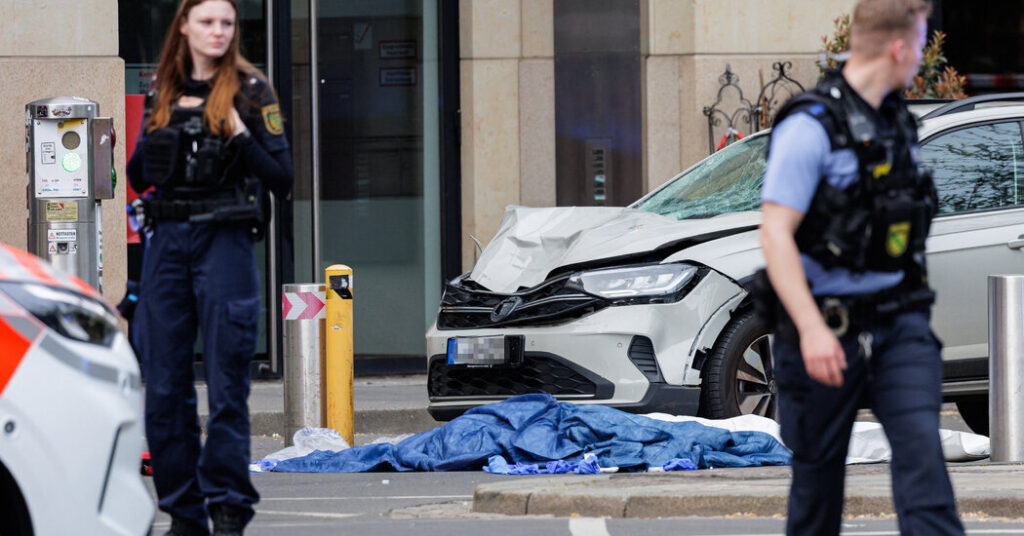
Driver Plows into Crowd Killing Two in Leipzig, Germany
The quiet streets of Leipzig, Germany, were shattered on a recent afternoon when a driver deliberately plowed a vehicle into a crowd of pedestrians, leaving two people dead and several others injured. This shocking act of violence has reignited debates about public safety, counterterrorism measures, and the vulnerability of crowded urban spaces.
In this expert analysis, we dissect the incident, examine the broader implications for European security, and explore what steps authorities may take to prevent future tragedies.
Incident Overview: What Happened in Leipzig?
According to official reports, the suspect drove a car into a group of people near the city’s central district. The attack occurred during a busy time, catching pedestrians completely off guard. Witnesses described chaotic scenes as emergency services rushed to the scene.
Key facts from the initial investigation:
- Two individuals were confirmed dead at the scene.
- Multiple victims sustained serious injuries, with some in critical condition.
- The driver was apprehended by police shortly after the attack.
- Authorities have not immediately ruled out a terrorist motive.
Leipzig, a major cultural and economic hub in the state of Saxony, is no stranger to public gatherings. This attack, however, represents a disturbing escalation in violence targeting everyday citizens.
Expert Analysis: Why Vehicle Ramming Attacks Remain a Persistent Threat
From a security standpoint, vehicle-ramming attacks are particularly difficult to prevent. They require minimal planning, low-cost resources, and often exploit gaps in urban infrastructure. Unlike bombings or armed assaults, a car can blend into traffic until the moment of impact.
Security experts identify several factors that make these attacks attractive to perpetrators:
- Ease of execution: No special skills or weapons are needed beyond obtaining a vehicle.
- High impact visibility: A single vehicle can cause mass casualties in seconds.
- Difficult interdiction: Stopping a moving car before it reaches a crowd is extremely challenging for police.
- Psychological terror: Such attacks undermine public confidence in everyday spaces like markets, festivals, and pedestrian zones.
Germany has experienced similar tragedies in the past, including the 2016 Berlin Christmas market attack that claimed 12 lives. Each event prompts authorities to reassess security protocols, but complete prevention remains elusive.
The Leipzig Investigation: What We Know So Far
German federal police, working with Saxony state authorities, have launched a comprehensive investigation. The suspect, whose identity has not been fully disclosed, is believed to have acted alone. However, investigators are examining digital communications, travel history, and possible connections to extremist groups.
Current investigative priorities include:
- Forensic analysis of the vehicle and accident scene.
- Interviews with witnesses and review of surveillance footage.
- Background checks on the suspect’s social circles and online activity.
- Psychological evaluation to determine mental state and intent.
At this stage, it is crucial not to jump to conclusions. While terrorism is a leading hypothesis, other motives—such as mental illness or personal grievance—cannot be ruled out.
Broader Implications for Public Safety in Germany
The Leipzig attack comes at a time when Germany is already grappling with heightened security concerns. The country has faced a rise in politically motivated violence, both from far-right and Islamist extremists. In response, the government has increased police presence in public spaces and expanded surveillance powers.
However, experts argue that a purely reactive approach is insufficient. Long-term prevention requires a multi-layered strategy:
- Urban design improvements: Installing bollards, barriers, and chicanes in pedestrian-heavy areas.
- Intelligence-led policing: Proactive monitoring of radicalization indicators online and offline.
- Community engagement: Encouraging citizens to report suspicious behavior without fear of stigma.
- International cooperation: Sharing threat data with EU partners and Interpol.
Germany’s Federal Office for the Protection of the Constitution (BfV) has noted that vehicle-ramming tactics remain a favored method among lone actors, who are often inspired by online propaganda but lack direct group affiliations.
How Authorities Are Responding
In the immediate aftermath, Leipzig’s mayor expressed condolences to the victims’ families and assured the public that safety measures are being reviewed. Police have cordoned off the attack site and are conducting a thorough forensic sweep.
Emergency response highlights:
- Multiple ambulances and a helicopter were dispatched to the scene.
- Hospitals in Leipzig activated mass casualty protocols.
- Traffic was rerouted to facilitate the investigation.
- Psychosocial support teams were deployed for witnesses and first responders.
The German government, led by Chancellor Olaf Scholz, has condemned the attack and offered federal resources to support the local investigation. Flags in Saxony were lowered to half-mast in mourning.
What This Means for Travelers and Residents
For those visiting or living in Germany, the Leipzig incident serves as a sobering reminder that no city is immune to such threats. While the risk of being caught in a vehicle-ramming attack remains statistically very low, awareness and vigilance are always prudent.
Practical safety recommendations:
- Stay alert in crowded public spaces—avoid distractions like phones.
- Identify exit routes and potential cover points when attending large events.
- Report any abandoned vehicles or suspicious behavior to authorities.
- Follow local news and official alerts, especially during periods of heightened tension.
Tourism authorities in Leipzig have emphasized that the city remains safe overall, and that enhanced police patrols are in place to reassure the public.
Looking Ahead: Can These Attacks Be Stopped?
The honest answer from security professionals is that no single solution can eliminate the threat of vehicle rammings. However, continuous improvement in threat assessment, physical countermeasures, and rapid response can reduce both the likelihood and the impact.
Key lessons from past incidents:
- Physical barriers are effective but costly and can alter urban aesthetics.
- Behavioral detection programs help identify pre-attack indicators.
- Social media monitoring can flag inspirational content before it leads to action.
- Public education campaigns empower citizens to act as lookouts.
Germany’s interior ministry is already reviewing whether additional legislation is needed to tighten vehicle rental regulations or mandate security features in high-risk zones.
Conclusion: Honoring the Victims While Seeking Solutions
As Leipzig mourns the loss of two innocent lives, the focus must remain on both justice and prevention. The driver is now in custody, and the legal process will determine accountability. Meanwhile, security experts, urban planners, and policymakers must collaborate to build a more resilient society.
The tragedy in Leipzig is not just a German story—it is a global challenge. Every country faces the same dilemma: how to maintain open, vibrant public spaces while guarding against those who would weaponize ordinary objects for mass harm. There are no easy answers, but there is a shared determination to learn and adapt.
For now, our thoughts are with the victims, their families, and the first responders who acted with courage under extreme circumstances.

