
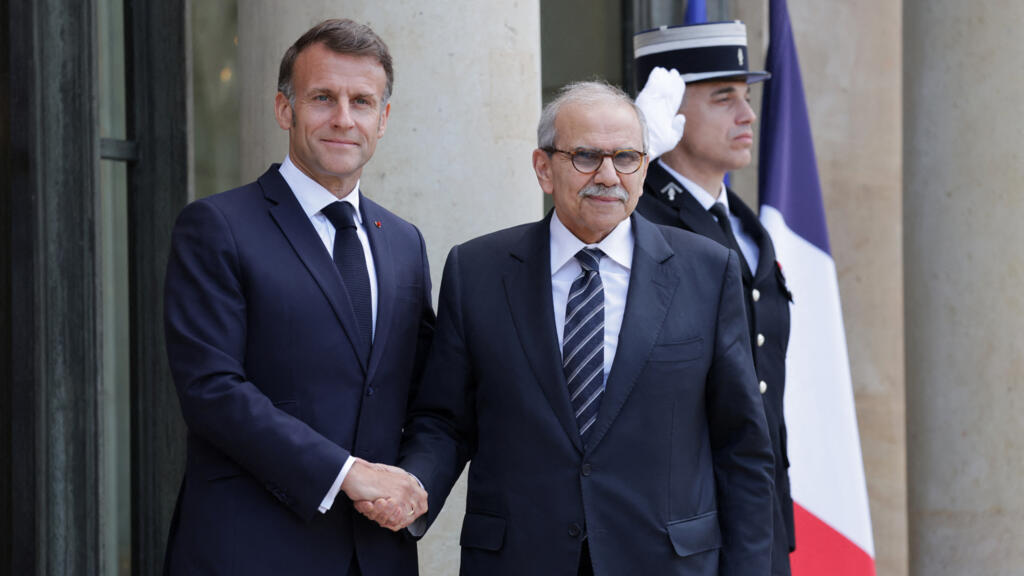
Macron Hosts Paris Talks to Secure Lebanon Ceasefire and Sovereignty
In a high-stakes diplomatic move, French President Emmanuel Macron is convening critical talks in Paris, aiming to pull the volatile Middle East back from the brink of a wider war. The immediate focus is twofold: to urgently de-escalate hostilities along the Lebanon-Israel border and to forge a sustainable path for Lebanon’s sovereignty and stability. This initiative comes as cross-border exchanges between Hezbollah and the Israeli military reach alarming new intensities, threatening to spiral into a full-scale conflict that could devastate Lebanon and destabilize the entire region.
The Precarious Situation on the Lebanon-Israel Border
For months, the Blue Line—the UN-drawn boundary between Lebanon and Israel—has been a tinderbox. Hezbollah, the powerful Iran-backed militant group and political force within Lebanon, began launching rockets and drones into northern Israel in solidarity with Hamas following the October 7th attacks. Israel has responded with intense airstrikes and artillery fire, primarily targeting Hezbollah operatives but causing significant collateral damage, displacing tens of thousands on both sides of the border.
The situation has created a dire humanitarian crisis in southern Lebanon and raised fears of a miscalculation that could ignite a war neither side claims to want, but for which both are actively preparing. Against this backdrop, Macron’s Paris talks represent a crucial international effort to impose a logic of de-escalation where momentum has been building toward conflict.
Key Objectives of the Paris Summit
The French-led discussions are not happening in a vacuum. They build upon, and aim to urgently advance, diplomatic frameworks that have been discussed for years but never fully implemented. President Macron’s strategy appears to be a multi-pronged approach:
- Immediate Military De-escalation: The primary and most urgent goal is to broker a ceasefire or a significant reduction in violence along the Blue Line. This would involve establishing clear “rules of engagement” to prevent daily skirmishes from escalating.
- Reinvigorating UN Resolution 1701: A cornerstone of the talks is the full implementation of UN Security Council Resolution 1701, which ended the 2006 Israel-Hezbollah war. The resolution calls for Hezbollah to disarm south of the Litani River and for the Lebanese army, supported by UN peacekeepers (UNIFIL), to be the sole armed force in the area. France will push for a realistic plan to make this a reality.
- Securing Lebanon’s Political Sovereignty: Beyond the ceasefire, Macron is advocating for a “lasting political solution” that reinforces the authority of the Lebanese state. This means strengthening state institutions, particularly the Lebanese Armed Forces (LAF), and curbing the influence of non-state actors like Hezbollah over national security decisions.
- Preventing Regional Conflagration: By stabilizing the Lebanon-Israel front, the international community hopes to contain the Gaza conflict and prevent a multi-front war that could directly involve Iran and its proxies across the Middle East.
The Stakes for Lebanon: Sovereignty and Survival
For Lebanon, a nation already crippled by a profound economic collapse, a dysfunctional political system, and a vacuum in the presidency, the stakes of these talks could not be higher. Another war would be catastrophic, potentially unraveling what remains of the state’s fragile infrastructure and social fabric.
French diplomacy is explicitly linking ceasefire efforts with the long-term project of rebuilding a sovereign Lebanese state. The argument is that a temporary halt in fighting is meaningless if the underlying conditions—a weak central government and a powerful armed militia operating independently—are not addressed. Macron’s vision likely involves international support packages and security guarantees for Lebanon, contingent on tangible steps toward implementing 1701 and asserting state authority.
However, this approach faces immense challenges. Hezbollah, which positions itself as a defender of Lebanon against Israel, is unlikely to willingly surrender its arsenal or its strategic foothold in the south without significant concessions, both domestically and regionally. Furthermore, any lasting agreement is inextricably linked to a resolution of the conflict in Gaza, which Hezbollah has stated is a primary driver of its current campaign.
International and Regional Players: A Complex Chessboard
The Paris talks underscore the complex web of international interests in Lebanon’s fate. France, as the former colonial power, maintains deep historical ties and sees itself as a guardian of Lebanese stability. The United States is actively engaged in parallel, behind-the-scenes diplomacy, focusing on preventing a regional war. Qatar and Egypt have also been key mediators in the broader Gaza conflict, and their roles may extend to the Lebanon file.
The most critical—and most opaque—dynamic is with Iran. As Hezbollah’s principal patron and arms supplier, Tehran holds significant sway over the group’s strategic decisions. Any viable long-term solution for Lebanon will require, at a minimum, Iran’s tacit acceptance. Whether this diplomacy can navigate the deep-seated hostility between Iran and Israel, as well as the competing interests of Saudi Arabia and other Gulf states, remains the billion-dollar question.
Conclusion: A Narrow Path to Peace
President Macron’s Paris initiative is a bold attempt to seize a diplomatic window that is cracking open under the pressure of potential war. The path forward is exceptionally narrow, littered with the debris of past failures and the live explosives of current hostilities.
Success would require a series of delicate, interlocking agreements:
- A verifiable and sustained ceasefire on the ground.
- A credible plan to deploy the Lebanese army southward with international support.
- Political compromises within Lebanon that strengthen the state without triggering internal conflict.
- And ultimately, a regional understanding that allows for de-escalation.
The alternative—a slide into full-scale war—is a scenario too grim for Lebanon and the region to contemplate. As world leaders gather in Paris, they are not just discussing a ceasefire line; they are attempting to chart a course for the very survival and sovereignty of a nation on the edge. The outcome will reveal much about the international community’s capacity to manage conflict in an increasingly volatile Middle East and will define the immediate future for millions of Lebanese and Israelis living under the shadow of rockets and airstrikes.

