
A Dire Health Crisis Engulfs the Middle East in Real Time
The World Health Organization has issued a stark and urgent warning: a catastrophic health emergency is accelerating across the Middle East, unfolding not in retrospect but in real time. This is not a distant threat or a projected scenario; it is a present-day reality where healthcare systems are buckling under immense strain, and the well-being of millions hangs in the balance. The convergence of conflict, economic collapse, and environmental pressures has created a perfect storm, pushing regional public health to a breaking point.
The Converging Catastrophe: A Multi-Faceted Emergency
This crisis cannot be attributed to a single cause. Instead, it is the lethal intersection of several protracted issues, each amplifying the other. Understanding its depth requires looking at the interconnected drivers.
The Devastating Impact of Protracted Conflict
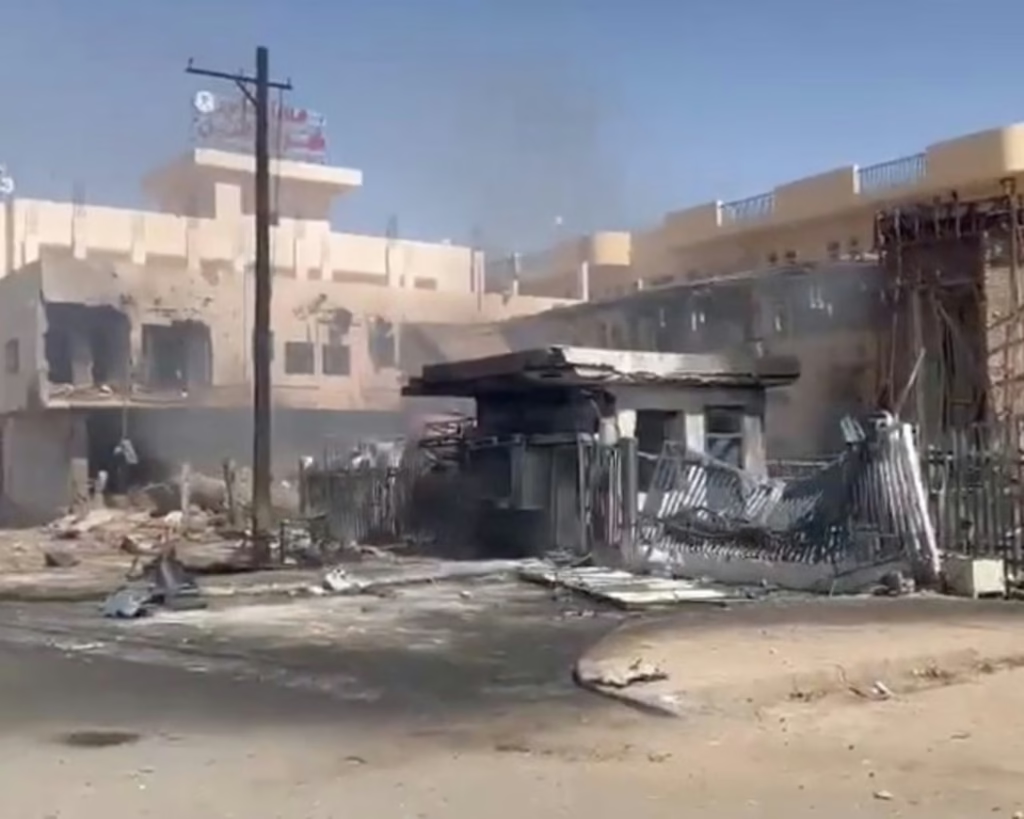
Ongoing and recent armed conflicts have been the primary catalyst. The destruction is both immediate and horrifically long-lasting.
- Infrastructure in Ruins: Hundreds of hospitals and clinics have been damaged or completely destroyed. Those still standing often operate without reliable power, clean water, or essential medical supplies.
- The Flight of Healthcare Workers: Doctors, nurses, and specialists have been killed, displaced, or forced to flee for their safety, creating a massive brain drain that cripples care delivery.
- Broken Supply Chains: Routes for delivering medicines, vaccines, and nutritional supplements are severed, leaving populations without access to even basic treatments for chronic and acute conditions.
The Silent Surge of Disease and Malnutrition
With sanitation systems shattered and populations crowded into inadequate shelters, the environment is ripe for disease outbreaks.
- Waterborne Illnesses: Diseases like cholera, typhoid, and severe diarrheal infections are spreading rapidly where access to clean water is a luxury.
- Vaccine-Preventable Diseases: Disrupted immunization campaigns have led to resurgences of measles and polio, threatening children who were previously protected.
- A Generation Undernourished: Food insecurity has reached alarming levels, leading to soaring rates of acute malnutrition, particularly among children under five, causing stunted growth and weakened immunity with lifelong consequences.
The Overwhelmed Mental Health Toll
Often termed the “invisible wound,” the psychological impact of years of trauma, loss, and instability is profound. Populations are experiencing widespread post-traumatic stress disorder (PTSD), anxiety, and depression, with almost no accessible mental health services to provide support. This constitutes a parallel crisis that undermines societal resilience.
A Region at a Tipping Point: Strains Beyond Conflict Zones
While active war zones face the most acute horrors, the ripple effects are destabilizing neighboring countries and straining the entire region’s health stability.
- Refugee Host Nations Under Pressure: Countries hosting large refugee populations see their own health systems overwhelmed. Public hospitals struggle to cater to both their citizens and the influx of newcomers, often leading to shortages and social tension.
- Economic Collapse and Sanctions: In several nations, economic freefall and restrictive sanctions have made importing medical equipment and pharmaceuticals nearly impossible. Hyperinflation puts even simple antibiotics out of reach for average families.
- The Climate Change Multiplier: Extreme heatwaves and water scarcity, endemic to the region, are worsening. Heat-related illnesses are increasing, and drought threatens agricultural output, exacerbating the food and water crisis that fuels poor health.
The WHO’s Alarm and the Path Forward
The World Health Organization’s warning is a clarion call for immediate and sustained international action. They emphasize that humanitarian aid, while critically needed, is a band-aid solution. A long-term strategic approach is required to pull the region back from the brink.
Urgent Priorities for Intervention
To address this real-time emergency, a coordinated focus on several key areas is non-negotiable.
- Unimpeded Humanitarian Access: All parties to conflicts must allow safe and sustained passage for medical personnel and supplies to reach all populations in need, without obstruction.
- Protection of Health Infrastructure: Hospitals and health workers must be shielded from attack, as mandated under international law. Their sanctity is the cornerstone of any public health response.
- Restoring Primary Care: Investment must shift towards rebuilding shattered primary healthcare networks—the first line of defense against disease outbreaks and malnutrition.
- Funding the Health Response: The UN and WHO humanitarian health appeals for the region are severely underfunded. Donor nations must dramatically scale up financial commitments to match the scale of the crisis.
A Crisis with Global Implications
Allowing this health catastrophe to fester unchecked does not only condemn millions in the Middle East to suffering and death; it poses a direct threat to global health security. Fragile states become incubators for drug-resistant infections and novel pathogens. Mass displacement continues to create regional instability. The moral and strategic imperative to act is clear.
The unfolding health crisis in the Middle East is a test of the world’s collective conscience and commitment to the fundamental human right to health. The WHO’s real-time warning is a stark reminder that time is the most scarce resource of all. The international response in the coming months will determine whether this dire situation can be stabilized or if it will spiral into one of the worst health disasters of the 21st century.

