
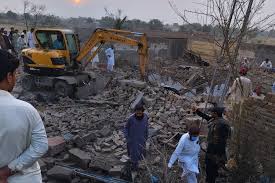
Pakistan Suicide Blast Claims 14 Lives: Tehreek-e-Taliban Pakistan (TTP) Splinter Group Behind Deadly Attack
The security landscape in northwestern Pakistan has once again been shaken by a brutal act of terrorism. On May 10, 2026, a suicide bomber targeted a crowded marketplace in Bannu district, Khyber Pakhtunkhwa, killing at least 14 civilians and wounding more than 30 others. The attack was immediately claimed by a breakaway faction of the Tehreek-e-Taliban Pakistan (TTP), known as the TTP-Jamaat ul-Ahrar splinter cell. This incident marks one of the deadliest attacks in the region in recent months, underscoring the persistent threat posed by militant groups operating along the Afghanistan-Pakistan border.
The Attack: What We Know So Far
According to local police and hospital officials, the explosion occurred during peak shopping hours near a vegetable market in the heavily populated city of Bannu. The bomber, described as a young male wearing a vest packed with ball bearings and high-grade explosives, detonated his device among a crowd of civilians. Emergency responders rushed the wounded to Bannu Medical College Hospital, where many remain in critical condition.
Details on Casualties
The death toll rose rapidly from an initial 8 victims to 14 within hours as victims succumbed to severe shrapnel wounds. Among the dead are:
- Six women and two children, according to the district health officer
- Three local shopkeepers who were at the entrance of the market
- Three daily wage laborers waiting for work near the blast site
The attack took place despite an apparent lull in major terrorist incidents in the province over the past few months. Security forces have since cordoned off the area and launched a search operation for any potential facilitators.
Responsibility and the Splinter Group Behind the Attack
Within hours of the blast, a previously lesser-known faction of the TTP claimed responsibility through a statement circulated on encrypted messaging apps. The group, calling itself “TTP – Hafiz Gul Bahadur Group (HGB)”, stated that the attack was revenge for ongoing military operations against militants in the tribal districts. This splinter group broke away from the main TTP in early 2025, citing disagreements over ceasefire negotiations with the Pakistani government.
Why Splinter Groups Are Especially Dangerous
Security analysts note that splinter factions often operate without the constraints of larger organizational leadership. They tend to:
- Pursue more violent tactics to gain legitimacy and notoriety
- Target soft civilian areas to undermine state authority
- Exploit porous border regions with Afghanistan to regroup and rearm
The HGB group has been particularly active near the Kurram and North Waziristan areas, where they compete with both the main TTP and rival groups such as the Islamic State Khorasan Province (ISKP) for territorial influence.
Regional Security Implications for Pakistan
The Bannu attack is a stark reminder that Pakistan’s counterterrorism gains remain fragile. Over the past five years, the country’s security forces have conducted multiple operations – including Operation Radd-ul-Fasaad – that significantly degraded militant networks. However, the resurgence of splinter groups indicates that ideological extremism has not been fully uprooted.
Impact on Police and Military Operations
In response to the bombing, the Pakistan Army has increased troop levels in the Bannu and Lakki Marwat districts. Checkpoints have been reinforced, and mobile phone services were temporarily suspended to prevent network-based detonations of secondary devices. Provincial counterterrorism departments are also investigating whether the bomber crossed from Afghanistan, a charge that has historically strained Pakistan-Afghanistan bilateral relations.
Civilian Desensitization and Fear
Local residents expressed both grief and frustration. Many in Bannu feel that the government has not done enough to address the root causes of militancy, including poverty, lack of education, and unresolved tribal disputes. One survivor told local media: “We were just buying vegetables. There is no safe place anymore.” This sentiment underscores the psychological toll of perpetual insecurity on ordinary Pakistanis.
International Reactions and Analysis
The international community was quick to condemn the attack. The United Nations Assistance Mission in Afghanistan (UNAMA) urged all parties to uphold human rights and prevent further bloodshed. The U.S. State Department issued a statement calling the bombing “an act of cowardice” and reiterated support for Pakistan’s counterterrorism efforts.
From an expert perspective, this incident fits a troubling pattern. Dr. Amir Rana, a security scholar at the Pakistan Institute for Peace Studies, noted: “Splinter groups are the new face of militancy in the region. They are harder to negotiate with and more likely to strike at soft targets. The government must adapt its strategy to deal with networked, decentralized cells rather than hierarchical organizations.”
Long-Term Stabilization Strategies
To prevent future attacks, analysts recommend a multi-pronged approach:
- Intensified intelligence-sharing between civilian and military agencies
- Community policing programs to win local trust and gather actionable intelligence
- Economic development in vulnerable districts to reduce recruitment pools
Without these measures, each new attack risks setting back years of progress in reducing terrorism in Pakistan.
Conclusion: A Bleak Reminder of Persistent Threats
The suicide bombing that killed 14 people in Bannu is not an isolated event but part of a broader resurgence of militant violence in South Asia. While the main TTP may have engaged in intermittent peace talks, its splinter factions remain committed to violent jihad. For Pakistan, the challenge is twofold: first, to provide immediate security to grieving communities, and second, to dismantle the ideological ecosystem that breeds such extremism. As the death toll rises and families bury their loved ones, the need for a comprehensive, resilient security strategy has never been more urgent.

