Powering the Future: Can Canada’s Energy Grid Keep Up with the AI Boom?
Artificial intelligence is no longer a futuristic abstraction; it is now a core engine driving productivity, scientific discovery, and global commerce. But behind the sleek interfaces of chatbots and image generators lies a less visible reality: massive electricity demand.
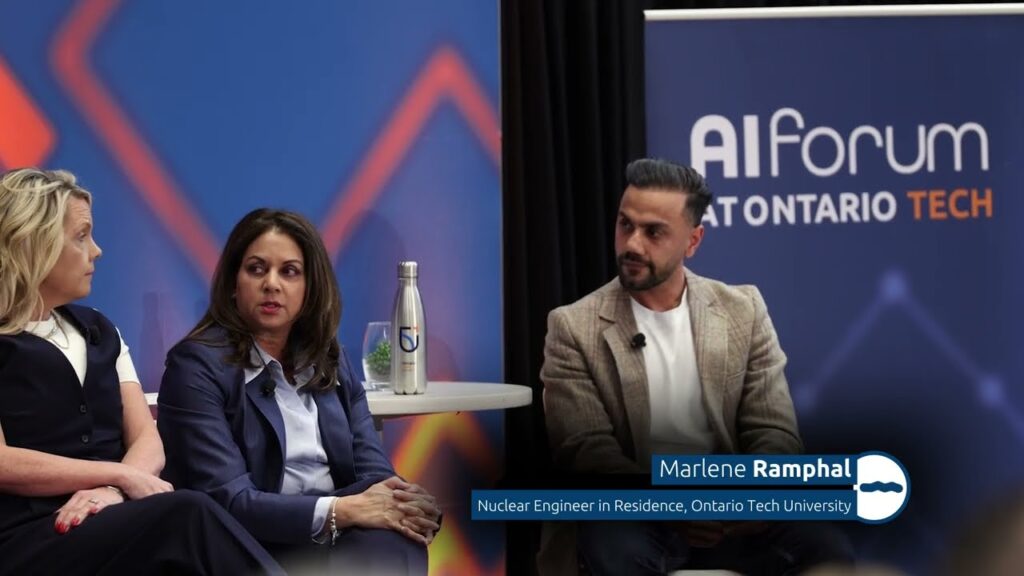
A recent deep analysis from Ontario Tech University raises a pressing question for policymakers and industry leaders alike: Can Canada’s fragmented and aging energy infrastructure keep up with the exponential power needs of modern AI?
The answer is complex—part warning, part opportunity, and part urgent call for reinvention.
The Hidden Energy Appetite of Artificial Intelligence
Most users experience AI as a simple interface—a chat window or a creative tool. But underneath, the infrastructure is industrial in scale.
Training and running large AI systems requires enormous computing power:
- Training a frontier model can consume electricity comparable to hundreds of households over an entire year
- AI inference (everyday usage like chat queries or image generation) adds continuous, global energy demand
- A single AI query can consume several times the energy of a traditional web search
Globally, data centers already account for roughly 1–2% of total electricity use, and this share is expected to grow significantly over the next decade due to AI workloads alone.
For Canada, this creates a tension between attracting digital investment and maintaining climate commitments.
Canada’s Natural Advantage—and Structural Limitations
On the surface, Canada is well-positioned to benefit from the AI infrastructure boom.
Key advantages include:
- Clean electricity grids dominated by hydro in provinces like Quebec, British Columbia, and Manitoba
- Naturally cool climate, reducing data center cooling costs
- Strong investment interest from global technology firms
However, the Ontario Tech University analysis highlights a critical issue: Canada does not operate a unified energy system.
Instead, it relies on provincial grids with different rules, capacities, and constraints.
The Regional Divide in Grid Capacity
Ontario: Demand Outpacing Infrastructure
Ontario is emerging as the central pressure point.
- Electricity demand could rise 50–60% by 2050, driven partly by AI and electrification
- Nuclear power remains the backbone of the grid, but much of it is aging
- New generation projects are slow to come online
The Independent Electricity System Operator (IESO) has already warned of potential capacity challenges in the late 2020s without urgent investment.
Quebec and British Columbia: Clean but Constrained
Hydro-rich provinces appear strong on paper, but even they face limitations.
Utilities such as Hydro-Québec have signaled that:
- Large-scale data center expansion will require new transmission infrastructure
- Existing hydro capacity cannot be rapidly scaled without major environmental and logistical trade-offs
The Hidden Reality: Backup Fossil Fuel Dependence
One of the most important findings in the analysis is often overlooked in public discussions.
AI data centers require 24/7 uninterrupted power, which renewable sources alone cannot guarantee.
As a result:
- Natural gas “peaker plants” are often used as backup
- This introduces carbon emissions into what is marketed as “clean AI infrastructure”
- Grid reliability, not just generation capacity, becomes the limiting factor
This creates a policy contradiction: AI growth can push emissions higher unless infrastructure is carefully planned.
What Needs to Happen Next
The report outlines three major pathways to keep Canada competitive in the AI era.
1. Modernizing the Grid
Canada’s electricity infrastructure was not designed for volatile, high-density computing demand.
Required upgrades include:
- Smart grid systems for real-time load balancing
- Expanded interprovincial transmission lines
- Faster approval processes for major infrastructure projects
Without these changes, provinces risk becoming isolated energy markets unable to share surplus power efficiently.
2. Small Modular Reactors (SMRs)
Nuclear innovation is emerging as a key solution.
Ontario is already exploring SMRs at existing nuclear sites.
These reactors offer:
- Stable, continuous baseload power
- Smaller physical footprint than traditional nuclear plants
- Zero operational carbon emissions
If deployed successfully, SMRs could power next-generation AI data centers directly.
3. Making AI More Energy Efficient
Not all solutions involve more electricity. Some involve using less.
Technological improvements include:
- More efficient GPU architectures from major chipmakers
- Model compression techniques (reducing computational load without major accuracy loss)
- Advanced cooling systems like liquid or immersion cooling
These innovations could reduce energy demand per AI task by 40–60% in some cases.
The Strategic Risk: Losing the AI Investment Race
The underlying concern is not just energy—it is economic positioning.
If Canada cannot provide reliable, scalable power quickly enough:
- AI data center investments may shift to U.S. regions with faster permitting and abundant gas power (e.g., Virginia or Texas)
- High-value digital infrastructure jobs may bypass Canadian provinces
- Long-term competitiveness in AI research and cloud infrastructure could weaken
The competition is not theoretical—it is already underway.
Opportunity: Canada as a Clean AI Power Hub
Despite the risks, Canada has a unique opportunity.
Global tech companies are actively seeking:
- Stable political environments
- Clean energy access
- Cooler climates for efficient data center operations
Canada can position itself as a “clean compute hub” if infrastructure keeps pace.
That would require aligning:
- Energy policy
- AI investment strategy
- Infrastructure permitting
- Private sector demand
Final Outlook: A Race Between Power and Progress
Canada is not facing an energy shortage in absolute terms. It is facing a coordination and speed problem.
The challenge is timing:
- AI development is accelerating exponentially
- Grid expansion moves slowly by comparison
If policy and infrastructure fail to synchronize, Canada risks losing a generational opportunity.
But if they align, the country could become one of the world’s leading providers of clean, reliable AI computing power.
The conclusion from the Ontario Tech analysis is clear:
Canada already has the energy foundations. The question now is whether it can connect them fast enough to power the intelligence era.