
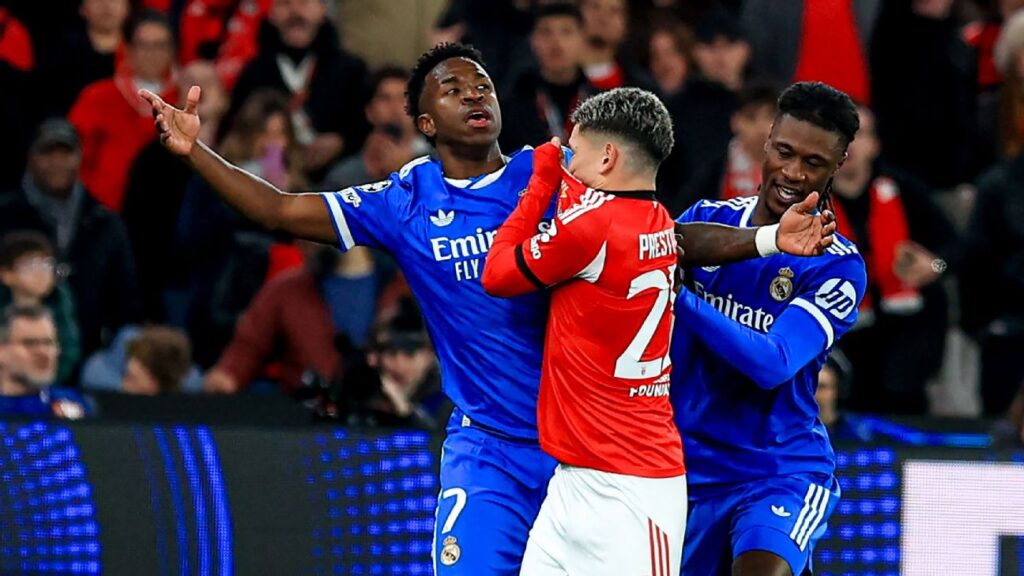
FIFA Extends Gianluca Prestianni Ban: Argentine Prodigy Sidelined from World Cup
The football world is reacting to a major disciplinary ruling after FIFA confirmed the global extension of a sanction against Gianluca Prestianni, the 19-year-old Argentine winger currently registered with Benfica. The decision now applies across all FIFA-sanctioned competitions, including the FIFA World Cup, dealing a major setback to both the player and the Argentine Football Association (AFA).
Prestianni has long been regarded as one of Argentina’s brightest young talents. Known for his explosive pace, tight ball control, and direct attacking style, he was widely expected to play a growing role in Argentina’s senior national team setup.
That progression has now been abruptly halted.
How the Ban Originated
The case began under UEFA jurisdiction, following an investigation linked to his transfer from Vélez Sarsfield to Europe. While full details remain limited due to regulatory confidentiality, the issue is understood to involve registration and contractual irregularities.
Key points of the original ruling:
- UEFA imposed a four-month suspension after its disciplinary review
- The ban initially applied only to UEFA competitions (league and continental tournaments)
- It did not originally affect FIFA tournaments or non-European football
The situation escalated when FIFA intervened and expanded the sanction globally under its disciplinary framework.
As a result:
- Prestianni is barred from all FIFA-recognized competitions
- He cannot participate in the FIFA Club World Cup
- He is ineligible for the FIFA World Cup during the ban period
This transforms a regional disciplinary case into an international restriction with major consequences.
Impact on Argentina’s National Team Plans
The AFA has reportedly expressed strong disagreement with the decision and is assessing legal options, though overturning FIFA disciplinary rulings is historically difficult.
From a sporting perspective, the timing is particularly damaging.
At 19, Prestianni is at a critical stage of development where international minutes and elite competition are essential for progression. Missing a World Cup cycle can significantly slow a young player’s career trajectory.
For context, recent Argentine stars followed a different path:
- Julián Álvarez used the 2022 World Cup to establish himself globally
- Enzo Fernández boosted his profile with standout tournament performances
- Alexis Mac Allister rose to prominence through consistent international exposure
Prestianni will now miss that opportunity entirely during this cycle.
Tactical and Squad Implications
Argentina’s senior squad remains strong, but the absence of emerging attackers adds pressure to squad depth planning.
The coaching staff now faces key questions:
- Who replaces Prestianni’s attacking versatility?
- Can players like Thiago Almada or Alejandro Garnacho absorb additional creative responsibility?
- Does the team need to accelerate development of alternative young forwards?
Prestianni’s ability to operate across multiple attacking roles—winger, second striker, and inside forward—made him a valuable tactical option. His absence reduces flexibility in squad selection.
Why FIFA’s Decision Matters Beyond One Player
Beyond the immediate impact, the ruling signals a stricter enforcement stance from FIFA regarding disciplinary consistency across jurisdictions.
Traditionally, sanctions imposed by continental bodies could remain regionally limited. FIFA’s move changes that approach by ensuring that penalties can extend globally when deemed necessary.
This sets a wider precedent:
- Transfer and registration compliance is under greater scrutiny
- Administrative errors can now have worldwide consequences
- Players and agents face increased responsibility in cross-border moves
For clubs and emerging talents, this raises the stakes significantly in international transfers.
What This Means for Prestianni’s Career
At this stage of his development, consistent match experience is critical. A prolonged absence from top-level competition risks slowing his growth and reducing visibility to elite clubs and national team selectors.
The longer-term concern is not only missed matches, but lost development time during peak progression years.
What Happens Next
The AFA is expected to consider an appeal to the Court of Arbitration for Sport (CAS). However, such proceedings often take time, and immediate relief before major tournaments is uncertain.
There is also the possibility of negotiation, though FIFA rarely modifies sanctions unless specific conditions are met.
For now, Prestianni’s immediate focus shifts away from competition and toward training and rehabilitation, while his camp monitors legal developments.
The case remains active, but its immediate impact is already clear: Argentina must plan for a major tournament cycle without one of its most promising young attackers.

