How China Benefits from the Strait of Hormuz Reopening
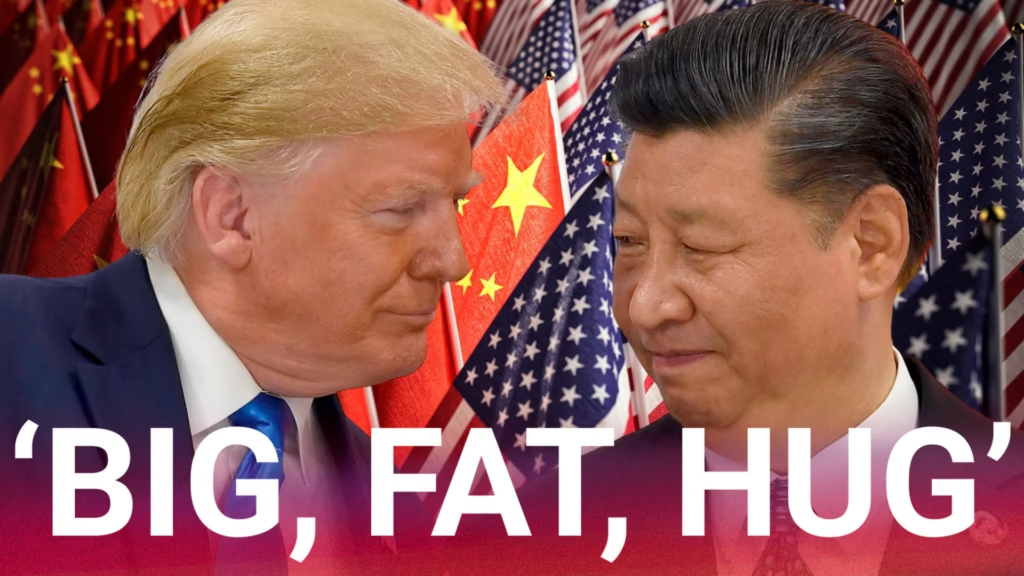
The recent announcement of the Strait of Hormuz’s planned reopening in 2026, a critical maritime chokepoint for global oil shipments, has sent ripples through international geopolitics. Former U.S. President Donald Trump’s remark that China’s President Xi Jinping is “very happy” about the development is more than just political commentary; it’s a stark indicator of the profound strategic and economic windfall this event represents for Beijing. For China, the world’s largest crude oil importer, the reopening is not merely a logistical relief—it is a pivotal moment that strengthens its energy security, amplifies its global influence, and reshapes the balance of power in a key region.
The Lifeline of China’s Economy: Securing the Energy Flow
China’s meteoric economic rise has been fueled by an insatiable appetite for energy. Over 70% of its crude oil imports transit through maritime routes, with a significant portion originating from the Middle East and Africa. The Strait of Hormuz, the narrow passage between the Persian Gulf and the Gulf of Oman, is the indispensable artery for this flow.
For years, the persistent threat of closure due to regional tensions has been a constant vulnerability for Beijing. Any disruption would immediately threaten China’s economic stability, making energy security a top national priority. The scheduled reopening, therefore, directly addresses China’s most pressing strategic anxiety.
Tangible Economic and Strategic Gains
- Stable and Predictable Supply Chains: A secure Hormuz ensures uninterrupted deliveries, allowing Chinese industries to plan long-term without the fear of sudden oil price spikes or shortages that could cripple manufacturing.
- Enhanced Bargaining Power: With the primary physical bottleneck removed, China can negotiate more favorable long-term contracts with oil producers like Saudi Arabia, Iran, and the UAE, leveraging its position as the world’s top buyer.
- Reduced “Malacca Dilemma” Pressure: While the Strait of Malacca remains a separate chokepoint, securing the Hormuz leg of the journey alleviates part of China’s broader vulnerability, allowing it to focus strategic investments on other key routes.
Expanding the Sphere of Influence: Diplomacy and Defense
China’s happiness extends far beyond tanker schedules. The reopening of the Strait provides a powerful catalyst for its ambitious foreign policy goals, particularly the Belt and Road Initiative (BRI).
The stability of the Hormuz region is a prerequisite for the success of China’s massive infrastructure and trade projects across the Middle East and beyond. With safer seas, China can deepen its economic partnerships with regional powers, weaving them more tightly into a Beijing-centric network of trade and investment.
A Foothold for Strategic Presence
The need to protect its vital interests has already driven China to establish its first overseas military base in Djibouti, near another critical waterway. A stable, reopened Hormuz could justify and facilitate an expanded Chinese naval presence in the region under the guise of protecting commercial shipping. This would:
- Project Chinese military power far from its shores.
- Provide a counterbalance to traditional U.S. naval dominance in the Persian Gulf.
- Strengthen defense ties with regional partners, potentially leading to more port access agreements.
Navigating a Multipolar Order: China’s Diplomatic Tightrope
President Xi’s reported satisfaction also reflects a nuanced diplomatic victory. The reopening is likely the result of complex, behind-the-scenes negotiations involving regional rivals and global powers. China’s ability to maintain strong, and sometimes contradictory, relationships with all sides—from Iran and Saudi Arabia to the United States—positions it as an indispensable player.
By advocating for stability and economic pragmatism over traditional alliances, China presents itself as a neutral, reliable partner for all nations in the Gulf. This approach allows Beijing to benefit from the reopening while avoiding direct entanglement in the region’s historic conflicts, a stance that serves its interests perfectly.
The Ripple Effects: Global Trade and Geopolitical Realignment
China’s gain from the Hormuz reopening will have significant secondary effects on the global stage.
For Global Trade:
- Lower Global Risk Premiums: Reduced threat of disruption will lead to more stable global oil prices, benefiting all importing nations, though China gains the most due to its volume.
- Reinforced Chinese Economic Leadership: As the engine of global trade secures its fuel, its influence over international economic norms and institutions grows.
For the United States and the World:
The reopening subtly alters the geopolitical calculus. The U.S. Fifth Fleet’s role as the primary guarantor of security in the Strait may diminish in perceived importance, creating space for other actors.
- It may accelerate discussions about a more multipolar security architecture in the Middle East.
- It underscores the shifting global priorities, where economic connectivity, often championed by China, can sometimes override traditional security paradigms.
Conclusion: A Strategic Windfall for a Rising Power
Donald Trump’s observation cuts to the core of a major geopolitical shift. The reopening of the Strait of Hormuz is a development that aligns almost perfectly with China’s core national interests. It bolsters its energy security, fuels its economic ambitions, and expands its strategic and diplomatic footprint on the world stage.
For Beijing, a stable and open Hormuz is not just about cheaper or more reliable oil; it is a key piece in the puzzle of its “national rejuvenation.” It reduces a critical vulnerability, empowers its foreign policy, and signals its arrival as a power capable of thriving from—and influencing—global stability on its own terms. As 2026 approaches, the world will be watching not just the tankers sailing through the narrow strait, but the long shadow of Chinese influence that sails with them.